Neuroscience
- Health & Medicine
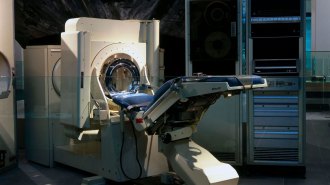
50 years ago, X-rays provided an unprecedented look inside the brain
CT scans can now image the whole body and are even used in other scientific fields such as archaeology, zoology and physics.
- Neuroscience
Three ways of rejuvenating aging brains may work via the same protein
Three brain rejuvenation methods may exert their effects through the same molecule, at least partly, which could lead to therapies for cognitive decline.
- Neuroscience
Here’s what lucid dreamers might tell us about our sleeping minds
Lucid dreaming could prove to be a powerful tool for probing dreams, one of the most universal yet elusive human experiences.
- Neuroscience
Neuroscientists decoded a Pink Floyd song using people’s brain activity
The technique could be used to improve devices that allow communication from people unable to speak.
- Neuroscience
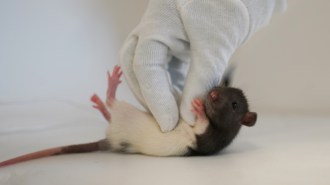
Playful behavior in rats is controlled by a specific area of their brains
Cells in a brain region called the periaqueductal gray are activated by chasing and tickling, a study finds. Blocking their activity reduces play in rats.
- Neuroscience
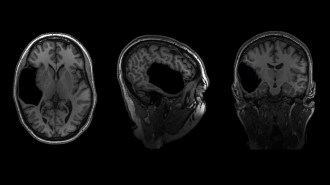
Elyse G.’s brain is fabulous. It’s also missing a big chunk
A new project explores interesting brains to better understand neural flexibility.
- Neuroscience
Brain cavities that swell in space may need at least 3 years to recover
MRI scans of astronauts show that duration in space and time between flights affect how much the brain’s fluid-filled cavities expand during missions.
- Neuroscience
A brain implant helped a man with paralysis walk more naturally
A successful test of a system that restores communication between the brain and spine could ultimately help many people with paralysis.
- Neuroscience
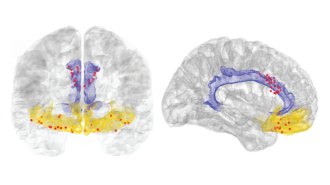
Brain implants have revealed a signature for chronic pain
Brain implants in four people with chronic pain gave researchers an inside look at the debilitating condition.
- Neuroscience
A rare mutation helped one man stave off Alzheimer’s for decades
The brain of a Colombian man with an inherited form of Alzheimer’s may hint at ways to halt or slow the progression of the disease.
- Tech
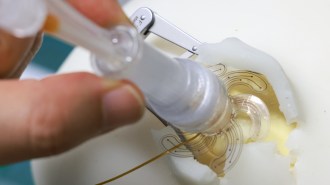
A flower-shaped soft robot could make brain monitoring less invasive
Once inserted in the skull, the device unfurls flexible sensors that can monitor the brain's electrical activity less invasively than current methods.
- Neuroscience
Neuroscientists decoded people’s thoughts using brain scans
The finding may lead to better communication aids for people who can’t communicate easily. It also raises privacy concerns.