Neuroscience
- Neuroscience
Hints of how the brain “sees” dreams emerge
Nerve cells that make sense of visual input keep chugging away during REM sleep, suggesting that these cells may help a sleeper “see” dreams.
- Health & Medicine
Fish oil may counter schizophrenia
Three months of omega-3 fatty acids protects against psychosis for years, a small study suggests.
- Neuroscience
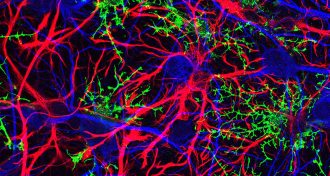
Rethinking which cells are the conductors of learning and memory
Brain cells called glia may be center stage when it comes to learning and memory, recent research suggests.
- Neuroscience
A voyage into Parkinson’s disease, led by patient and journalist
Jon Palfreman’s Brain Storms explores Parkinson’s disease in the past, present and future.
- Animals
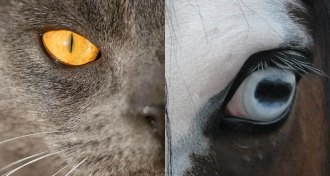
Power of pupils is in their shape
Horizontally or vertically stretched pupils may provide predators and prey with visual advantages.
- Neuroscience
Brain scans hint at reasons for stress-eating
Moderate stress changes brain behavior in ways that may lead to poor food choices.
- Neuroscience
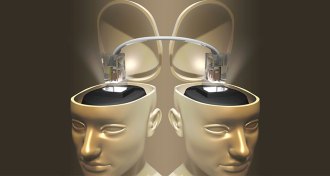
Claim of memory transfer made 50 years ago
Scientist’s claims of transferred memories were more fiction than fact.
- Life
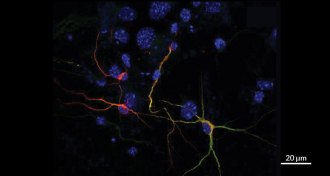
Chemical magic transforms skin cells into nerve cells
Just a few chemicals can transform skin cells from Alzheimer’s patients and healthy people into nerve cells.
- Neuroscience
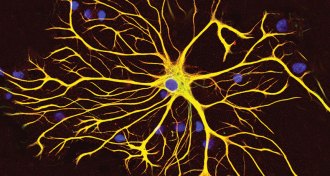
Astrocytes help speed up brain’s messages
Astrocytes may help speed nerve cells’ electrical messages.
- Animals
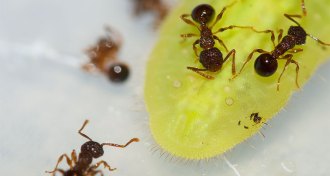
Caterpillar treats and tricks ants by oozing spiked juice
Caterpillars ooze droplets that lure ants away from colony duties to instead lick and defend their drug source, new lab tests suggest.
- Neuroscience
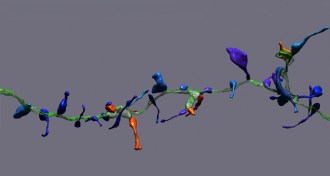
New view of mouse brain provides up-close look at nerve cells’ habitat
Detailed reconstruction of a tiny fleck of mouse brain reveals neural complexity.
- Neuroscience
Global warming unpaused, how space affects the brain and more reader feedback
A reader shares a story about Stephen Jay Gould, while others discuss how to protect the brain from radiation in space and whether 2014 was the hottest year on record.