Psychology
- Quantum Physics
Quantum math makes human irrationality more sensible
Vagaries of human decision making make sense if quantum math describes the way the brain works.
- Science & Society
Main result of Facebook emotion study: less trust in Facebook
Facebook’s controversial manipulation of emotional posts raises key questions about how to study online behavior.
- Psychology
People will take pain over being left alone with their thoughts
Evidence suggests that people dislike solitary thought so much that some prefer electric shocks.
- Psychology
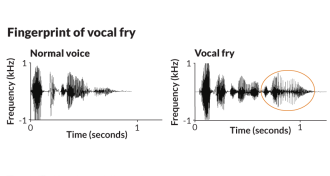
Vocal fry
At the lowest registers of the human voice, a creaky, popping sound known as vocal fry emerges.
- Psychology
Tablet devices help kids with autism speak up
Talking iPads may help break the near-silence of some kids with autism.
- Neuroscience
Shaking up the body may improve attention
Just two minutes of whole body vibrations improved young adults’ attention to detail.
- Psychology
Westerners sleep more than people from Eastern nations
Sleep schedules vary from country to country, with social demands like work and study providing the primary incentives to stay up.
- Psychology
Online causes may attract more clicks than commitments
Online awareness campaigns can make people feel they’ve contributed to a good cause, but social scientists say the tangible benefits of such efforts may be small.
- Psychology
Just four questions can identify which ER patients need prompt care
A simple decision tree may find serious ailments in ER patients’ fuzzy complaints.
- Psychology
Children negotiate taking turns surprisingly early in life
Five-year-olds can coordinate decisions with others in a fair way, even when each child has conflicting interests.
- Humans
There’s more to acing interviews than holding the vocal fry
A new study of vocal fry, a low razz in human speech, suggests job interviewees might want to hold the fry. But there's more to a job interview than a little vocal sizzle.
- Psychology
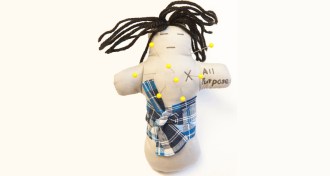
Why stabbing a voodoo doll is so satisfying
To measure how aggressive a person is, psychologists turn to voodoo dolls and hot sauce.