Tech
We summarize the week's scientific breakthroughs every Thursday.
- Earth
Succession of satellites keep eye on Earth
50 years after plans were laid for the first Earth-observing spacecraft, the youngest Landsat satellites are still flying and imaging the planet’s surface.
- Tech
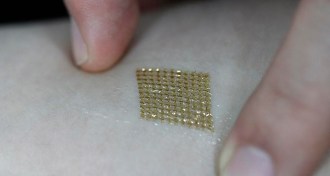
Stretchy silicon sticker monitors your heartbeat
A new stretchy memory device looks like a temporary tattoo and works like a heart rate monitor.
- Tech
SpaceX rocket sticks its landing
A Falcon 9 rocket section lands after launching a set of satellites during a successful test of SpaceX’s reusable rocket parts.
- Tech
SpaceX rocket blasts to space and back, sticks the landing
A Falcon 9 rocket section lands after launching a set of satellites during a successful test of SpaceX’s reusable rocket parts.
- Math
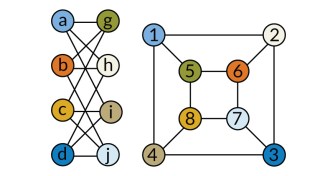
Year in review: New algorithm quickly spots identical networks
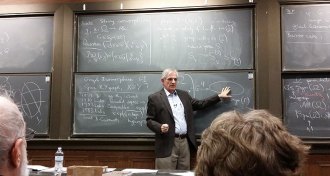
In what may be a once-in-a-decade advance, a computer scientist claimed to have devised an algorithm that efficiently solves the notorious graph isomorphism problem.
- Quantum Physics
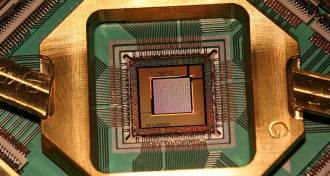
Google’s quantum computer speeds up, but practical use is unclear
Google’s D-Wave quantum computer is getting faster, but it’s still unclear whether it will ever outperform regular computers at completing useful tasks.
- Life
Microbes show up on schedule after death
Microbes in the soil beneath dead bodies offer forensic clues for time and place of death.
- Physics
There’s no hiding from new camera
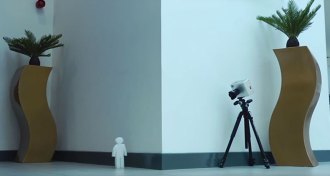
A new camera tracks objects hidden around a corner by detecting light echoes, similar to the way bats use sound to find prey.
- Tech
Roses rigged with electrical circuits
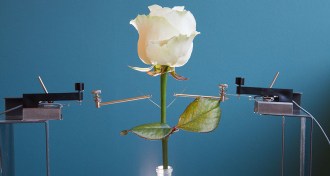
Bioelectric molecules can form wires and conduct electricity in cut roses, researchers find.
- Plants
Roses rigged with electrical circuitry
Bioelectric molecules can form wires and conduct electricity in cut roses, researchers find.
- Climate
Geoengineering is world’s last hope, new book argues
Geoengineering is humankind’s only viable solution to curb climate change impacts, a journalist contends in The Planet Remade.
- Computing
New algorithm cracks graph problem
A new algorithm efficiently solves the graph isomorphism problem, which has puzzled computer scientists for decades.