All Stories
- Archaeology
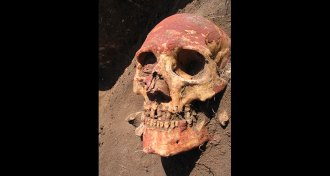
Bronze Age humans racked up travel miles
A new study indicates long journeys and unexpected genetic links in Bronze Age Eurasian cultures.
- Planetary Science
WISE satellite measures girth of Saturn’s widest ring
Saturn’s dark, outermost ring is about 270 times as wide as the planet itself.
- Earth
Grand Canyon’s age revised, again
The Grand Canyon is much younger than previous research had suggested, a new study says.
- Paleontology
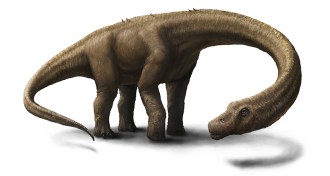
New analysis cuts massive dino’s weight in half
Gigantic dinosaur Dreadnoughtus may have weighed only about half of what scientists estimated last year.
- Animals
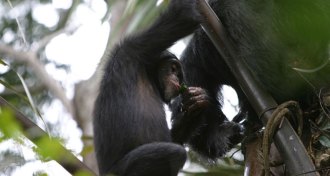
Chimps get buzzed on fermented tree sap
Scientists have documented the first case of chimpanzees drinking ethanol in the wild.
- Tech
Humanoid robot tops other bots in defense agency’s challenge
A humanoid robot named DRC-HUBO won first place in DARPA’s Robotic Challenge, held June 5-6.
- Science & Society
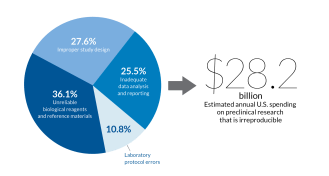
Irreproducible life sciences research in U.S. costs $28 billion
Problems with preclinical research often stem from study design and experiments’ materials.
- Physics
Common campfire build confirmed as best
A standard method for building fires, making the height about equal to the width, is the most efficient structure for stoking the hottest flames, calculations show.
- Paleontology
Traces of dino blood, soft tissue found even in junk bones
Hints of blood and collagen found in poorly preserved dinosaur bones suggest that soft tissue from the creatures may be easier to come by.
- Health & Medicine
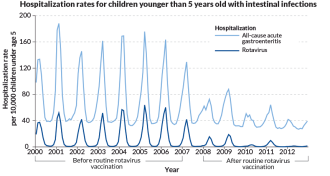
Rotavirus vaccine is proving its worth
Rotavirus vaccination cuts childhood intestinal infection hospitalizations in half.
- Animals
Camera traps provide treasure trove of African animal pics
Scientists set up hundreds of cameras across Serengeti National Park to capture images of predators and their prey.
- Life
MERS virus didn’t morph in its move to South Korea
No obvious changes in the MERS virus account for its rapid spread in South Korea.