Uncategorized
- Climate
How species will, or won’t, manage in a warming world
Fast evolution and flexibility, in biology and behavior, may allow some species to adapt to a warming world. Others may need help from humans, or risk dying out.
- Cosmology
Lab version of early universe fails to solve lithium problem
An experiment that imitated conditions from just after the Big Bang failed to explain why observed amounts of lithium don’t match those expected from theory.
- Life
Microscapes take off at D.C’s Dulles airport
“Life: Magnified,” a display of microscope images depicting cells, microbes and details of life invisible to the naked eye runs from June to November.
- Environment
Decline in birds linked to common insecticide
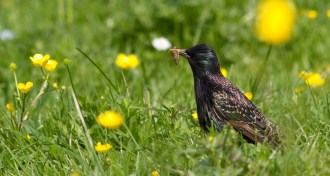
In addition to harming bee populations, neonicotinoid insecticides may also be detrimental to bug-eating birds.
- Life
Fiber optics in mammals’ eyes separate colors
Specialized cells in the retina separate different wavelengths of light to enable sharp vision during the day without harming night vision.
- Tech
1960s research paid off in automotive safety
Scientists in 1964 were studying shatterproof glass, which was mandated just a couple of years later.
- Health & Medicine
Two genes clear up psoriasis and eczema confusion
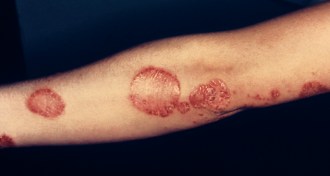
Psoriasis and eczema are often mistaken for each other, leading to mistreatment. Testing just two genes could eliminate this confusion.
- Life
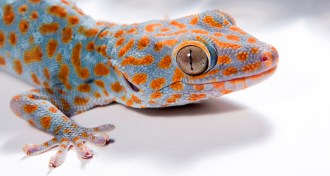
Gecko adhesion takes electric turn
Challenging a favored theory, measurements suggest that electrostatic interactions make gecko feet supersticky.
- Paleontology
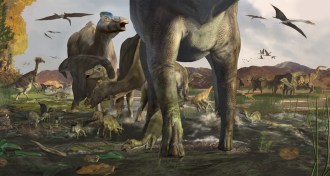
Duck-billed dinosaurs roamed the Arctic in herds
Young and old duck-billed dinosaurs lived together in herds in the Arctic, tracks preserved in Alaska indicate.
- Astronomy
Supernova rapidly creates dust between stars
Astronomers watch a shell of dust form within weeks of a star’s explosion.
- Paleontology
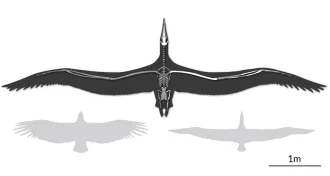
Fossils reveal largest airborne bird
Despite its massive size, an extinct bird may have been an efficient glider.
- Environment
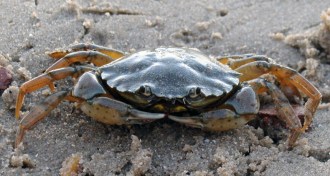
Microplastics lodge in crab gills and guts
Crabs can absorb microplastic particles through their gills and by eating polluted mussels.