Newborn screening for cancer risk could save lives. Should it be done?
Screening that IDs mutations in genes linked to cancer could give doctors a head start on treatment
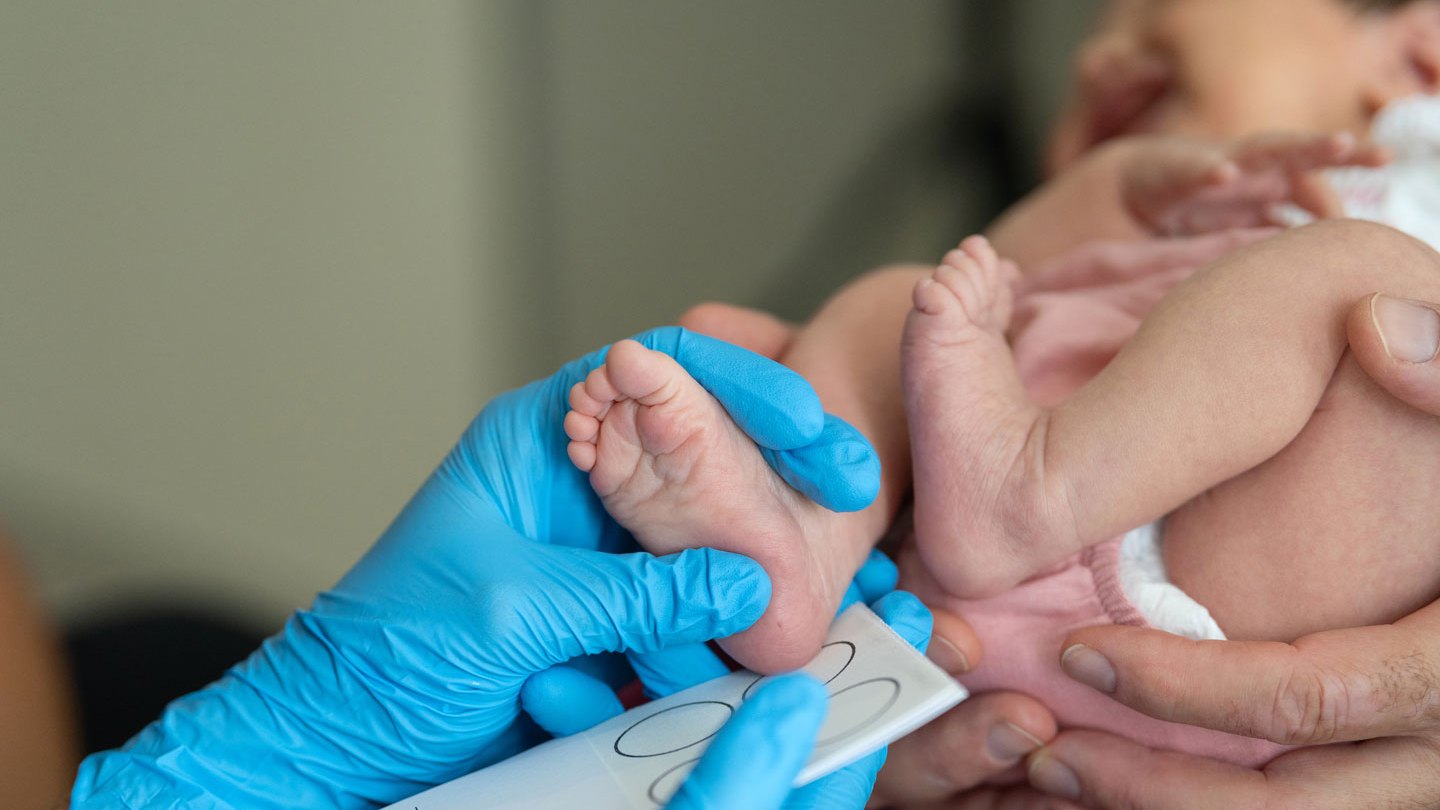
Newborns in the United States are screened for dozens of conditions using blood taken from a heel prick shortly after birth. But today’s screenings don’t look for cancer risk.
Abraham Gonzalez Fernandez/Moment/Getty Images
Daniel Oakes was 2½ years old when his mother noticed an unusual glow in his eye.
When he moved his head, Daniel’s right pupil shone white, like a bleached-out version of the red-eye effect sometimes seen with flash photography. That shining spot turned out to be a sign of cancer — retinoblastoma, a disease that’s fatal if not treated. “By the time we got his diagnosis, his whole right eye was nothing but tumor,” says his mother, Brittany Oakes. His left eye, doctors discovered, was also riddled with disease.
Daniel went through months of treatment, including chemotherapy, radiation and surgery. Doctors ultimately had to remove both of his eyes and replace them with prosthetics. Daniel’s family found out that he had been born with a rare genetic mutation that gave him a roughly 90 percent risk of eye cancer. His sister, Eveyana, born three years later, carried the same mutation. But her story was different.

Genetic testing at 6 weeks gave doctors a jump on Eveyana’s treatment. They monitored her eyes, zapping away tumors when they began sprouting. Cancer never advanced, and Eveyana avoided much of what her brother endured. “She never got chemotherapy, she never got radiation,” and cancer never took her vision, says Lisa Diller at Dana-Farber Cancer Institute and Harvard Medical School in Boston, a pediatric oncologist who works with the family.
Two kids. Two cases of cancer. Two vastly different outcomes. Their experiences illustrate the power of newborn screening for retinoblastoma, Diller says. Newborn screening for this or any cancer risk is not routinely offered, but doctors including Diller are looking to change that. For certain cancers, such screening could identify at-risk children early, before the first whispers of disease, preparing doctors to pounce on any emerging tumor. Once cancer has crept throughout the body, treatments tend to be more aggressive, with long-term side effects.
The push is part of a larger, global effort to expand newborn screening for genetic disorders more generally. Across the board, there are open questions about what conditions should be included. But screening for cancer can be especially tricky because some cancer-linked genes carry only a low risk of disease, says Richard Parad, a neonatologist at Brigham and Women’s Hospital and Harvard Medical School.
Say your baby girl has a gene variant that gives her a 15 percent risk of cancer. There’s an 85 percent chance she’ll be fine, Parad says. Is that gene worth testing for? “That’s a hard question to answer,” he says. Scientists are currently debating the merits of such tests; they’re also figuring out how to communicate risk to parents. For some cancers, including Daniel’s, the benefits of genetic testing are clear. For others, not so much.
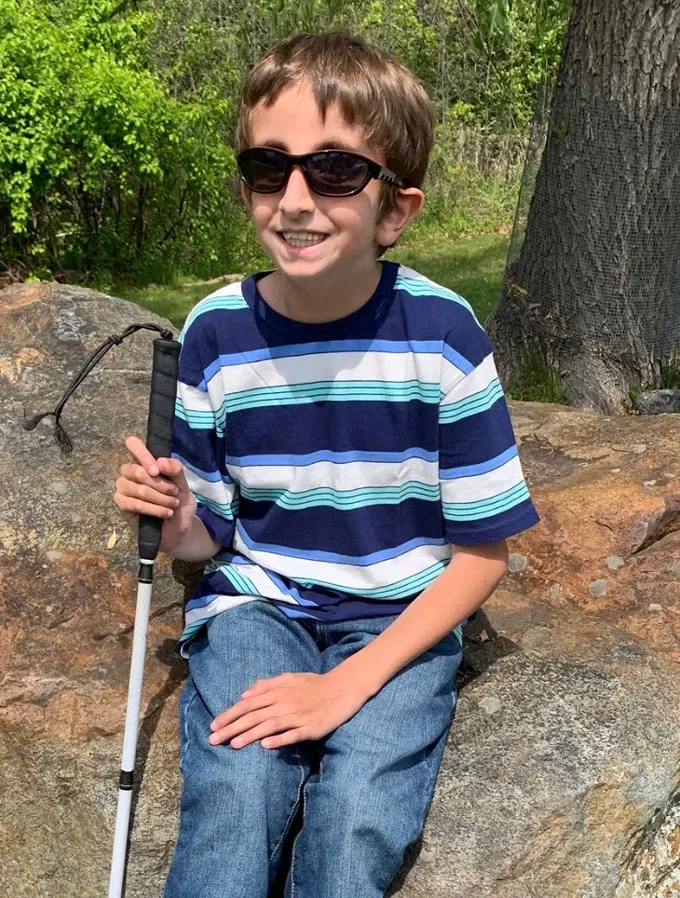
Daniel is doing well now, buzzing through school, competing in track meets and playing video games like other 14-year-old boys. He relies on sound cues and controller vibrations to navigate games on his PlayStation, and his parents have to remind him to use his cane at school. Blindness hasn’t seemed to slow Daniel down much, his mom says.
Still, although Oakes tries not to dwell on it, she sometimes wonders what life would be like had genetic testing been available for Daniel. She’ll think to herself, “Man, why couldn’t we have had this?”
What to screen newborns for
Federal guidelines in the United States recommend that newborns be screened for 40 core conditions at birth; those tests can also turn up 26 other conditions. The actual number each infant is screened for varies by state: It’s 66 in Massachusetts, where Daniel was born, 75 in California and Connecticut, 35 in Vermont and 36 in Kansas.
A day or two after birth, nurses prick babies’ heels and collect a few drops of blood on a card. Those blood spots contain loads of chemical compounds that stack up into a ziggurat of health information and can reveal whether a child has a specific disease.
In many cases, the benefit of such screening is obvious. Take phenylketonuria, which doctors began testing newborns for in the 1960s. In babies with the disease, a certain protein building block amasses to toxic levels in the body. Left untreated, this can cause brain damage. Yet treatment is straightforward: a low-protein diet that limits the troublesome building blocks.
There are all sorts of rare diseases like this with available treatments, says medical geneticist David Bick of Genomics England in London. Diagnosing babies at birth can change the course of their lives — and even save them. “Newborn screening has been perhaps the most successful public health initiative in the world,” he says.
Yet there’s a lot of data that remains untapped, much of it in babies’ DNA. In deciding what screenings might be added, medical geneticist Sharon Plon points to three key considerations. The condition must be serious, there must be some sort of treatment available, and the test must be cost-effective, says Plon, of Baylor College of Medicine and Texas Children’s Hospital in Houston.
Several cancers could fit the bill. In a project with Alex’s Lemonade Stand Foundation for Childhood Cancer, a national nonprofit based in Wynnewood, Pa., Plon, Diller, Parad and their colleagues are developing a new test that would screen for cancer risk. Presented in April at the annual American Association for Cancer Research meeting in San Diego, their approach includes a panel of nine genes implicated in childhood cancer. These cancers have clear patient monitoring recommendations in early childhood, Plon says. If a child tests positive, doctors have a plan — as in Eveyana’s case, where a mutation in her RB1 gene prompted regular eye exams and timely treatment of burgeoning tumors.
Diller and Parad tested a similar gene panel using archived dried blood spots from nearly 2,000 Michiganders born from 1987 to 2020 and known to have malignant childhood tumors. The panel identified nearly 7 percent of the kids who would develop cancer by age 8, the team reports August 12 in Nature Communications.
That number might sound tiny, Parad says. But it would translate to roughly 1,000 babies born in the United States every year who would develop cancer as children. “We could find them before they have a problem,” he says. And that could help doctors detect and treat the cancers early, so the kids could avoid the toxic treatments that often come with a later diagnosis.
Wendy Chung, a clinical and molecular geneticist at Boston Children’s Hospital, says she’d love to see more data, like how many babies born with abnormalities in these genes don’t go on to get disease. Unpublished data from Chung’s team suggests that cancer risk estimates associated with certain gene variants may be overestimated.
One of the risks of newborn screening for cancer, Chung says, is that it could lead to as anxiety about test results, as well as follow-up testing that may prove unnecessary.
Similar questions are currently thrumming in Plon’s mind: “How much screening and stress are we going to put the families through?” And: “How well do we know these genes and their cancer risks?”
In 2027, the researchers hope to launch a clinical trial in Boston and Houston. They plan to approach up to 10,000 parents of newborns about screening with either a nine-gene cancer panel or a more focused two-gene test. Both tests include RB1, the gene mutated in Daniel’s and Eveyana’s cancers, and WT1, or Wilms tumor 1, another well-described gene that carries childhood cancer risk. The larger panel also includes cancer genes that extend risk into adulthood.
Plon and her colleagues want to understand what goes into parents’ decision to test their children or not, and plan to track parents’ feelings before and after receiving results. The team will also create educational materials on the tests’ risks and benefits. Diller hopes their study will guide implementation of newborn screening for cancer for larger, potentially statewide trials in the future.
Looking to the genome
Other efforts are looking beyond cancer to capture potentially useful health information from a newborn’s entire genome. The GUARDIAN study, led by Chung out of New York City, has used whole-genome sequencing to screen more than 25,000 newborns for over 450 genetic conditions, including genes associated with multiple endocrine neoplasia and retinoblastoma, the cancer Daniel had. GUARDIAN aims to find babies with these conditions, in many cases so treatments can start early. “Parents want this information,” Chung says.
Chung also hopes to pin down the disease risk tied to different genetic variants. Some mutations may be completely benign, she says. That’s important information because it will help scientists better understand how to balance the benefits of testing with the potential harms.
In a similar effort, the National Institutes of Health–funded BEACONS project plans to screen up to 30,000 infants in seven states and territories. In March, the project reported the list of nearly 800 different conditions and the accompanying genes it will test for, including 19 genes linked to cancer.
Genomics England, in partnership with the National Health Service in England, is leading another, larger study. The Generation Study aims to read the whole genomes of 100,000 newborns in England. Bick’s team will examine genes linked to more than 200 different treatable conditions that usually appear in the first years of life, including the cancers retinoblastoma, multiple endocrine neoplasia, which can cause thyroid cancer, and Wilms tumor, an aggressive kidney cancer that typically emerges in toddlerhood.
One of the study’s main goals, Bick says, is to find out if such testing leads to better health outcomes; scientists will follow each screened child until they’re at least 16. Long-term studies like this should, over time, reveal how many people identified through screening go on to get certain diseases.
“Newborn screening has been perhaps the most successful public health initiative in the world.”
David Bick
medical geneticist
Even once such questions are answered, cost may remain a barrier. “Whole genome sequencing is great,” says Plon, “but it is still way too expensive.”
It can run hundreds of dollars, making it too costly for state budgets. Take Texas, Plon says, where about 400,000 babies are born every year. “There’s no way that a state can afford 400,000 whole genomes,” she says.
The slimmed-down approach from Plon, Diller and Parad would be less expensive, costing around $50. They hope the lower cost might let states adopt such a test sooner than whole-genome sequencing. “Our goal was to try to speed things up,” Plon says.
The team’s approach diverges from other efforts plumbing more of the genome, but that’s not a bad thing, Bick says. Each newborn screening study around the world is doing things a bit differently, he says. “We have to find out what works and what doesn’t.”
How any push for expanded screening would play out in the United States is far from certain. Last year, the Trump administration disbanded the committee that recommends which disorders should be added to the federal newborn screening panel. That committee examined scientific evidence and evaluated which conditions should be screened for, making it a good resource for states, says Parad, who now foresees even more state-to-state variation.
The researchers are also aware that any new screening could come with additional hurdles for families. Even if states do add cancers to their panels, the necessary treatment might not always be accessible. And early detection and treatment don’t guarantee survival, Diller notes.
Still, Diller says, in certain cases, the benefits will outweigh the risks. It’s an issue she’s been thinking about for more than 30 years, since her early days in medicine. She sees many kids who undergo aggressive treatment like radiation and later go on to develop tumors caused by that treatment.
From the beginning, Diller was sure that doctors could find a way to identify babies at risk for retinoblastoma, like Daniel, and intervene early with less arduous therapies. She says most of her colleagues told her that genetics would be the answer. “But,” she says, “who knew it would take this long?”