Smithsonian secrets most likely to blow your mind
Get a behind-the-scenes look at a vast museum collection open only to select visitors
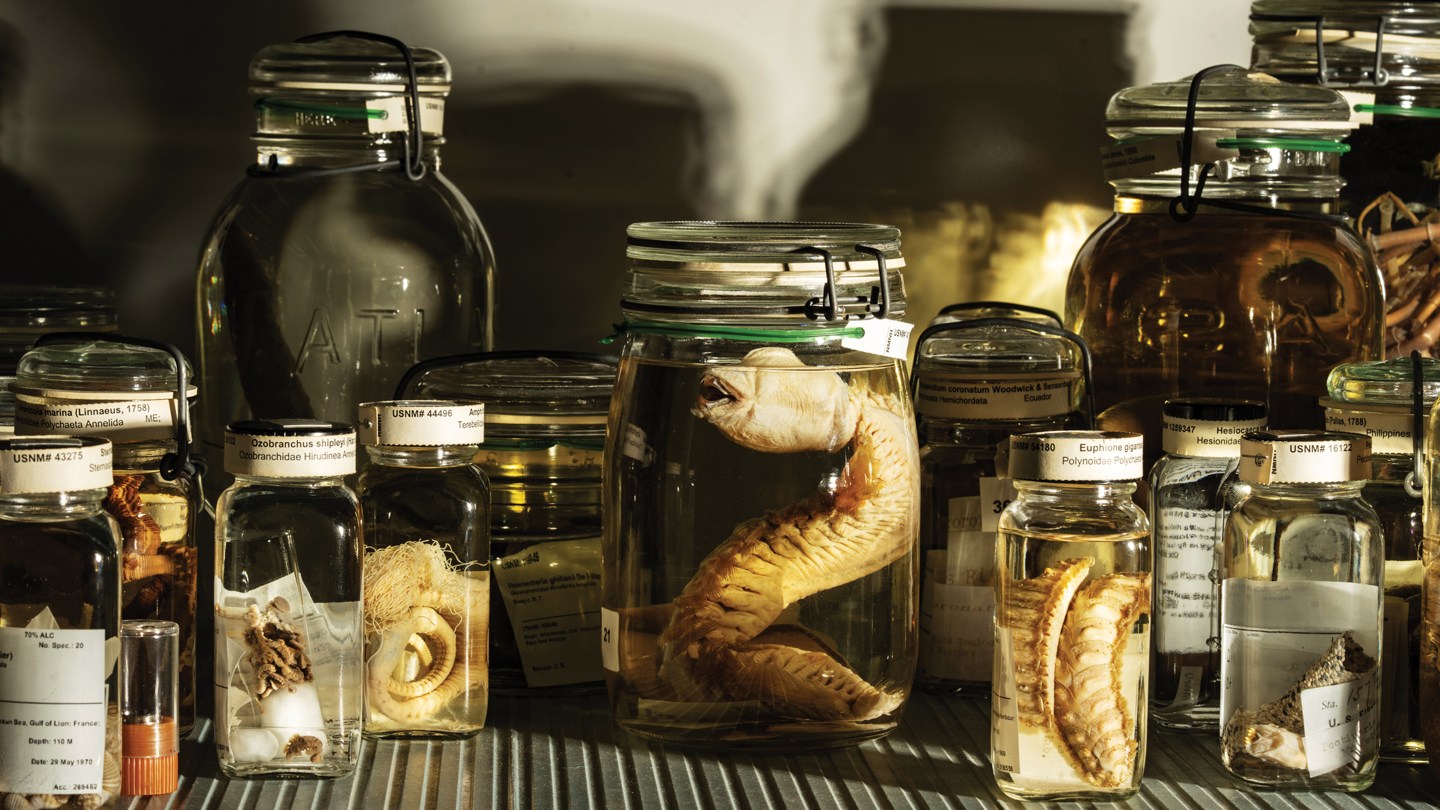
The Smithsonian Museum Support Center houses nearly 150 million items, including giant worms preserved in alcohol.
Stephen Voss
This is a human-written story voiced by AI. Got feedback? Take our survey . (See our AI policy here .)
Text By Meghan Rosen
Photos By Stephen Voss
Meteorites billions of years old, alienlike worms, a blue whale’s massive jaw bones. These are just some of the millions of marvels that the Smithsonian Institution has stashed away in storage.
Most are part of the National Museum of Natural History’s collection, which comprises nearly 150 million objects. It’s not all bones and rocks, though. The collection holds a spectacular array of biological, geological, astronomical and cultural items, some seemingly unassuming and others with undeniable razzmatazz. At the Smithsonian Museum Support Center in Suitland, Md., you’ll find both the world’s biggest mosquito collection and resplendent feathered ornaments worn by people in what is now Papua New Guinea.
Most people have never seen this vast collection of astonishing objects, the majority of which lie tucked away in gigantic storage pods. The center is not open to the public, but Science News was able to get a behind-the-scenes peek. Inside the MSC’s hushed halls, rows of cream-colored cabinets and kilometers of shelving evoke an above-ground catacomb. Scientists led us through long corridors, pointing out prime specimens along the way. Stuffed pink fairy armadillos, narwhals’ spiraling tusks, twist tobacco used in trade during a trip to the Solomon Islands and Fiji in the early 1900s; we saw and touched an abundance of real-world treasures that captivated the mind and the eyes. Some items even engaged the nose, like a freeze-dried crabeater seal exuding an aroma of burnt soy sauce.
But the center is not just a giant storage unit — it’s a place scientists visit to do research and answer big questions about Earth and its inhabitants. Forget the stereotype of museums being old and dusty, says Kirk Johnson, director of the National Museum of Natural History. They’re “vastly more vibrant and more important” than people think, he says.
The Smithsonian opened the MSC in 1983 to ease overcrowding at the natural history museum’s main building on the National Mall in Washington, D.C. The center’s five storage pods are each about the size of a football field and nearly three stories tall. A sixth pod is in the works. One key goal: Protect the specimens.
Beyond controlling the pods’ climate and keeping out pests, the team has security guards on patrol 24/7. The big concerns are power outages, floods, flames, evaporation and explosions. Capacious freezers need power to keep tissue and DNA samples ultracold; dried specimens can be damaged by fire and water; wet items in alcohol-filled jars are at risk of drying out — or blowing up.
Items in the MSC are part of a “forever” collection that is available for study today and in the future. Scientists are now, for instance, analyzing DNA from an African elephant thought to hail from a population that has long evaded humans. And previous work on bird eggs collected decades ago helped reveal that the insecticide DDT built up in shells and thinned them, nearly driving some species — including the bald eagle — to extinction. “There’s a cloud of knowledge about the planet that exists only because we have collections in museums,” Johnson says.
And the scientists who work here are passionate about the knowledge these pods hold. As we’d move from one area to another, staff members would race to show us “just one more thing!” — like a coil of feathered money traditionally used for dowries in the Santa Cruz Islands in the South Pacific. All those items stowed at the MSC or on display at the natural history museum represent everything that we know about the planet, says Rebecca Johnson, the museum’s chief scientist. “This is the record of the world.”
In an age of AI, when it can be difficult to tell truth from fiction, the MSC’s treasures let us see and touch and smell and study our planet’s reality. “People still want to know what is real,” Rebecca Johnson says. “This is the place where we have the real thing.”
Let’s go on a field trip
Our private tour of the Smithsonian Museum Support Center introduced us to a colossal cache of charismatic objects. We saw items that dazzled and gave us chills. We wanted to photograph everything. In a place that’s home to more than 100 million objects, how do you pick what to feature?
We selected items from around the world, with an eye for specimens that stood out in size or peculiarity, or those that came with an intriguing backstory. We could fill entire issues with photos and histories of these items. But come meet our favorites.
Most Likely to Haunt Your Dreams
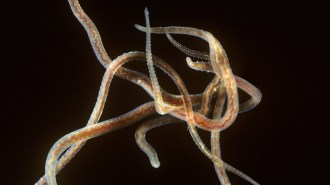
The Antarctic scale worm
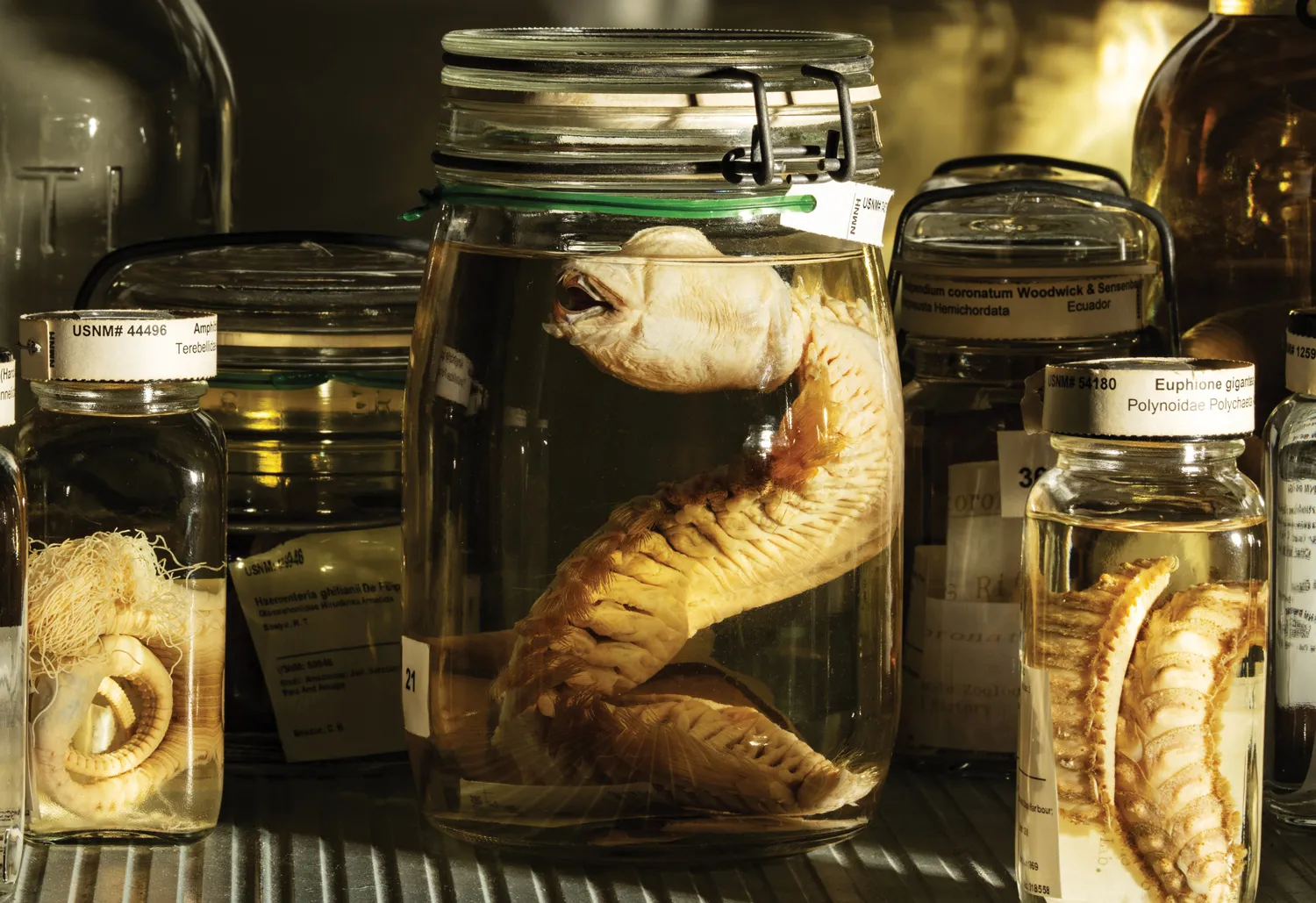
No, this giant worm (Eulagisca gigantea, center) didn’t moonlight as a character in the sci-fi movie Alien. But with its retractable mouth and toothed jaw, it looks like it could play the part. Don’t worry; these worms typically live on the sea floor, so you probably won’t encounter one in real life. This specimen is part of the Museum Support Center’s wet collection.
Most Likely to Strip the Flesh from Your Bones
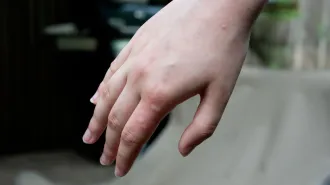
The hide beetle
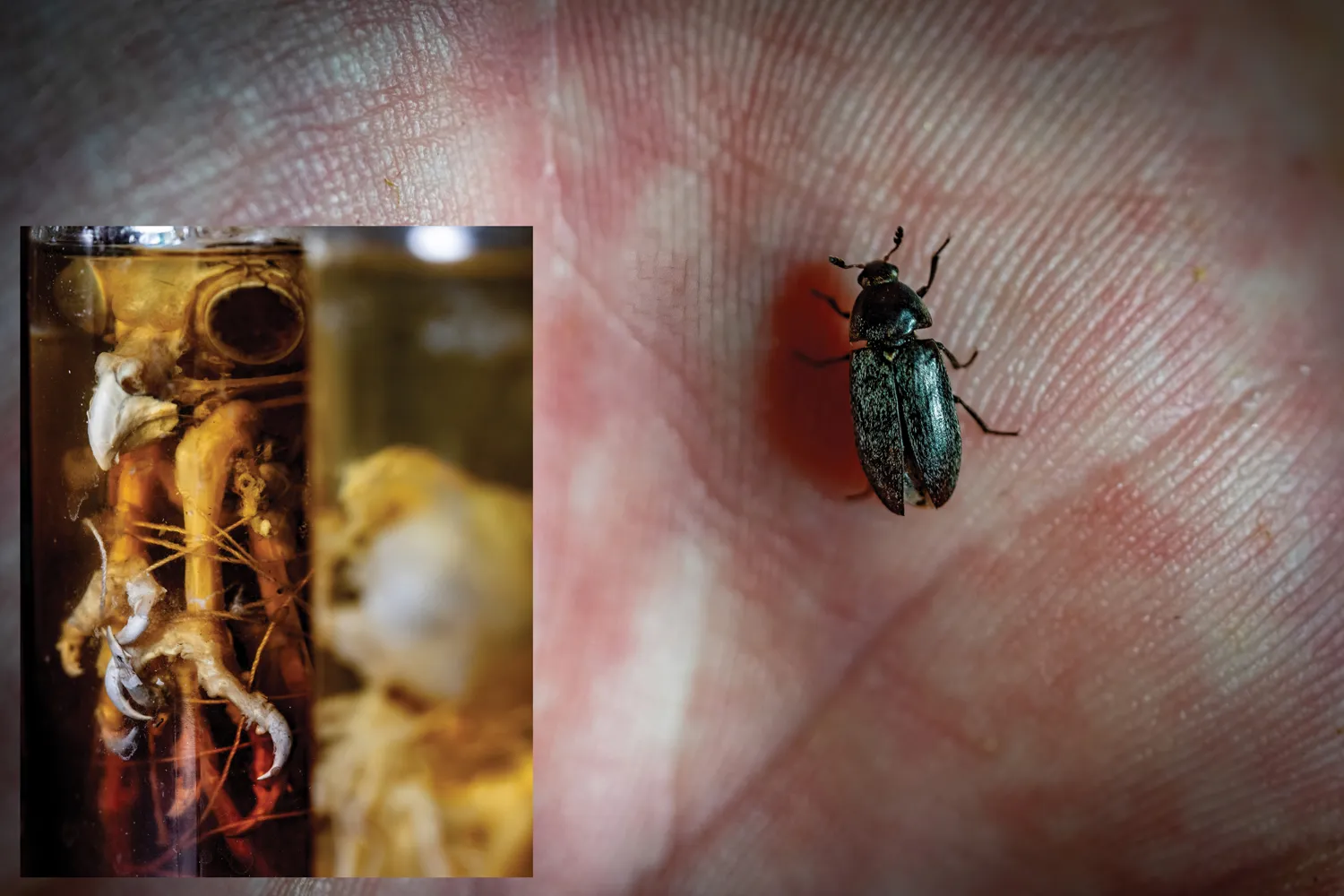
Flesh-eating beetles might sound terrifying, but they feast on the dead rather than the living. And it’s the larvae that do most of the meat-eating, anyway, says osteological specimen preparator Inger Toraason. So this hide beetle (Dermestes maculatus) on Toraason’s hand poses no danger of chowing down.
In fact, the insect and thousands of its buddies are closer to colleagues than specimens. They help clean animals’ bones, eating tissue off specimens that are being prepped for the museum’s collection. It’s a big job: The beetles cleaned 429 skeletons in 2025. They can strip a hummingbird’s bones in less than a day. A whale skull might take months. Beetle-cleaned bones then go through several more steps. Toraason will pick off any remaining flesh by hand and soak the bones in a degreasing solution, as with this skeleton of a little owl (Athene noctua, inset).
If Toraason and colleagues didn’t have the beetles, they could simply let flesh rot away in water. But that’s a long process that leaves behind just a pile of bones. With the hide beetles, the team gets a skeleton that’s intact, connective tissue still in place. The beetles are “our little unsung heroes of the museum,” he says.
Most Likely to Keep Calm and Carry On
A North Atlantic right whale
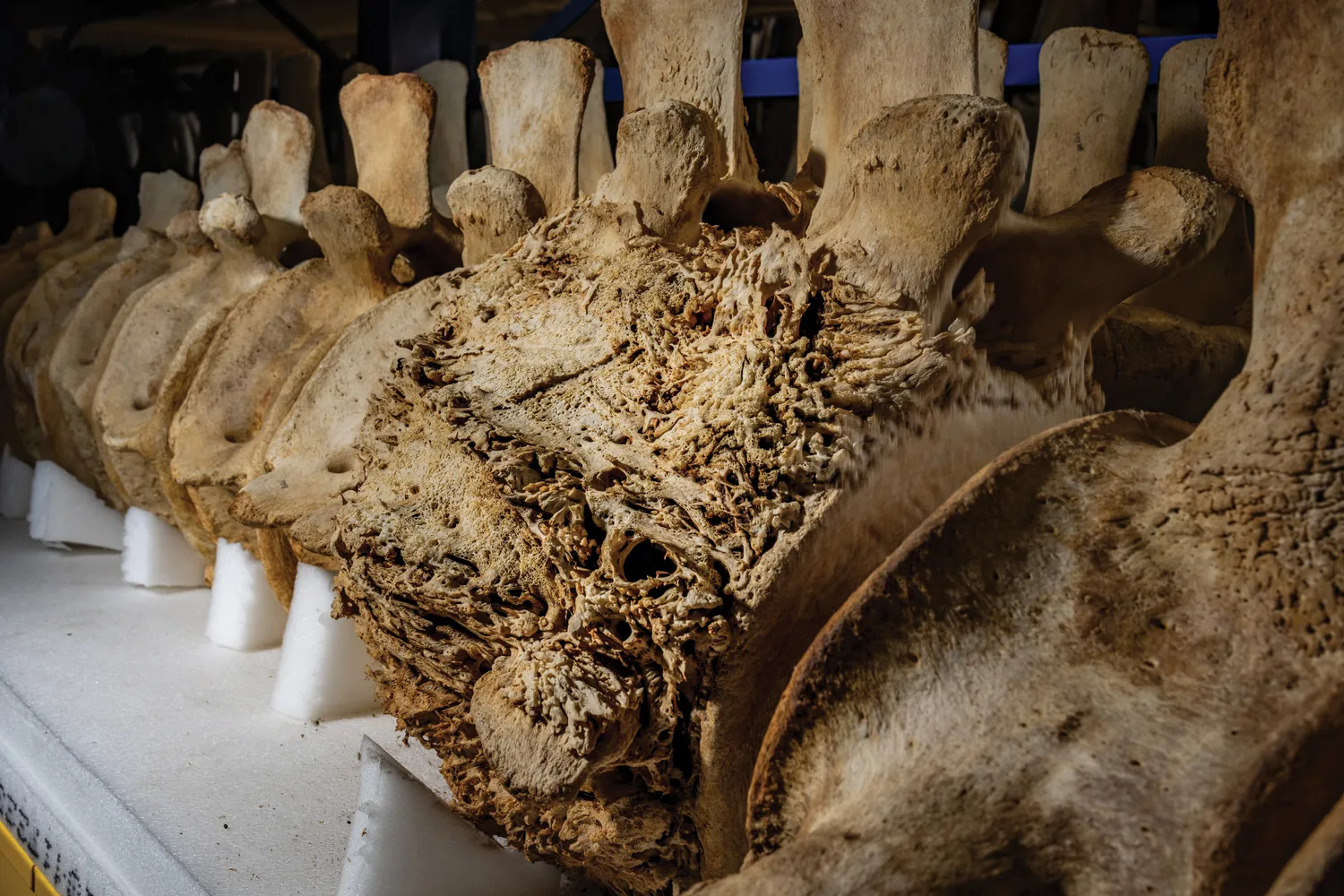
This bizarre-looking backbone belongs to Tips, a 14-meter-long North Atlantic right whale (Eubalaena glacialis) that appears to have survived a collision with a ship. Squiggles of bone protrude from one section of vertebrae, a sign that injured tissue didn’t heal cleanly. Tips died in 2010, possibly from getting entangled in fishing gear. Entanglements and ship strikes threaten North Atlantic right whales, an endangered species with fewer than 400 individuals.
Biggest Stinker
The tongue orchid
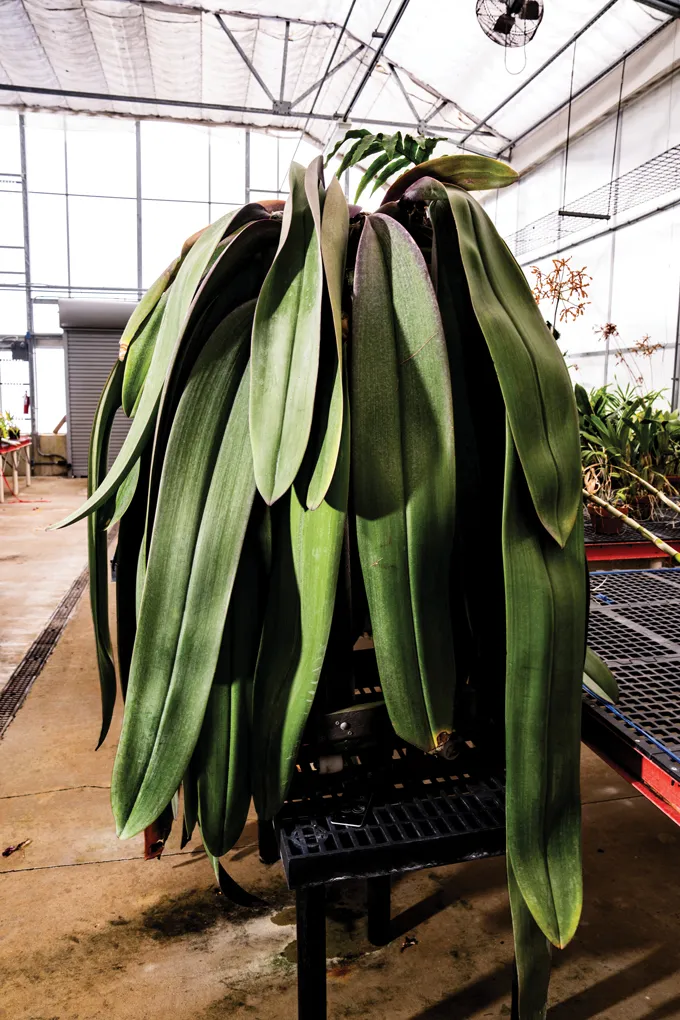
This massive plant, part of the Smithsonian Gardens Orchid Collection, is an example of one of the largest orchid species on Earth.
Bulbophyllum fletcherianum has leaves that can stretch nearly 2 meters long. But it’s known for more than its epic foliage.
When in bloom, this orchid’s flowers emit the foul fragrance of fetid flesh. That scrumptious scent attracts pollinator insects such as blow flies or carrion beetles looking to lay eggs in dead and decaying animals.
Best Dressed
The pink fairy armadillo
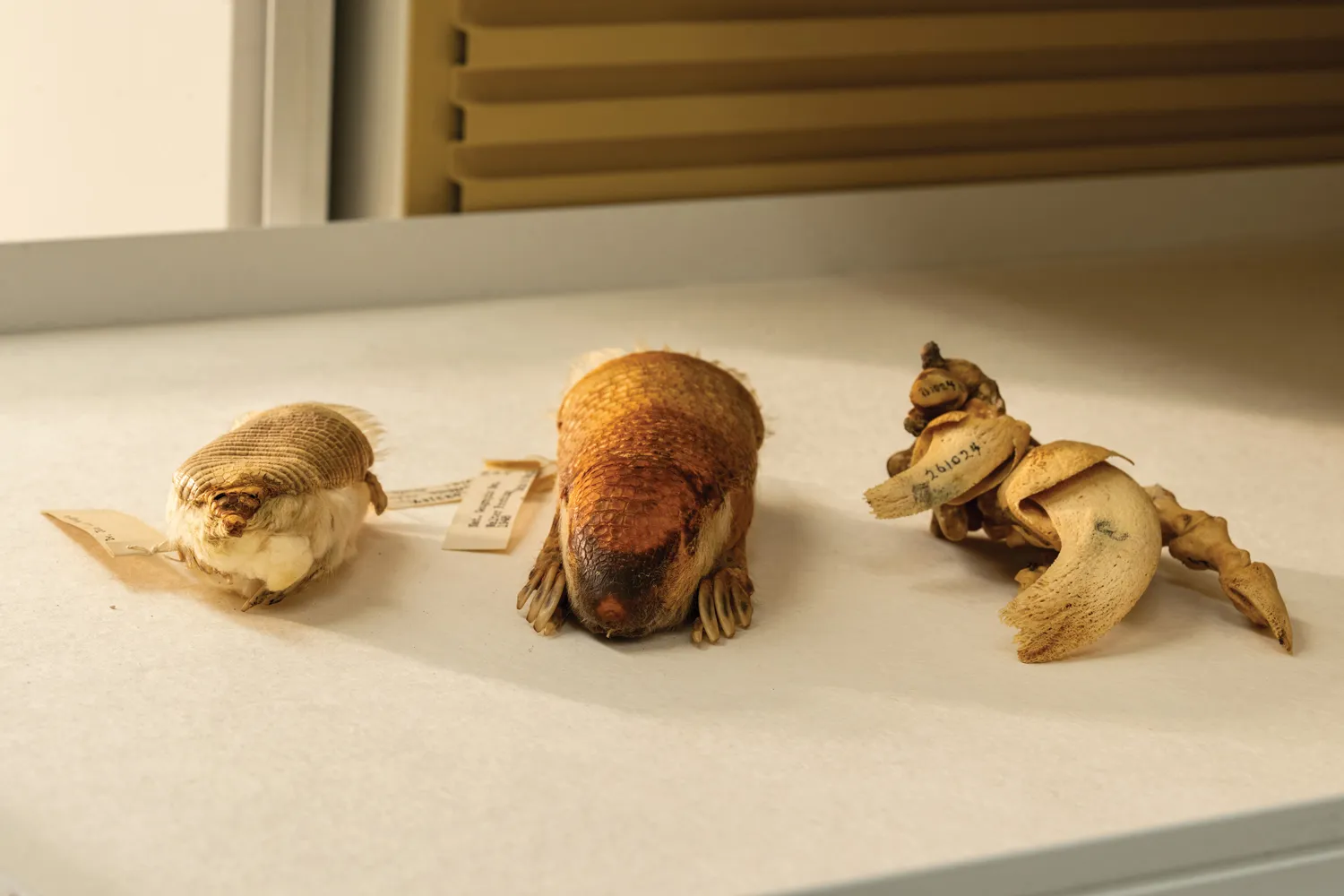
In life, this pink fairy armadillo (Chlamyphorus truncatus, left) would have been a fashion designer’s dream, with its pale pink shell and whitish fur. The shell gets its hue from blood vessels and may help the smallest armadillo species regulate its body temperature. Check out those oversized claws, used for burrowing. They grow even bigger in the greater fairy armadillo (Calyptophractus retusus, middle) and the giant armadillo (Priodontes maximus, claws shown, right).
Most Likely to Be Mistaken for A Mushroom
A Dracula orchid
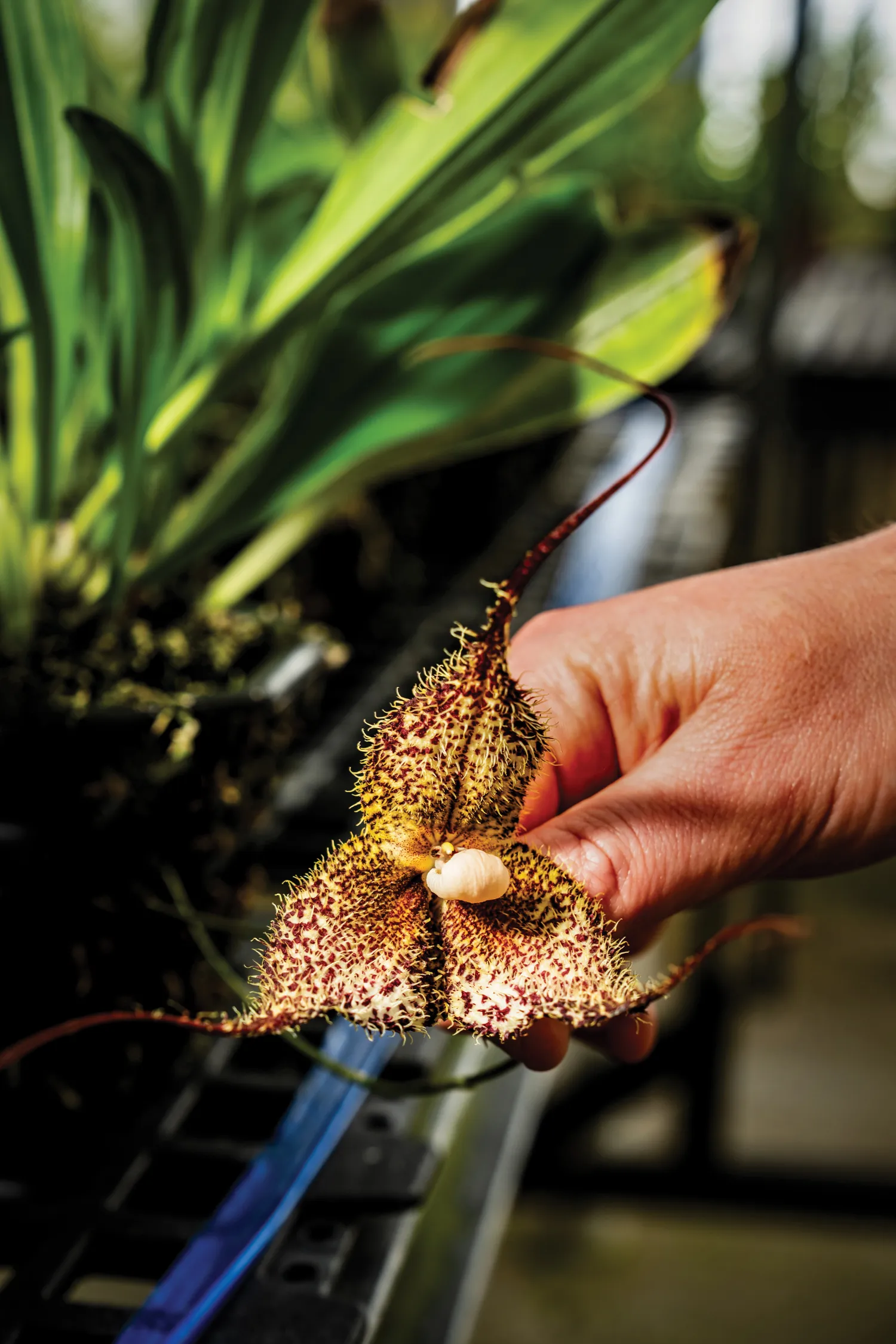
Known as a Dracula orchid for its blood-red coloring and long, pointy structures, this plant (Dracula chimaera ‘Pacifica’) can be found in Ecuador and Colombia.
To fungus gnats, the orchid’s blooms have the alluring odor of mushrooms. And they kind of look like them, too.
Fine ribs decorate the orchid’s central pouchlike petal, a feature that mimics the gills on a mushroom.
Biggest Buzzkill
The world’s largest mosquito collection
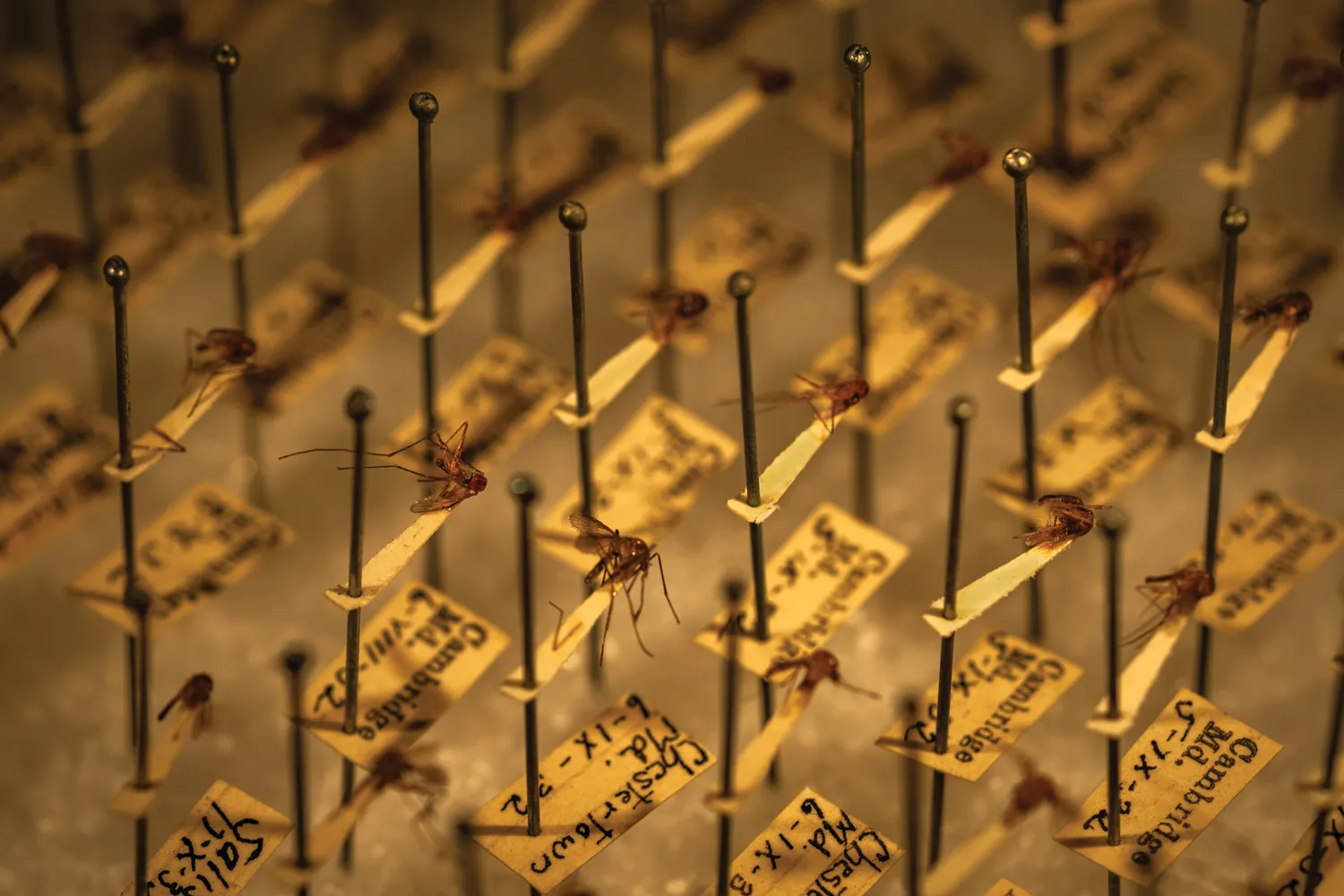
Boasting some 2 million specimens, the collection is the largest and most diverse in the world and includes an eye-boggling assortment of insects. These Uranotaenia sapphirina mosquitoes may not actually be much of a nuisance — to humans, at least. The blood suckers are among just a handful of modern-day mosquito species that feed on cold-blooded creatures such as earthworms or leeches, says entomology curator Yvonne-Marie Linton.
Most Likely to Make You Take A Closer Look
The wet collection
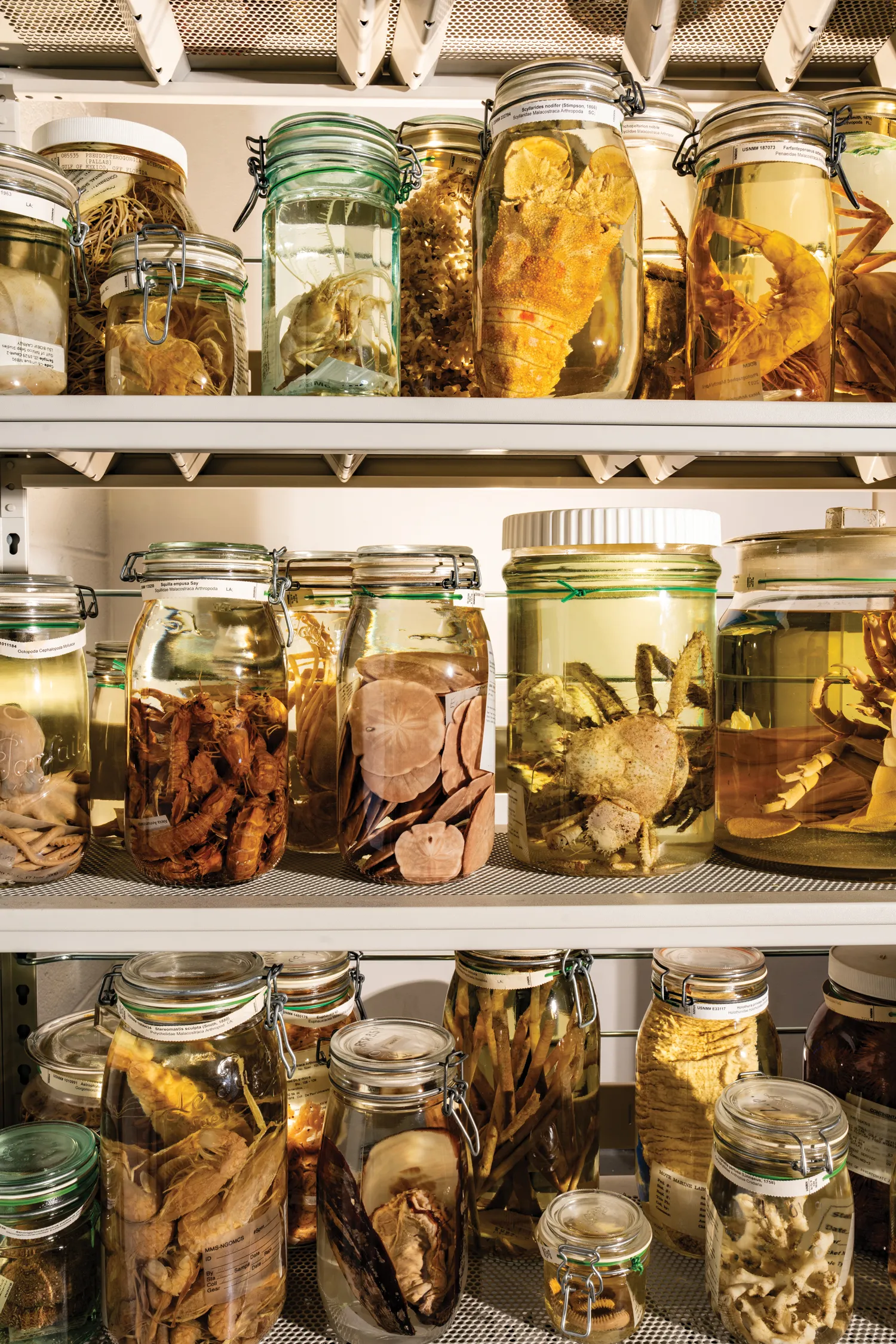
Resting in rows upon rows of jars, some 25 million specimens are preserved in fluids at the MSC.
Items including sand dollars, shrimp, coral, slipper lobsters and octopuses take up roughly 72 kilometers of shelving. That’s more than four times as long as trails to the bottom of the Grand Canyon. Most of these jars are filled with ethanol, nearly 2 million liters in total. All of the jars need to be topped off as the ethanol evaporates over time, so the specimens don’t dry out.
Most Likely to Make You Feel Very Small
The jaw bones of a blue whale
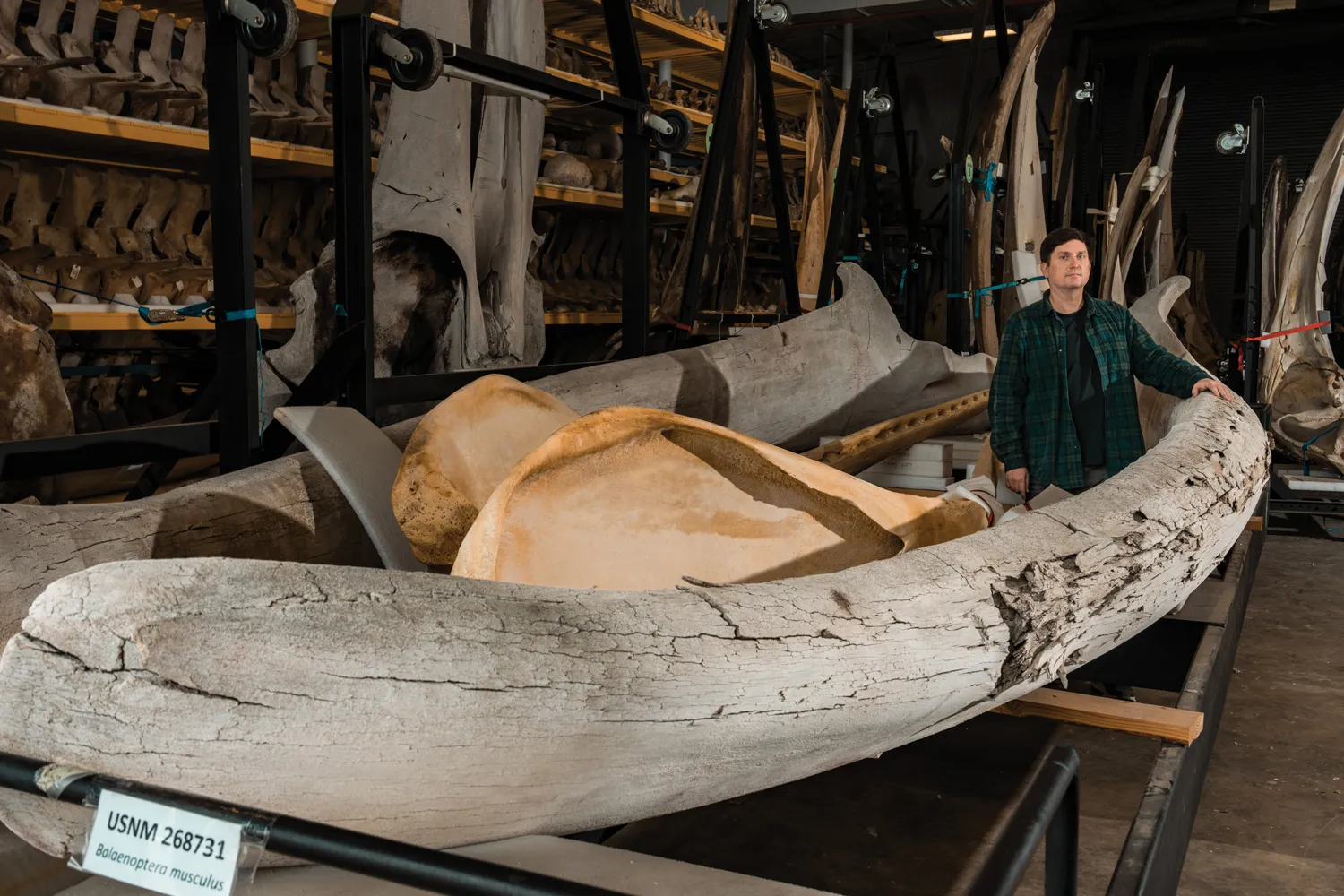
Marine mammals curator Michael McGowen stands inside the massive lower jaw bones of a blue whale (Balaenoptera musculus). An adult female, she once lived off the coast of Antarctica. Weighing in at 2 metric tons and measuring nearly 7 meters long, the jaws are the largest bones in the museum’s collection. Blue whale mandibles, in fact, are the largest bones of any animal ever. McGowen, who studies the evolution and genetics of whales and other cetaceans, says he loves coming to the Whale Bone Repository, a building big enough to house airplanes. “I’m always in awe,” he says.
Finest Feathers
Bird-of-paradise headdress ornaments
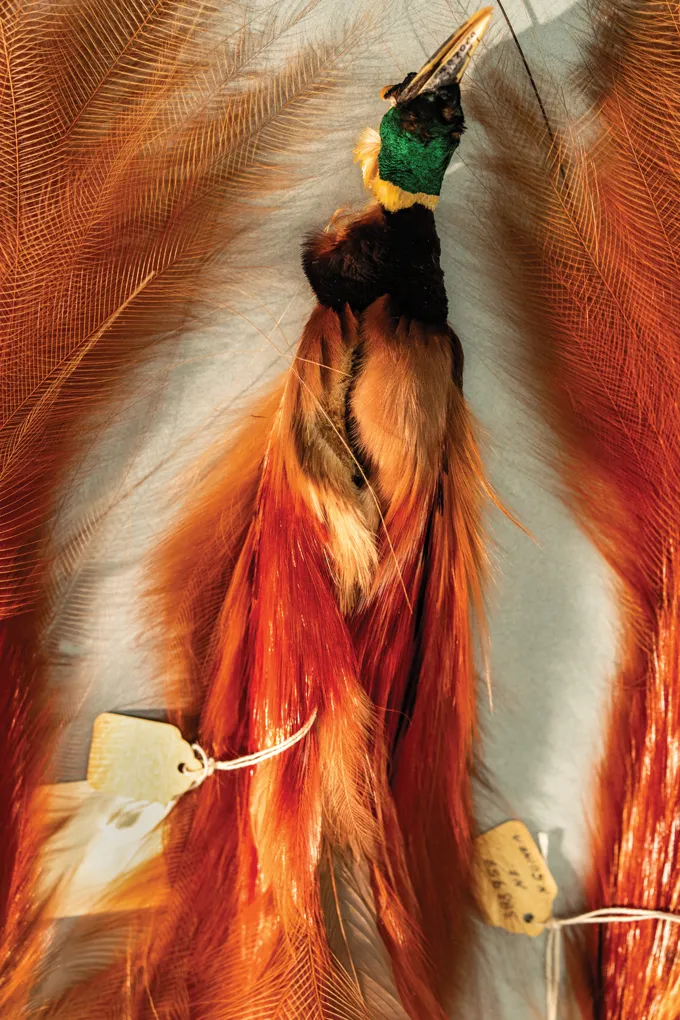
These vibrant ornaments, which came into the collection in 1946, were used in headdresses in what is now Papua New Guinea.
They’re made from Raggiana birds-of-paradise (Paradisaea raggiana) and they’re meant to move, says globalization curator Joshua Bell.
Men and sometimes women wore the ornaments while dancing in ritual performances. Glinting light and rapid motion would have blurred the red feathers, making it appear almost as if the dancers were transforming into birds themselves.
Most Likely to Ghost You
Henry the elephant
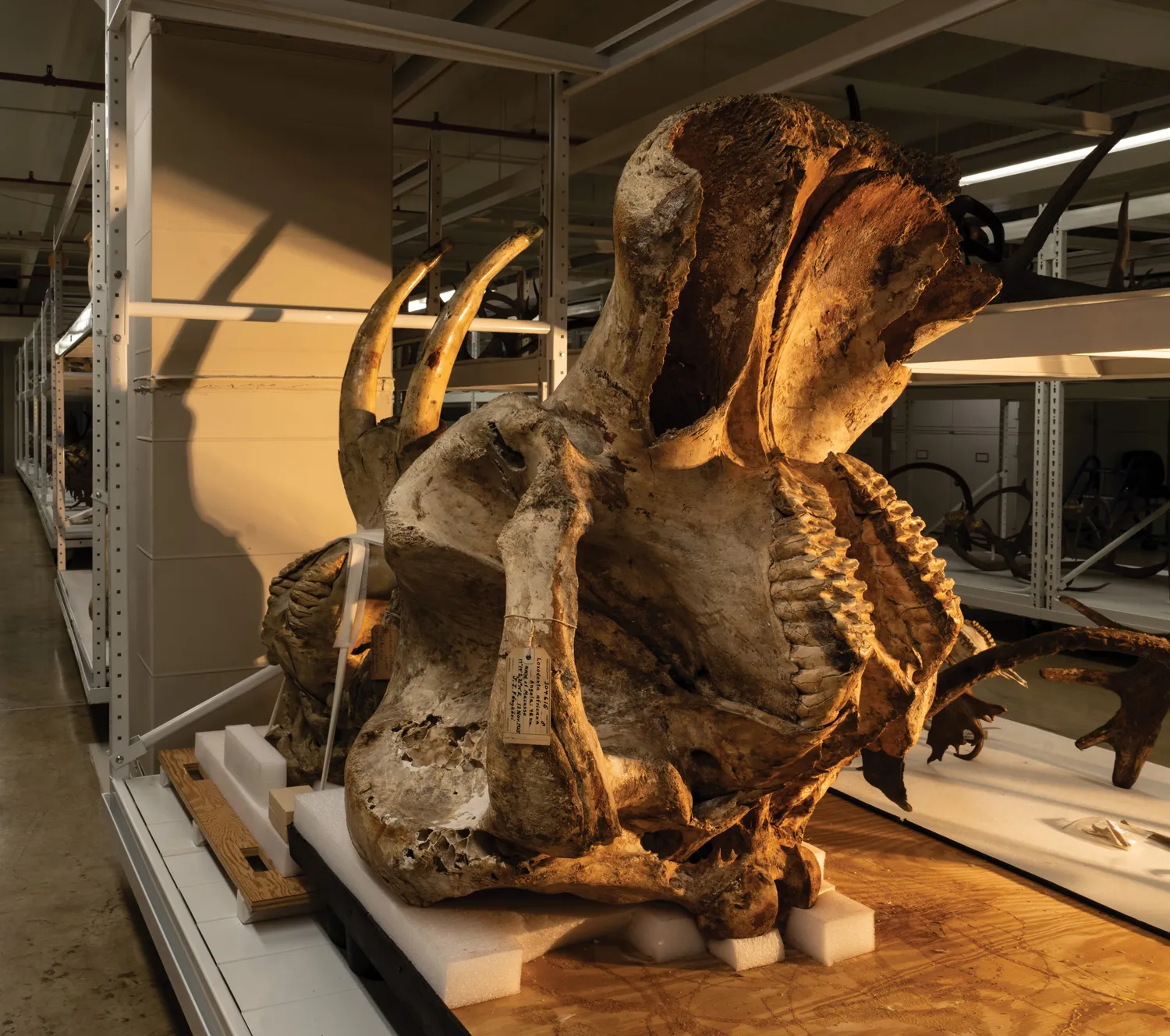
Inside the natural history museum in Washington, over 4 million people a year walk by a towering taxidermy mount: Henry, the African bush elephant (Loxodonta africana). Most visitors probably don’t know that his skull (shown) is actually stored roughly 15 kilometers away at the MSC. At an estimated 4 meters tall and 11 metric tons, Henry is the largest elephant ever placed in a museum collection. Researchers recently scanned his skin and hope to use that data to calculate Henry’s weight even more precisely, says chief scientist Rebecca Johnson. Henry may have belonged to a population of “ghost” elephants in Angola known for avoiding humans.