The last mile of fire tech: prevention
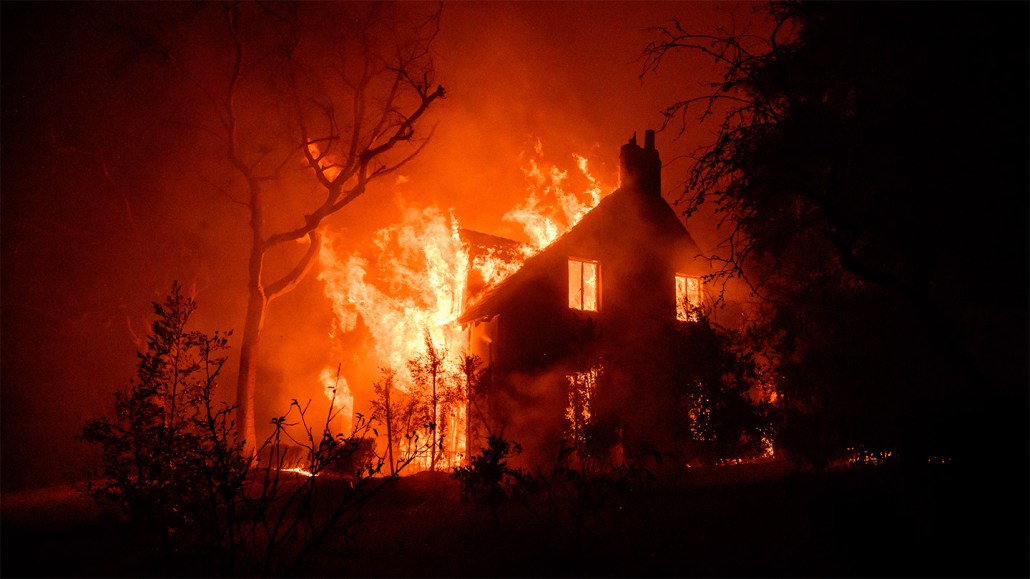
The Eaton fire killed 19 people and destroyed more than 9,000 buildings in January. It was one of the 14 wildfires that ravaged Southern California that month.
Josh Edelson/AFP/Getty Images
By Susanna Camp
We can’t outrun climate change. But we can do more to protect structures and make communities more resilient. This means moving beyond the reactive (putting out fires) to more proactive, structural defense. The latest research shows how communities that prioritize property “hardening” (bolstering resistance through planning and safety measures) are sidestepping disaster, cutting a path for specialized tech. SN’s Nikk Ogasa reports on how science is helping.
🪵Wind-driven hot chips
Most houses lost in a wildfire are destroyed not by a wall of fire but by windborne embers. These embers land on the most vulnerable parts of a home, such as cracked roof tiles, unscreened vents or dry mulch near the foundation. That’s why it’s important to keep flammable hazards such as sheds or mulch piles 10 to 15 feet (3 to 4.5 meters) away from homes. Homeowners and communities that prepare for fire resistance through this hardening tend to see a return on investment for their efforts.
🚒 Scaling resilience with algorithms to assess fire risk
It’s not an easy method to scale. Hardening protocols, while effective, require specific, granular assessments of every roof, gutter and fence line — a massive, nonscalable effort for human inspectors. This is where predictive AI tools and data mapping become critical. Companies are now deploying algorithms trained on high-resolution aerial imagery and geospatial data to instantly score a property’s vulnerability based on roof material, vegetation proximity and slope. This allows insurers, mortgage lenders and municipal governments to prioritize intervention and accurately price risk. For example, AI models can automatically flag every home in a high-risk neighborhood that still uses wooden deck material within five feet of the foundation, enabling targeted, efficient capital deployment for mitigation. This data-driven approach moves resilience from a boutique service to a standardized, scalable financial tool.
🔥 Investing in fire prevention
Platforms that commoditize risk assessment and mitigation are hot:
- Zesty.ai uses aerial imagery and proprietary AI model to assess specific hazard risk for the property and casualty insurance industry, scoring a property’s vulnerability down to the roof level, and allowing owners to potentially lower insurance premiums by taking preventative measures. The San Francisco–based company has raised over $60 million to date and recently announced a partnership with insurer California Casualty to enhance wildfire underwriting and pricing in support of California’s Sustainable Insurance Strategy, a state-run effort to modernize insurance regulations.
- Kettle: Focused on the reinsurance market (a.k.a. “insurance for insurance companies,” a mechanism for primary insurers to transfer portions of their risk to another party), Kettle uses high-resolution satellite imagery and machine learning to underwrite wildfire risk in real-time. Their model allows them to dynamically adjust policy pricing and offer coverage where traditional carriers retreat. Kettle recently secured a $25 million Series A round, validating the demand for AI-driven catastrophe risk capacity.
The future of property insurance won’t be won by better hoses, but by smarter algorithms.
Disclaimer: The Science News Investors Lab newsletter is for informational purposes only and does not constitute investment advice. Society for Science and Science News Media Group assumes no liability for any financial decisions or losses resulting from the use of the content in this newsletter. Society for Science and Science News Media Group do not receive payments from, and do not have any ownership or investment interest in, the companies mentioned in this newsletter. Please consult a qualified financial advisor before making any investment decisions.