6,913 results
6,913 results for: Bears
- Humans
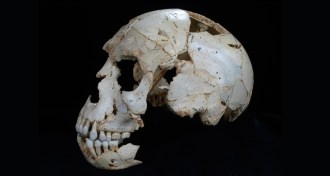
Skulls reveal Neandertal’s hodge-podge genealogy
A new analysis of ancient hominid skulls reveals a patchy anatomical start of the Neandertal lineage.
- Animals
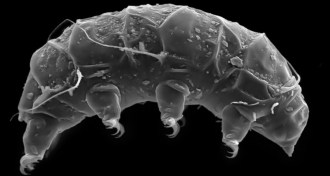
New water bear species found in Antarctica
A tiny creature called a tardigrade could shed light on how animals reached the far southern continent.
- Humans
Letters from the February 9, 2008, issue of Science News
Small, or just invisible? “Heavy Find: Weighty neutron stars may rule out exotic core” (SN: 1/12/08, p. 20) says that the companion star of the pulsar PSR B1516+02B must be “tiny” because it cannot be seen. Isn’t it possible that the companion is made of dark matter? Is there a “wobble” test or other way […]
- Anthropology
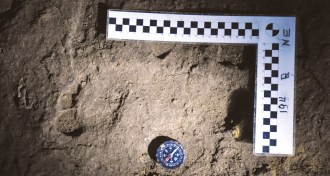
Romanian cave holds some of the oldest human footprints
A group of Homo sapiens left footprints about 36,500 years ago, not 15,000 as scientists had thought.
- Health & Medicine
Organic foods may contain extra antioxidants
Contrary to previous studies, a new analysis finds that organic crops have nutritional benefits over conventionally grown foods.
- Humans
Letters from the July 15, 2006, issue of Science News
People want to know “Sharing the Health: Cells from unusual mice make others cancerfree” (SN: 5/13/06, p. 292) reported that years ago it was discovered that certain male mice eradicate cancer cells and that white blood cells from these mice make normal mice cancer resistant. It also reported that it is superpremature to look forward […]
- Space
Exoplanet oxygen may not signal alien life
Oxygen in an exoplanet atmosphere may come from water and ultraviolet light, not alien life.
- Genetics
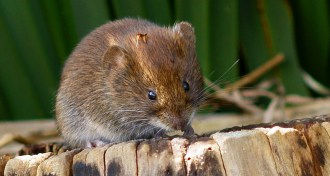
Bank voles provide clue to prion disease susceptibility
A protein from bank voles makes mice susceptible to disorders that wouldn’t otherwise infect them.
- Microbes
One giant leap for zit-causing microbes
A bacterium that lives on humans and causes acne also hopped to domesticated grapevines and relies on the plant for crucial DNA repairs.
- Astronomy
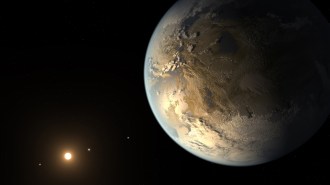
Earth-sized planet found in star’s habitable zone
Astronomers have found a potentially habitable Earth-sized planet around a cool red star.
- Ecosystems
Tracing Tahitian vanilla
The discovery of Tahitian vanilla’s heritage could set off a custody battle between nations.
- Life
How the snake got its fangs
A study of snake embryos suggests that fangs evolved once, then moved around in the head to give today’s snakes a variety of bites.