Archaeology
- Archaeology
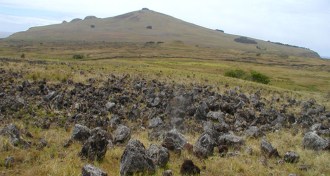
Stones challenge dating of Easter Island collapse
Despite losing ground in some areas, Polynesian farmers outlasted European contact.
- Health & Medicine
Online favorites of 2014
Science News' website traffic reveals the most-read news stories and blog posts of 2014.
- Archaeology
Ancient Egyptian blue glass beads reached Scandinavia
Chemical analysis of Danish discoveries extends northern reach of Bronze Age trade.
- Anthropology
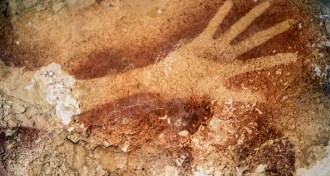
Year in review: Asian cave art got an early start
Stone Age cave painting began at about the same time in Southeast Asia as in Europe, challenging the idea that Western Europeans cornered the market on creativity 40,000 years ago.
- Archaeology
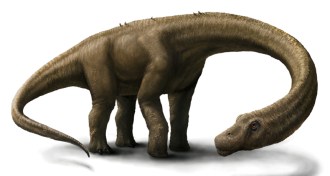
Year in review: Roster of dinosaurs expands
With the discovery of several new species and a few dogma-shaking revelations, dinosaurs got a total rethink in 2014.
- Archaeology
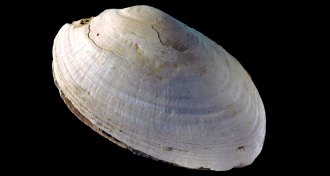
Human ancestors engraved abstract patterns
Indonesian Homo erectus carved zigzags on a shell at least 430,000 years ago.
- Archaeology
Magnetism paved way for excavation without digging
In the 1960s, archaeologists used a new technique to locate and map a submerged Greek city without digging.
- Archaeology
Genetic tests confirm remains are those of King Richard III
DNA evidence has finally confirmed that remains found beneath a parking lot in Leicester, England, are those of King Richard III.
- Archaeology
Golden Fleece myth was based on real events, geologists contend
Jason’s legend grew out of long-distance trade with people who used sheepskins to collect gold.
- Archaeology
Barley elevated Central Asian farmers to ‘the roof of the world’
Hardy western crops allowed villagers to settle in the cold, thin air atop the Tibetan Plateau.
- Archaeology
Feedback
Readers ask questions about a study on sweeteners, how scientists recognize primitive tools and the purpose of a dinosaur's sail.
- Animals
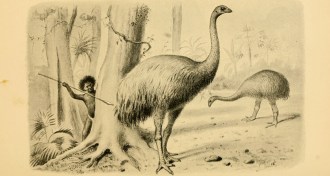
Few humans were needed to wipe out New Zealand’s moa
A new study finds that the Maori population was still small when it managed to drive several species of large, flightless birds extinct.