Physics
Physics explains why gold stays pristine
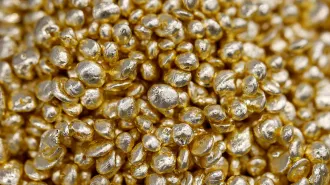
Metals like copper oxidize — reacting with oxygen in the air — but gold doesn’t, thanks to a quick switch in atom arrangement on its surface.
Every print subscription comes with full digital access
Metals like copper oxidize — reacting with oxygen in the air — but gold doesn’t, thanks to a quick switch in atom arrangement on its surface.
We summarize the week's scientific breakthroughs every Thursday.
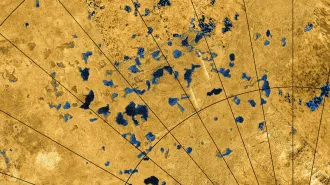
An experiment mimicking conditions on the Saturn moon suggests that cell-like bubbles don’t form in methane lakes, puncturing hopes for alien life.
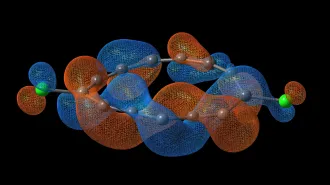
A molecule made of carbon and chlorine is half as twisty as the paper loops common in math classes.
The framework predicts how proteins will function with several interacting mutations and finds combinations that work well together.
New U.S. dietary guidelines promote eating full-fat foods and meats. But experts say nuts and seed oils are better sources of the two crucial fats we need.
When infected by a fungal disease, ant pupae actively emit a chemical cue that prompts workers to get rid of them for the good of the colony.
A closeup look at colibactin’s structure reveals chemical motifs that guide its mutation-wreaking “warheads” to specific stretches of DNA.
Simple chemistry could give the reindeer his famously bright snout. But physics would make it look different colors from the ground.
An AI tool trained on chemical signatures from corpse-eating insects may help determine time and place of death for victims of violent crimes.
The open-source AI model improves transparency in predicting how proteins interact with other molecules, which could speed up drug discovery.
Subscribers, enter your e-mail address for full access to the Science News archives and digital editions.
Not a subscriber?
Become one now.