Life
We summarize the week's scientific breakthroughs every Thursday.
- Neuroscience
A rare mutation helped one man stave off Alzheimer’s for decades
The brain of a Colombian man with an inherited form of Alzheimer’s may hint at ways to halt or slow the progression of the disease.
- Animals
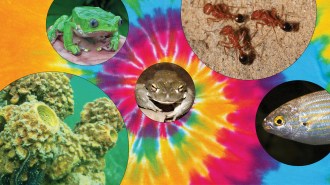
The Sonoran Desert toad can alter your mind — it’s not the only animal
Their psychedelic and other potentially mind-bending compounds didn't evolve to give people a trip.
- Life
In one lake deep under Antarctica’s ice, microbes feast on ancient carbon
Microorganisms living in a lake beneath the ice sheet in West Antarctica feed on ocean carbon that was deposited 6,000 years ago.
- Animals
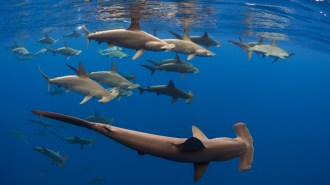
Why some hammerhead sharks seem to ‘hold their breath’ during dives
Scalloped hammerhead sharks in Hawaii seem to limit the use of their gills during deep dives to prevent losing heat to their surroundings.
- Paleontology
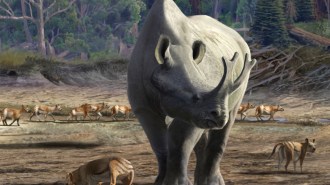
‘Thunder beast’ fossils show how some mammals might have gotten big
Rhinolike mammals called brontotheres repeatedly evolved into bigger and smaller species, a fossil analysis shows. The bigger ones won out over time.
- Tech
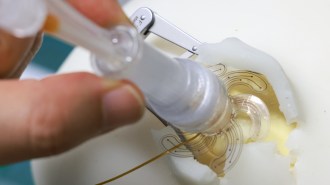
A flower-shaped soft robot could make brain monitoring less invasive
Once inserted in the skull, the device unfurls flexible sensors that can monitor the brain's electrical activity less invasively than current methods.
- Life
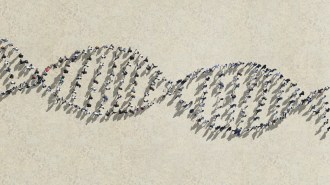
The new human pangenome could help unveil the biology of everyone
The deciphered DNA includes never-before-explored parts of the genome and better represents the genetic diversity of all humans.
- Life
Ancient giant eruptions may have seeded nitrogen needed for life
A new study bolsters the idea that on the young Earth volcanic lightning may have provided some materials that made it possible for life to emerge.
- Animals
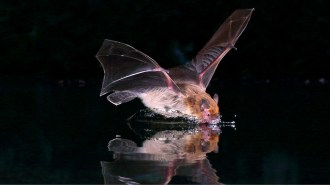
Pregnancy may hamper bats’ ability to ‘see’ in the dark
Tiny Kuhl’s pipistrelle bats make fewer calls when pregnant, which may make it more difficult to hunt prey, lab tests hint.
- Life
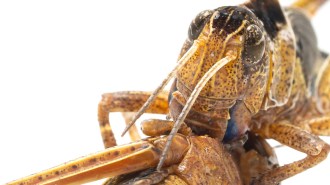
Swarming locusts can deploy a chemical to avoid being cannibalized
Releasing a “don’t-eat-me” pheromone signals a locust has become a toxic treat. The finding could lead to new ways to control destructive swarms.
- Health & Medicine
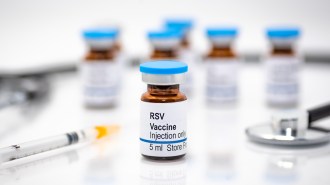
The FDA has approved the first-ever vaccine for RSV
GSK’s shot, for those 60 and over, can protect against severe respiratory syncytial virus. Other vaccines, including to protect newborns, are in the works.
- Animals
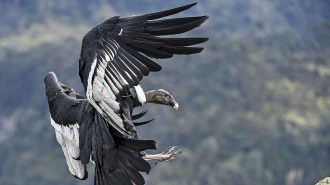
A 2,200-year-old poop time capsule reveals secrets of the Andean condor
Guano that has accumulated in a cliffside Andean condor nest for 2,200 years reveals how the now-vulnerable birds responded to a changing environment.