Microbes
- Life
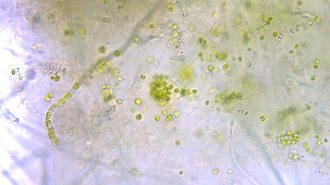
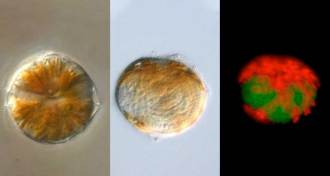
This is the first fungus known to host complex algae inside its cells
In the lab, an alga and a fungus teamed up to exchange food, similar to lichens. But instead of staying outside, the alga moved into the fungal cells.
- Plants
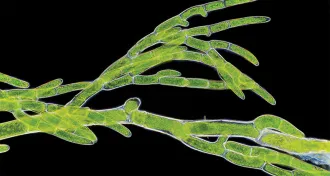
‘Slime’ shows how algae have shaped our climate, evolution and daily lives
The new book ‘Slime’ makes the case that algae deserve to be celebrated.
- Microbes
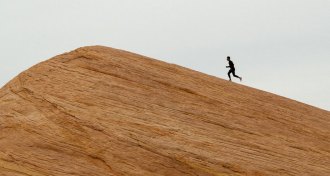
Gut microbes might help elite athletes boost their physical performance
Veillonella bacteria increased in some runners’ guts after a marathon, and may make a compound that might boost endurance, a mouse study suggests.
- Health & Medicine
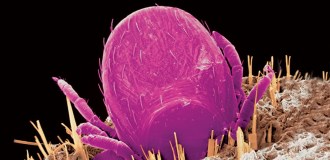
New approaches may help solve the Lyme disease diagnosis dilemma
Lyme disease is hard to detect, but scientists are investigating new diagnostic approaches.
- Life
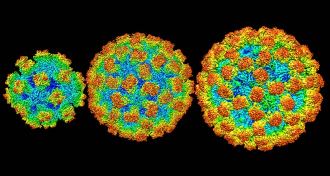
Norovirus close-ups might help fight stomach flu
Detailed views of a common stomach virus that causes vomiting and diarrhea could aid vaccine and disinfectant development.
- Microbes
A global survey finds that the Arctic Ocean is a hot spot for viruses
Scientists mapped virus diversity around the world’s oceans. That knowledge may be key to making better climate simulations.
- Genetics
A marine parasite’s mitochondria lack DNA but still churn out energy
Missing mitochondrial DNA inside a parasitic marine microbe turned up inside the organism’s nucleus.
- Health & Medicine
Studies can be in vitro, in vivo and now ‘in fimo’ — in poop
Scientists have coined a new term — “in fimo” — to describe studies focused on feces.
- Microbes
Mini ‘solar panels’ help yeast shine at churning out drug ingredients
Microbes equipped with light-harvesting semiconductor particles generate useful chemicals much more efficiently than ordinary microbes.
- Earth
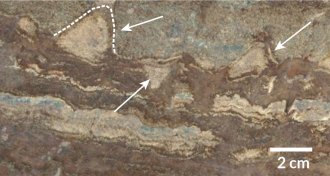
These ancient mounds may not be the earliest fossils on Earth after all
A new analysis suggests that tectonics, not microbes, formed cone-shaped structures in 3.7-billion-year-old rock.
- Animals
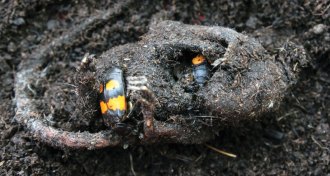
In cadaver caves, baby beetles grow better with parental goo
A dead mouse — with the right microbial treatment from beetle parents — becomes a much better nursery than your average carcass.
- Earth
These light-loving bacteria may survive surprisingly deep underground
Traces of cyanobacteria DNA suggest that the microbes live deep below Earth’s surface.