Microbes
- Genetics
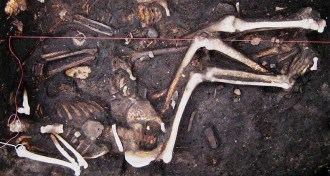
Bubonic plague hung out in Europe
The plague bacterium Yersinia pestis may have lurked in a medieval European reservoir for at least 300 years, researchers from Germany suggest January 13 in PLOS ONE.
- Genetics
Bubonic plague hung around in Europe
DNA from plague victims suggests that a European reservoir of the plague bacterium Yersinia pestis could have fueled the medieval pandemic.
- Genetics
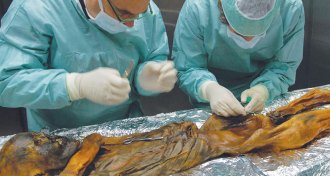
The Iceman tells a new tale: Infection with ulcer-causing bacteria
Ötzi the Iceman was infected with a virulent strain of H. pylori. A new study is the first to piece together an ancient genome of these bacteria.
- Microbes
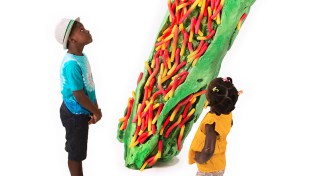
Get to know your microbes at ‘The Secret World Inside You’
The American Museum of Natural History’s newest exhibit rehabilitates bacteria’s bad reputation and introduces visitors to the microbiome.
- Paleontology
Bubbles may have sheltered Earth’s early life
Bubbles formed on ancient shorelines offer scientists a new place to look for traces of early life.
- Animals
Algal toxin impairs sea lion memory
California sea lions that have brain damage linked to domoic acid poisoning have impaired spatial memory, a new study finds.
- Life
Year in review: Microbe discoveries spur rethink of treetop of life
Microbes discovered in Arctic mud this year could be the closest relatives yet found to the single-celled ancestor that made life so complicated.
- Microbes
Gut microbes signal when dinner is done
Helpful E. coli bacteria that live in the guts of animals produce proteins that can decrease an animal’s appetite only 20 minutes after receiving nutrients
- Animals
Getting creative to cut methane from cows
Changing feed, giving vaccines and selective breeding may enable scientists to help beef and dairy cattle shake their title as one of society's worst methane producers.
- Climate
Kangaroo farts may not be so eco-friendly after all
Kangaroos fart methane, but not much thanks to the metabolism of gut microbes
- Animals
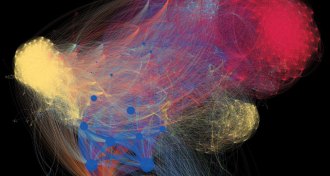
Diagram captures microbes’ influence across animal kingdom
A network diagram of animal species shows that many microbes living in humans also make themselves at home in dogs, pigs and cattle.
- Paleontology
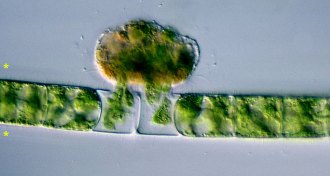
Vampire microbes sucked some ancient life dry
Hole-ridden fossils suggest that vampirelike microbes were among the first predators that targeted eukaryotes.