Neuroscience
- Health & Medicine
Hollywood-made science documentary series comes to TV
Breakthrough series gives a closer look at scientists at work.
- Neuroscience
Multitaskers do worse on tasks that require focus
Multitasking is more likely to impair teens’ focusing ability than improve it, study testing attention skills finds.
- Neuroscience
Signs of Huntington’s show up in the brain in childhood
Hints of Huntington’s disease show up in the brain long before symptoms do.
- Neuroscience
Adolescent brains open to change
Adolescent brains are still changing, a malleability that renders them particularly sensitive to the outside world.
- Neuroscience
That familiar feeling comes from deep in the brain
Knowing what’s new and what we’ve seen before is at the base of memory. A new study shows that with a flash of light, scientists can change the firing of brain cells, and make the old new again.
- Health & Medicine
Weight and sun exposure linked to onset of multiple sclerosis
Among people with multiple sclerosis, those with higher body mass and lower adolescent sun exposure tended to be diagnosed with the disease at an earlier age, a new study suggests.
- Neuroscience
Kavli Foundation gives more money for the brain
The Kavli Foundation will provide $100 million toward solving the mysteries of the brain.
-
- Neuroscience
How a fat hormone might make us born to run
Many runners finish long races in a euphoric mood. The underpinnings of this runner’s high may involve many chemicals, including the fat hormone leptin.
- Neuroscience
Separate cell types encode memory’s time, place
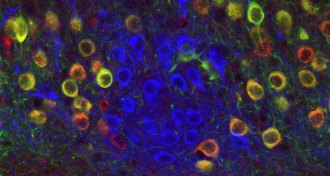
Cells called ocean cells help store a memory’s “where,” while other cells called island cells help store a memory’s “when.”
- Genetics
Benyam Kinde: Gene expression and Rett syndrome
M.D.-Ph.D. student Benyam Kinde studies how genetic changes affect brain cells’ activity in Rett syndrome.
- Neuroscience
Priya Rajasethupathy: Memories mark DNA
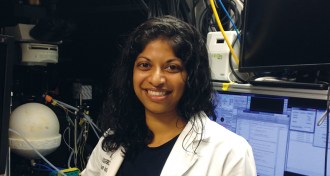
Neuroscientist Priya Rajasethupathy has discovered a tiny molecule that may turn off part of the genome to help the brain store long-term memories.