Planetary Science
- Oceans
‘Ocean Worlds’ chronicles the story of water on Earth and across the cosmos
Jan Zalasiewicz and Mark Williams recount the history and predict the future of Earth’s oceans.
- Planetary Science
Space simulations of 1960s focused on survival
50 years ago, space simulations focused on survival. Now, quality of life is critical, too.
- Planetary Science
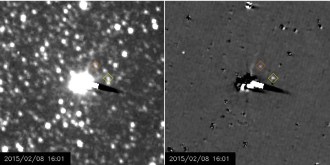
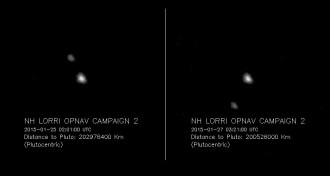
New Horizons spies two of Pluto’s moons
Nix and Hydra come into view on the 85th anniversary of Pluto’s discovery.
- Planetary Science
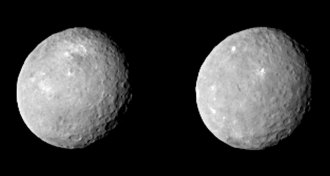
Dwarf planet Ceres comes into view
New images from the Dawn spacecraft reveal a landscape of craters and mysterious bright patches on the dwarf planet Ceres.
- Astronomy
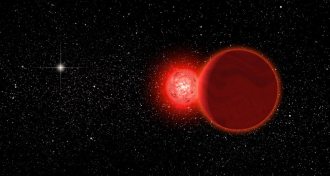
Pair of stars buzzed the solar system 70,000 years ago
Astronomers discover a binary system that made the closest known flyby of the sun.
- Planetary Science
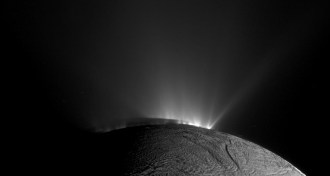
Enceladus ocean may resemble Antarctic lake
The pH of a subsurface sea on a moon of Saturn resembles an ice-covered lake in Antarctica where microbial mats thrive.
- Planetary Science
New Horizons snaps new photos of Pluto
Pluto and its moon Charon appear as two smudges in the first pictures taken since New Horizons came out of hibernation.
- Planetary Science
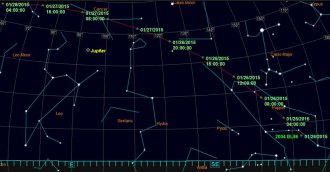
Large asteroid buzzes Earth
Asteroid 2004 BL86 swings by Earth today at three times the distance to the moon, the closest asteroid encounter until 2027.
- Planetary Science
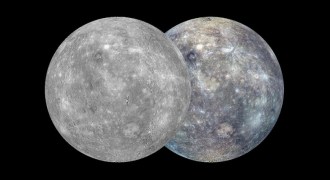
Decades-old idea brought to fruition: a mission to Mercury
In 1965, engineers proposed sending a spacecraft to Mercury with help from another planet’s gravity – a technique now used in many interplanetary missions.
- Planetary Science
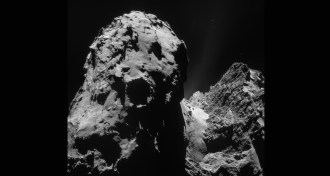
Rosetta reveals a complex comet
Rosetta finds diverse landscapes on comet 67P, which could provide researchers with clues about how the solar system formed.
- Planetary Science
Young asteroids generated long-lasting magnetism
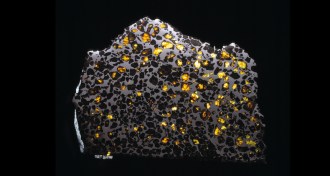
Pockets of iron and nickel in meteorites suggest that asteroids in the early solar system produced magnetic fields for much longer than once thought.
- Planetary Science
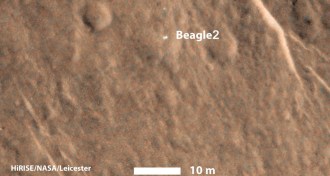
Mars orbiter locates lost Beagle 2 lander
The Beagle 2 lander, missing since 2003, has been found on the surface of the Red Planet in images from the Mars Reconnaissance Orbiter.