Tech
We summarize the week's scientific breakthroughs every Thursday.
- Tech
Website privacy policies don’t say much about how they share your data
Privacy policies don’t reveal the half of how websites share user data.
- Tech
Private web browsing doesn’t mean no one is watching
Many people misunderstand what private web browsing actually is. Web browsers’ explanations don’t help.
- Tech
Why touch can be such a creepy sensation in VR
Touch sensation in VR can go from immersive to unnerving as the feeling gets more realistic, if you can’t see the source.
- Science & Society
Here’s why putting a missile defense system in space could be a bad idea
Expanding missile defense capabilities could put the world on a slippery slope to space warfare.
- Math
‘Weird Math’ aims to connect numbers and equations to the real world
The book Weird Math attempts to make chaos theory, higher dimensions and other concepts more relatable.
- Tech
The Facebook data debacle may not change internet behavior
In the wake of the Facebook data breach, personal privacy experts say there’s little individuals can do to control their personal information online.
- Chemistry
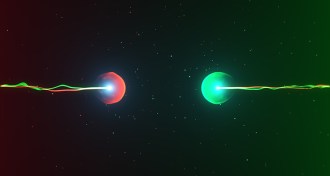
Using laser tweezers, chemists nudged two atoms to bond
This is the first time researchers have purposefully combined two specific atoms into a molecule.
- Microbes
This material uses energy from ambient light to kill hospital superbugs
A quantum dot–powered material could help reduce the number of hospital-acquired infections, including those with drug-resistant bacteria.
- Tech
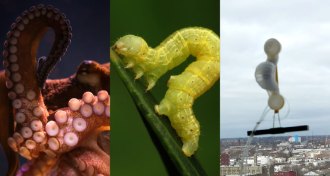
A new soft bot mimics octopuses and inchworms to climb walls
A new soft robot that scales walls could help with surveillance or building inspections.
- Tech
Sheets of tiny bubbles could bring a sense of touch to virtual reality
Shape-shifting films used in sleeves or other garments could provide tactile feedback that makes virtual realities feel more real.
- Materials Science
Live heart cells make this material shift color like a chameleon
A new material made of heart cells from rats and hydrogel changes color as the living cells contract and relax.
- Life
Earwigs take origami to extremes to fold their wings
Stretchy joints let earwig wings flip quickly between folded and unfurled.