All Stories
- Archaeology
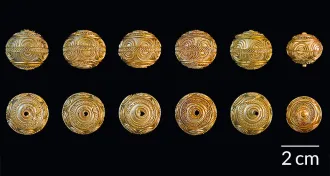
Iron Age secrets exhumed from riches-filled crypt
Wealthy woman’s 2,600-year-old grave highlights Central Europe’s early Iron Age links to Mediterranean societies.
- Neuroscience
If chewing sounds irk you, blame your brain
People who find chewing and slurping sounds annoying have structural differences in their brains.
- Astronomy
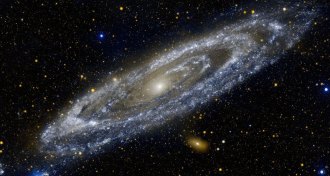
In 20th century, astronomers opened their minds to gazillions of galaxies
Telescopes in the U.S. West opened astronomers’ eyes to a vast, expanding universe containing countless galaxies.
- Health & Medicine
E-cigarette smoking linked to heart disease risk
Two indicators of heart disease risk were elevated for users of e-cigarettes in small-scale study.
- Astronomy
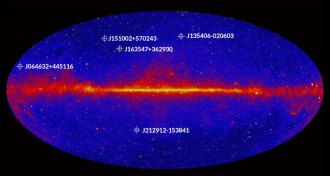
Five gamma-ray blazars set new distance record
Intensely bright galaxies are the farthest blazars ever detected in gamma rays.
- Animals
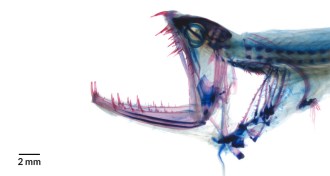
Dragonfish opens wide with flex neck joint
New study reveals anatomical secrets of mysterious deep ocean fish.
- Tech
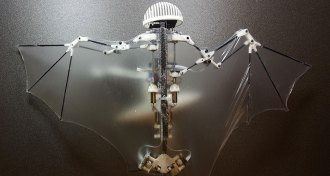
Bat robot takes wing
Unlike other aerial robots that use whirling rotor blades to fly, the Bat Bot relies on soft, silicone-based wings to glide, swoop and turn.
- Planetary Science
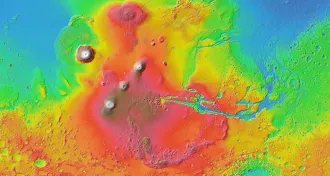
Red Planet’s interior may not churn much
The magma fueling a Martian volcanic system remained largely unchanged for billions of years, analysis of a newfound meteorite suggests.
- Physics
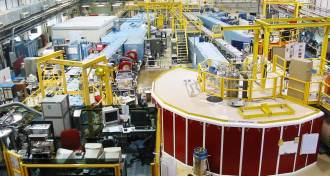
Physicists seek neutron lifetime’s secret
Updated experiments hope to resolve neutron lifetime discrepancy.
- Animals
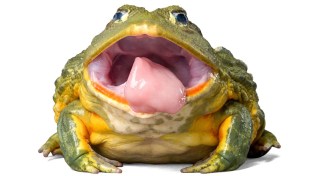
What gives frog tongues the gift of grab
Here’s what puts the grip in a frog’s high-speed strike: quick-change saliva and a tongue softer than a marshmallow.
- Chemistry
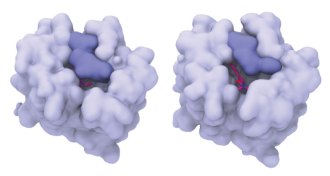
LSD’s grip on brain protein could explain drug’s long-lasting effects
The newly discovered structure of a human serotonin receptor linked to LSD could reveal why the drug’s hallucinogenic effects last so long.
- Earth
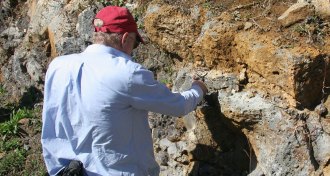
3-billion-year-old crystals hint at lost continent’s fate
Zircon crystals from a long-gone continent called Mauritia may have resurfaced during volcanic eruptions on the island of Mauritius in the Indian Ocean.