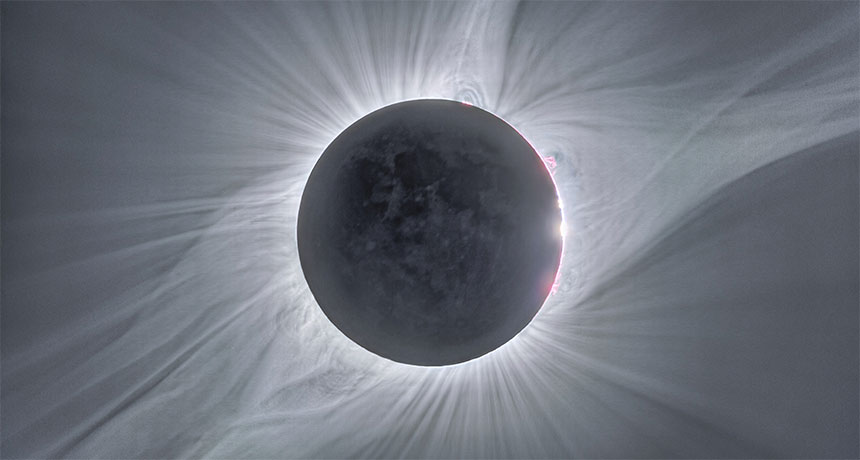
INTO THE DARK AGAIN This composite image shows the eclipsed sun on August 21, 2017, the last total solar eclipse. The faint disk of the moon is visible in the center, and the pale wisps of the solar corona surround it. On July 2, scientists will observe another eclipse over parts of South America.
Solar Wind Sherpas project, P. Horálek, ESO