Uncategorized
- Cosmology
Year in Review: Dark energy gets more confusing
New data raise the prospect of a ‘Big Rip’ destroying the cosmos.
-
- Planetary Science
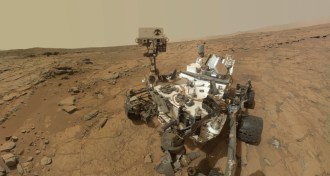
Year in Review: Methane shortage on Mars
A trace of the gas is not enough to be a sign of life.
-
- Earth
Creativity offers insights into the past and future
With the long-term future of many fisheries in doubt and severe drought once again hitting the Southwest, coming up with new insights into the past and future on land and sea may be crucial to protecting some of our most precious resources.
- Neuroscience
Year in Review: Obama unveils brain initiative
In April, the president announced an ambitious plan to reveal the human brain’s secrets.
- Psychology
Year in Review: DSM-5’s controversial debut
The diagnostic manual updates disorder criteria.
- Physics
Year in Review: Below absolute zero, but hot
Lab trickery pushes atoms to a negative temperature.
- Astronomy
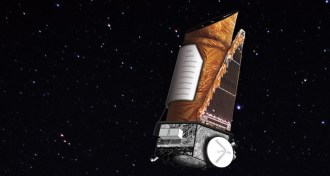
Year in Review: Death of a planet hunter
The Kepler space telescope finishes a brilliant career.
- Astronomy
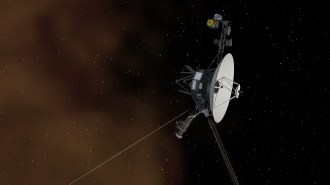
Year in Review: Voyager 1 reaches interstellar space
The planetary probe is the first human-made object to break out of the heliosphere.
- Health & Medicine
Year in Review: Putting kids at risk
U.S. parents increasingly are delaying their children’s vaccination.
- Neuroscience
Bad memories fade with a short jolt
Research illustrates the vulnerability of the brain’s information storage.