Uncategorized
- Quantum Physics
Light breaks up to cloak gaps in time
Method could hide messages without sender’s knowledge.
- Paleontology
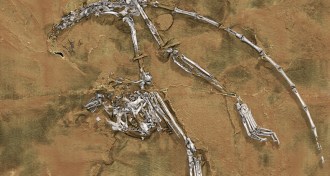
Fossil sheds light on early primates
Partial skeleton near root of monkey, ape and human line.
-
- Paleontology
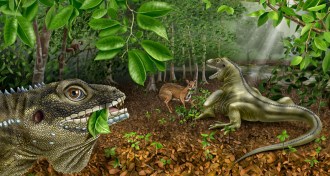
Lizard king thrived in ancient warm climate
The herbivorous reptile of 40 million years ago was around 2 meters long.
- Planetary Science
Thirty years to Mars
Excerpt from the June 15, 1963, issue of Science News Letter.
-
Letters to the editor
Wet Earth Erin Wayman’s article “Faint young sun” (SN: 5/4/13, p. 30), about how the early Earth stayed warm enough for liquid water, made me wonder about the effect of the temperature of the planet itself. A hotter core, thinner crust, more volcanism — wouldn’t those factors in addition to atmospheric influences affect surface temperature? […]
- Animals
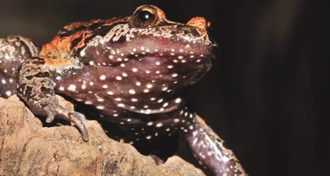
Frog long thought extinct rediscovered in Israel
Hula painted frog turns out to be the only surviving member of an extinct genus.
- Health & Medicine
Flu spreads via airborne droplets
Hand washing goes only so far in retarding flu transmission.
- Humans
Dietary changes accompanied human evolution
Hominids moved toward eating grasses and away from tree leaves, according to chemical analyses of fossil tooth enamel.
- Archaeology
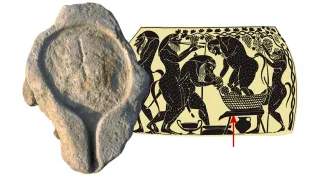
Italians taught French wine-making
Archaeology suggests Etruscans brought the grape to Gaul.
- Humans
Couples who meet online have fine marriages
Relationship satisfaction for Internet daters is similar to that of people who find potential partners in more traditional ways.
- Life
Genes weakly linked to education level
A search of more than 2 million DNA locations in more than 125,000 people finds a weak, and perhaps dubious, association with schooling.