Damage Control: Brain injuries fight off PTSD in vets
Brain damage suffered while fighting in a war can undermine core aspects of a soldier’s personality and behavior. In two particular neural regions, however, such wounds actually protect combat veterans against developing the severe stress reaction known as post-traumatic stress disorder (PTSD), a new study finds.
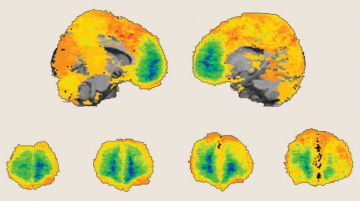
These brain structures play crucial roles in causing PTSD after exposure to traumatic experiences, concludes a team led by neuroscientist Michael Koenigs of the National Institute of Neurological Disorders and Stroke (NINDS) in Bethesda, Md.
Psychiatrists classify PTSD as an anxiety disorder characterized by frequent re-experiencing of a traumatic event, emotional numbing, avoidance of reminders of the upsetting event, and excessive vigilance. Previous brain-imaging studies had suggested that PTSD involves overactivation of the amygdala, a structure that mediates fear responses, as a result of reduced activity in the ventromedial prefrontal cortex, an area that tamps down emotional reactions. The same studies also implicated deficient activity in the hippocampus, a memory-related structure, in PTSD. Still, it wasn’t clear whether these brain alterations caused PTSD or resulted from it.
The new study, slated to appear in the February Nature Neuroscience, looked for neural causes of the stress disorder by probing PTSD development in interviews with 193 Vietnam combat veterans who had experienced various types of brain damage as well as traumatic war events. Another 52 combat vets in the study had no brain injuries.
Magnetic resonance imaging produced detailed images of participants’ brain structure.
Consistent with previous studies, Koenigs’ team found that none of the 15 vets with amygdala damage developed PTSD after their injury. PTSD emerged in only 7 of 40 vets with ventromedial prefrontal cortex damage, conflicting with earlier evidence that inactivity in this area promotes PTSD. The ventromedial prefrontal cortex apparently interacts with the amygdala in more complex ways than scientists have suspected, the researchers say.
Other anxiety disorders, such as panic disorder, occurred among these vets at rates typical of the general population.
In contrast, PTSD occurred in 40 percent of vets with other types of brain damage and in nearly half of those without brain damage.
Hippocampus damage showed no link to PTSD development in any group of combat vets.
“It appears that the amygdala and the ventromedial prefrontal cortex are necessary for PTSD to develop, whereas any hippocampus changes are probably responses to having PTSD,” says study coauthor Jordan Grafman, also of NINDS.
Treatments that selectively disturb activity in either of the two critical brain regions may assist in easing PTSD symptoms, Grafman proposes. One way researchers might accomplish this feat would be by using a device that delivers harmless magnetic pulses to precise neural locations.
Psychologist Lisa M. Shin of Tufts University in Medford, Mass., calls the new study “important and thought provoking.”
It’s not yet clear why vets with ventromedial prefrontal cortex damage displayed low, not high, PTSD rates, she says.