Flowers such as four-o’clocks and portulacas invented the fluorescent look long before the psychedelic 1960s with its black light posters, new research shows.
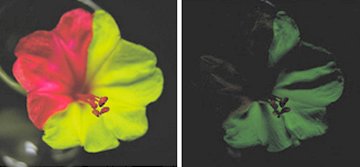
Flowers such as four-o’clocks and portulacas invented the fluorescent look long before the psychedelic 1960s with its black light posters, new research shows.