A blood test for dementia may tell you if you have more than one type
The experimental test could help doctors spot overlapping brain diseases
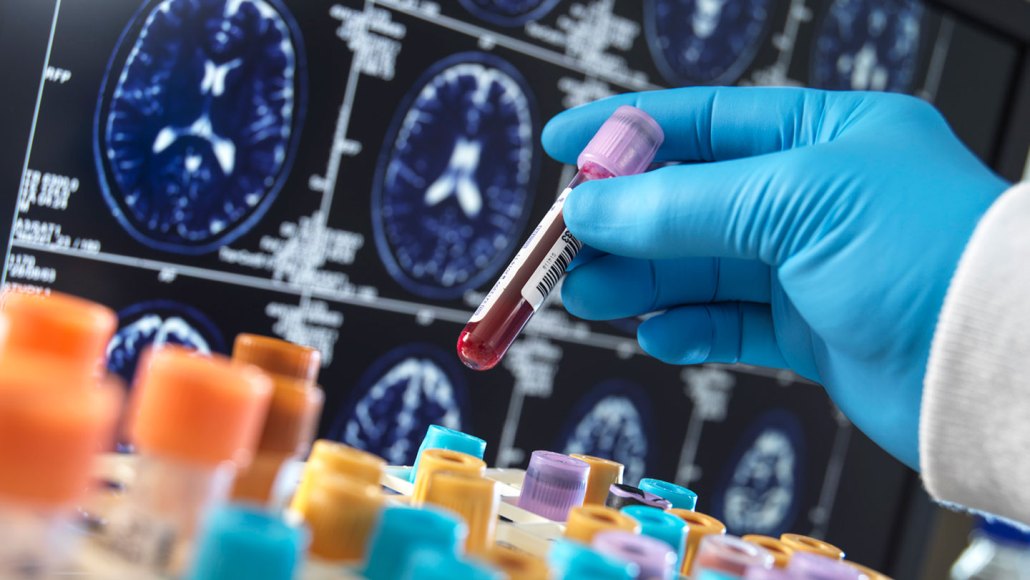
The test can help diagnose four neurodegenerative diseases — Alzheimer's, Parkinson's, frontotemporal dementia and dementia with Lewy bodies — based on levels of 15 proteins in the blood.
Andrew Brookes/Connect Images/Getty Images
When something goes wrong in the brain of people with dementia, often it’s more than one thing. But it can be hard to tease apart multiple brain diseases, especially in the early stages, or even determine if more than one disease is at play. An experimental new blood test may change that.
The test measures the levels of 15 proteins in the blood to help diagnose four major neurodegenerative diseases — Alzheimer’s, Parkinson’s, frontotemporal dementia and dementia with Lewy bodies. And it can determine if a person has more than one of those diseases with 92.3 percent accuracy, researchers report in the May Alzheimer’s & Dementia.
Dementia affects more than 6 million people in the United States and is the seventh leading cause of death worldwide. “These diseases are more complex than we initially thought, and there is more overlap than we thought,” says Carlos Cruchaga, a human genomicist at Washington University in St. Louis. “In order to really address and understand the biology of the disease of any of these, we need to study all of these diseases together.”
Different dementias require different kinds of care, he says, even if the symptoms seem similar. Knowing the combination of diseases can help point toward more tailored precision treatment.
Last year the U.S. Food and Drug Administration approved the first blood test for Alzheimer’s disease. A number of other Alzheimer’s tests that do not have FDA backing are on the market. But those tests can’t detect anything more than Alzheimer’s.
The new test can. It could show that an individual has, for instance, both Alzheimer’s and Parkinson’s, and hint that of the rogue proteins detected, 75 percent signal Alzheimer’s, while a lesser amount, say, 20 percent, signal Parkinson’s. With this fuller picture, Cruchaga says, “we are going to be able to provide much better therapy.”
The test is built on blood samples and medical records from more than 3,000 patients at two clinics at Washington University in St. Louis focused on Alzheimer’s and Parkinson’s. With the help of an AI algorithm designed to find patterns in large datasets, the team narrowed a panel of 123 proteins to the final 15 that best signal whether a type of dementia or Parkinson’s might be present in the brain, and in what proportion. That list includes proteins implicated in different dementias, such as p-tau217, the cornerstone of existing Alzheimer’s blood tests.
The researchers then verified the AI model’s predictions against a separate group of patients at the Banner Sun Health Research Institute in Arizona, comparing blood test results against what was actually found in brain tissue donated at autopsy.
The test “moves away from a simple yes/no Alzheimer’s framework and instead tries to reflect the biological complexity we often see clinically,” says Davide Cappon, a neuropsychologist at Tufts Medical Center in Boston who was not involved in the study. That’s “an important conceptual shift” for the field. But he says larger, more diverse studies are needed to validate the test.
“Maybe five, six years ago, nobody believed that blood biomarkers for Alzheimer’s or neurodegenerative diseases were even possible,” Cruchaga says. But the pace of technology has been accelerating.
He and his colleagues dubbed their test GPND-AI, short for a mouthful of a name: the generalizable protein-based neurodegenerative disease artificial intelligence classifier. The team is talking with pharmaceutical companies to take the test into clinical trials and begin the FDA approval process.
Tests like GPND-AI, Cappon says, don’t replace a clinical evaluation, though. “Blood biomarkers can suggest underlying pathology,” he says. “They cannot fully explain how a person is functioning day-to-day, why symptoms started, or how factors like sleep, depression, medications, vascular disease, or resilience are influencing cognition.”