Gum disease bacteria can promote cancer growth in mice
Human breast cancer cells with a BRCA1 mutation could be more susceptible to damage, lab experiments suggest
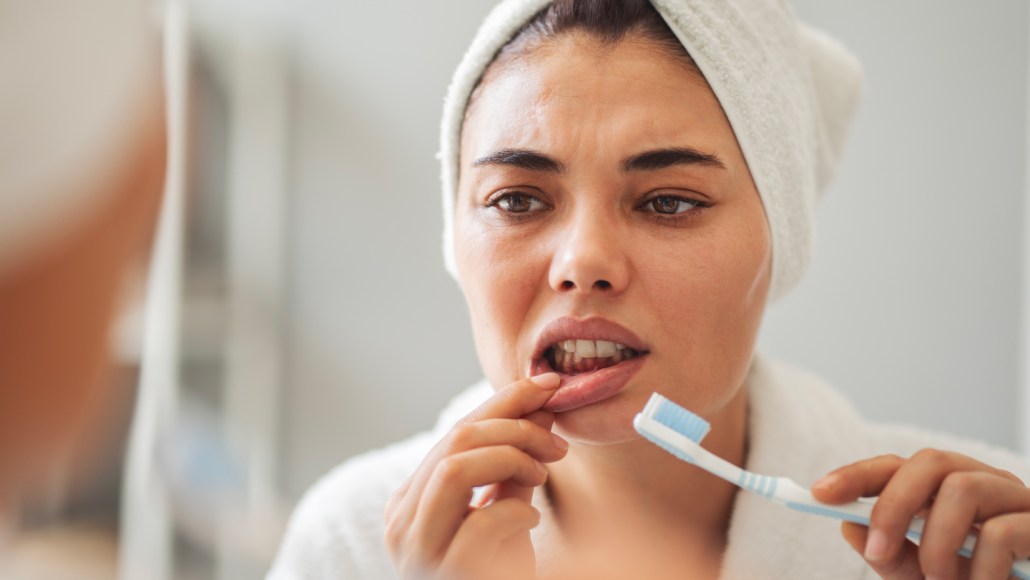
Bacteria involved in gum disease may also play a role in cancer, prompting tumor growth and spurring the formation of precancerous lesions, a mouse study suggests.
seb_ra/iStock/Getty Images Plus
A microbe involved in gum disease could fan the flames of breast cancer.
In mice, the oral bacterium can swell the size of existing tumors and even spark the formation of precancerous growths, researchers report January 15 in Cell Communication and Signaling.
The work suggests that harmful bacteria in the mouth may enter the bloodstream, make a beeline for breast tissue and then whomp healthy cells like a wrecking ball. Previous studies have turned up correlations between oral disease and breast cancer, but “now we have a direct connection,” says Dipali Sharma, an oncology researcher at Johns Hopkins School of Medicine.
In the mouth, Fusobacterium nucleatum helps build biofilms, the slimy networks of microbes that slick people’s teeth and tongues. Researchers know this bacterium plays a role in gum disease and have previously linked it to cancers of the head and neck, among others. But F. nucleatum also shows up in malignant breast cancer tumors, Sharma’s team found after analyzing patient datasets. That got the team thinking about what the bacterium might be doing there. The answer was nothing good.
When the researchers injected F. nucleatum into the mammary tissue of healthy mice, the animals developed inflamed lesions — not cancer, but a step toward it, Sharma says. Then, the researchers injected the bacterium into the bloodstreams of mice that already had small mammary tumors. Over six weeks, the tumors grew to about three times the size of tumors in mice without the bacterium. What’s more, in every mouse with F. nucleatum, cancer spread to the lungs, too.
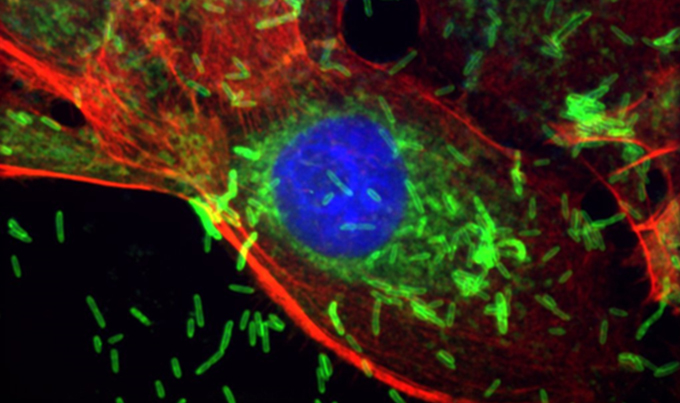
The researchers haven’t fully unpacked F. nucleatum’s bag of cancer-promoting tricks, but it seems to involve cranking up DNA damage, lab tests on human cells revealed. Some cells may also be more prone to damage than others. The bacterium was especially good at colonizing human cells with a BRCA1 mutation, a genetic change that increases people’s risk of breast cancer. That could mean people who carry the mutation are more susceptible to cellular slights wrought by F. nucleatum, Sharma says. It’s too early to say for sure.
It’s also too early to say whether F. nucleatum can cause breast cancer all by itself, or whether the findings hold up in humans, Sharma says. Oral medicine specialist Firoozeh Samim agrees. It’s possible that the bacterium is a risk factor that combines with others, like a person’s environment, health and genetics, to initiate disease. “Cancer is multifactorial,” says Samim, of McGill University in Montreal.
Samim was not involved with the new research, but says it goes beyond previous efforts linking the bacterium to disease. Continued work in this area is important, she says, because it could build the case for integrating oral health care into current efforts in cancer prevention.