463 results
463 results for: Dolphins
-
Copy Crab: DNA confirms that crab forms have several origins
New genetic evidence suggests that crabs aren't all close relatives and their characteristic shape evolved independently on numerous occasions.
-
Brains show evolutionary designs
Mammal species exhibit basic types of brain design from which they have evolved a wide array of brain sizes, according to a new analysis.
- Humans
Rare animals get U.N. protection
Several types of whales, river dolphins, the great white shark, and an unusual camel are among animals designated to receive new or heightened protection under a United Nations treaty.
- Paleontology
Study picks new site for dinosaur nostrils
A new analysis of fossils and living animals suggests that most dinosaurs' nostrils occurred at locations toward the tip of their snout rather than farther up on their face, a concept that may change scientists' views of the animals' physiology and behavior.
-
River dolphins can whistle, too, sort of
In the most elaborate attempt so far to eavesdrop on Brazil's pink river dolphins, researchers have detected what may be a counterpart to seafaring dolphins' whistles.
- Animals
Even deep down, the right whales don’t sink
A right whale may weigh some 70 tons, but unlike other marine mammals studied so far, it tends to float rather than sink at great depths.
- Paleontology
New Fossils Resolve Whale’s Origin
The first discovery of early whale fossils with key ankle bones intact provides compelling paleontological evidence that whales are closely related to many living ungulates, a relationship already supported by molecular data.
-
-
2011 Science News of the Year: Life
Multicellular life from a test tube In less than two months, yeast in a test tube evolved from single-celled life to bristly multicellular structures. The new, snowflakelike forms act like multicellular organisms, reproducing by splitting when they reach large sizes and evolving further in response to harsh conditions, William Ratcliff of the University of Minnesota, […]
- Animals
Furry Friends Forever
Humans aren’t the only animals who benefit from having someone to count on.
-
- Animals
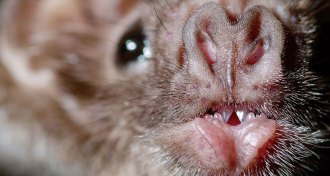
Vampire reality check
A vampire bat drinks one meal a night, and missing just three nights in a row would probably kill the animal.