113,283+ results
113,283+ results for:
- Climate
How to melt an ice cave
Frigid winter air keeps gives ice caves their perpetual chill, researchers find, warning that airtight seals on some ice caves could cause the frigid formations to melt within decades.
- Plants
Marsh grass masquerades as a native species
The abundant cordgrass found in South American marshes may actually have invaded the region more than two centuries ago, a new study concludes.
- Planetary Science
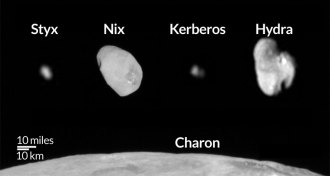
Pluto’s smaller moons pose mysteries
The four smaller moons of Pluto are finally revealed in images from New Horizons, and might hold some clues to the dwarf planet’s past.
- Animals
‘On the Wing’ chronicles origins of flying animals
In "On the Wing," a biomechanicist reviews how animals took to the air.
- Anthropology
Early globalization on display in history of Eurasian civilization
It was a long, strange trip from the first Eurasian farmers to the modern world.
- Astronomy
‘Halloween fireballs’ may light up the night sky
Trick-or-treaters might get treated to a meteor swarm for Halloween.
- Planetary Science
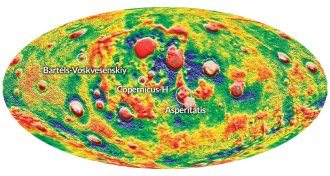
Probes unveil three hidden blemishes on moon’s face
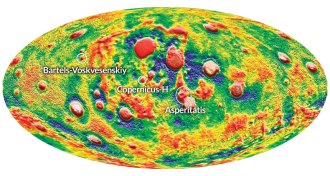
Gravity measurements collected by NASA’s GRAIL spacecraft reveal a clearer picture of the moon’s craters, including three previously unseen lunar basins.
- Planetary Science
Probes unveil three hidden blemishes on moon’s face
Gravitational tugs on a pair of spacecraft have revealed previously unseen blemishes on the moon’s face.
- Tech
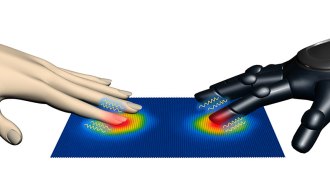
Electronic skin feels the heat, hears the sound
Electronic skin inspired by human fingertips detects texture, pressure, heat and sound.
- Earth
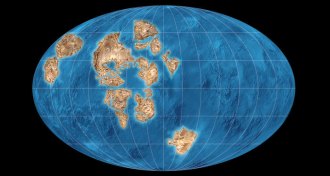
New fascination with Earth’s ‘Boring Billion’
The Mesoproterozoic era, known as the boring billion, had very low oxygen, but it set the stage for the evolution of animals.
- Psychology
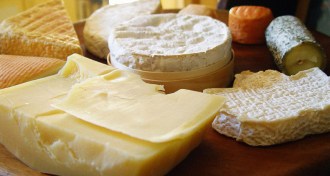
No, cheese is not just like crack
Recent news reports claimed that a study shows cheese is addictive. But the facts behind the research show cheese and crack have little in common.
- Science & Society
Happy Birthday to Boole, with 11001000 binary candles
George Boole’s 200th birthday is occasion to celebrate the 1s and 0s of computer language.