Life
We summarize the week's scientific breakthroughs every Thursday.
- Archaeology
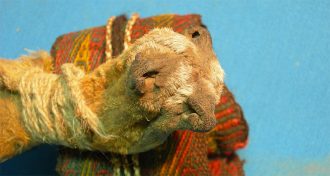
An ancient pouch reveals the hallucinogen stash of an Andes shaman
South American shamans in the Andes Mountains carried mind-altering ingredients 1,000 years ago, a study finds.
- Ecosystems
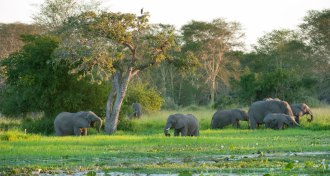
War wrecked an African ecosystem. Ecologists are trying to restore it
Bringing back big predators to Gorongosa, once a wildlife paradise in Mozambique, is just one piece of the puzzle in undoing the damage there.
- Animals
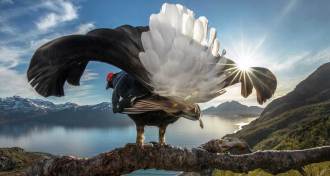
These award-winning photographs capture rarely seen wildlife and landscapes
Winners of the California Academy of Sciences’ annual photo contest dove deep underwater and hiked to great heights to create these striking images.
- Animals
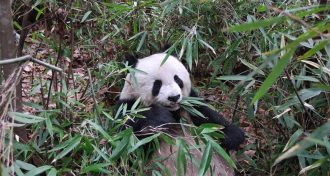
Pandas’ share of protein calories from bamboo rivals wolves’ from meat
The panda gut digests protein in bamboo so well that the animal’s nutritional profile for calories resembles a wolf’s.
- Paleontology
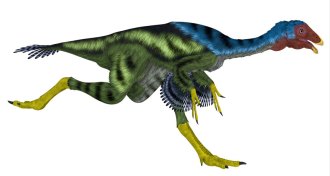
A dinosaur’s running gait may reveal insights into the history of bird flight
In what may have been a precursor to avian flight, a flightless winged dinosaur may have flapped its wings as it jogged.
- Artificial Intelligence
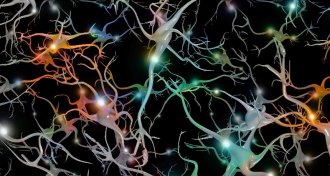
An AI used art to control monkeys’ brain cells
Art created by an artificial intelligence exacts unprecedented control over nerve cells tied to vision in monkey brains, and could lead to new neuroscience experiments.
- Agriculture
Can Silicon Valley entrepreneurs make crickets the next chicken?
Entrepreneurs are bringing automation and data analysis to insect agriculture to build a profitable business that helps feed the planet.
- Animals
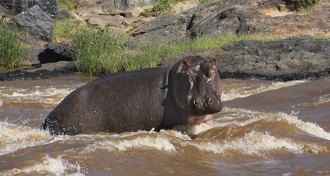
Hippo poop cycles silicon through the East African environment
By chowing down on grass and then excreting into rivers and lakes, hippos play a big role in transporting a nutrient crucial to the food web.
- Health & Medicine
A mysterious dementia that mimics Alzheimer’s gets named LATE
An underappreciated form of dementia that causes memory trouble in older people gets a name: LATE.
- Animals
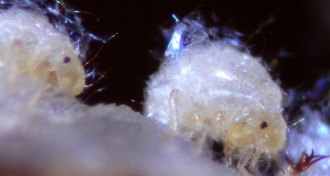
How aphids sacrifice themselves to fix their homes with fatty goo
Young aphids swollen with fatty substances save their colony by self-sacrifice, using that goo to patch breaches in the wall of their tree home.
- Animals
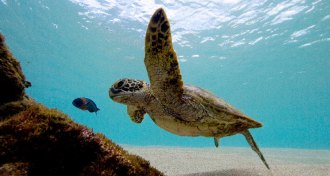
Endangered green sea turtles may be making a comeback in the U.S. Pacific
The numbers of green sea turtles spotted around Hawaii, American Samoa and the Mariana Islands have increased in the last decade.
- Microbes
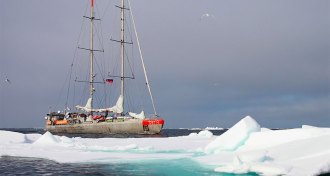
A global survey finds that the Arctic Ocean is a hot spot for viruses
Scientists mapped virus diversity around the world’s oceans. That knowledge may be key to making better climate simulations.