Life
We summarize the week's scientific breakthroughs every Thursday.
- Animals
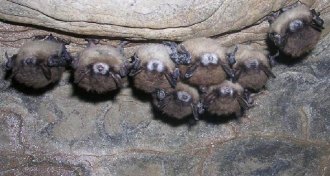
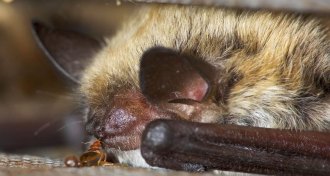
Vaccines may help bats fight white nose syndrome
Researchers are developing an oral vaccine that helps little brown bats survive the fungal disease white nose syndrome.
- Animals
Some dog breeds may have trouble breathing because of a mutated gene
Norwich terriers don’t have flat snouts, but can suffer the same wheezing as bulldogs. It turns out that a gene mutation tied to swelling could be to blame.
- Life
Bloodthirsty bedbugs have feasted on prey for 100 million years
Research sheds light on the evolutionary history of the bloodsucking bedbugs. The first species evolved at least as early as the Cretaceous, scientists say.
- Animals
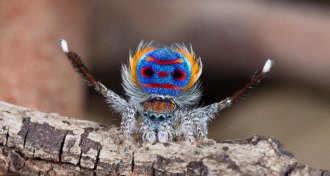
Peacock spiders’ superblack spots reflect just 0.5 percent of light
By manipulating light with tiny structures, patches on peacock spiders appear superblack, helping accentuate the arachnids’ bright colors.
- Genetics
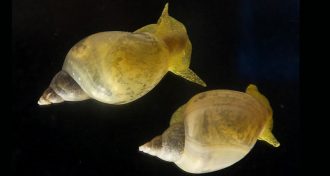
Tweaking one gene with CRISPR switched the way a snail shell spirals
The first gene-edited snails confirm which gene is responsible for the direction of the shell’s spiral.
- Artificial Intelligence
A new AI acquired humanlike ‘number sense’ on its own
A new artificial intelligence seems to share our intuitive ability to estimate numbers at a glance.
- Ecosystems
Readers were curious about green icebergs, aliens and more
Readers had questions and comments about icebergs and climate change, CBD and NASA’s search for E.T.
- Animals
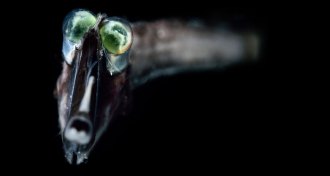
Deep-sea fishes’ eye chemistry might let them see colors in near darkness
An unexpected abundance of proteins for catching dim light evolved independently in three groups of weird deep-sea fishes.
- Life
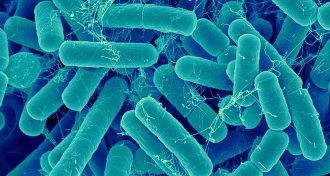
A gut bacteria transplant may not help you lose weight
A small study finds that transplanting gut microbes from a lean person into obese people didn’t lead to weight loss, as hoped.
- Life
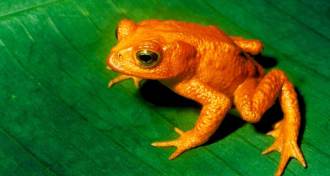
1 million species are under threat. Here are 5 ways we speed up extinctions
One million of the world’s plant and animal species are now under threat of extinction, a new report finds.
- Paleontology
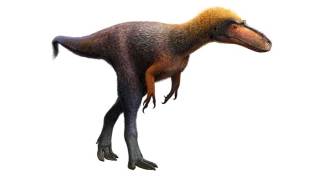
A tiny mystery dinosaur from New Mexico is officially T. rex’s cousin
A newly identified dinosaur species called Suskityrannus hazelae fills a gap in tyrannosaur lineage.
- Earth
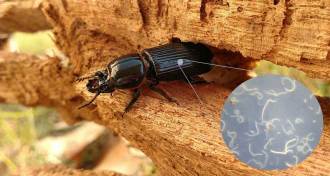
A belly full of wriggling worms makes wood beetles better recyclers
Common beetles that eat rotten logs chew up more wood when filled with a roundworm larvae, releasing nutrients more quickly back to the forest floor.