Life
We summarize the week's scientific breakthroughs every Thursday.
- Neuroscience
Some grape-scented compounds repel mosquitoes
Molecules discovered to drive away bugs after researchers identify cells that detect, and are disgusted by, DEET.
- Animals
Tortoise-studying teen takes top Broadcom prize
Even a tortoise enthusiast can speed through a three-day gauntlet of science, engineering and math challenges to claim victory. River Grace, 14, of West Melbourne, Fla., did just that. At an awards ceremony October 1, he picked up the top award of $25,000. The teen was one of 30 finalists from 17 states who attended the third annual Broadcom Math, Applied Science, Technology and Engineering for Rising Stars, or MASTERS, competition.
- Plants
Tiny fossils set record for oldest flowerlike pollen
Oldest flowerlike pollen might have come from an ancient relative of today’s flowering plants.
- Life
Engineered salivary glands keep juices flowing
Organs grown in a lab dish do their job when transplanted into mice.
- Animals
The giraffes that sailed to medieval China
Chinese exploration of the world is often left out of Western textbooks (at least it was left out of mine), but for a brief period, from 1405 to 1433, the Chinese under Ming emperor Yongle sent out numerous trade missions that reached as far as present-day Kenya. During the fourth expedition, which left China in 1413, part of the fleet led by commander Zheng He sailed to Bengal in India, where in 1414 they met envoys from the African coastal state of Malindi (now part of Kenya). The men from Malindi had brought with them as tribute giraffes, and they gave one of those giraffes to the Chinese, who took it home.
- Microbes
Microbes signal deceased’s time of death
In a study using mice, germs accompany the body’s decay in a consistent time sequence.
- Animals
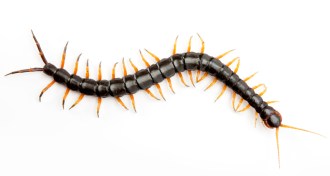
Centipede venom fights pain
Molecule from toxin makes mice less sensitive to pain, may work as well as morphine.
- Life
Dangerous Digs
By properly managing a tumor cell’s microenvironment, cancer researchers are making cancer something people live with, not die from.
-
- Neuroscience
An on-off switch for eating
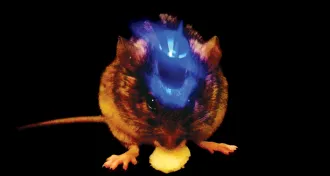
By triggering or silencing certain brain cells, scientists can get mice to feed or stop feeding regardless of hunger.
- Life
Newfound biological clocks set by the moon
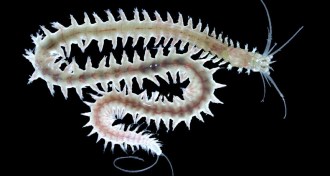
Two unrelated marine organisms have rhythms dictated by tides, lunar cycle.
-