Neuroscience
- Neuroscience
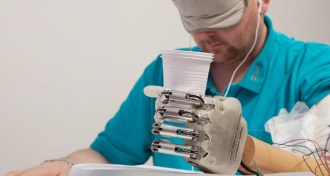
Prosthetic provides sense of touch to man who lost hand
A new prosthetic hand restores a sense of touch by stimulating nerves in the arm.
- Neuroscience
Football helmet redesign can reduce concussion risk
No helmet will ever eliminate the risk of sustaining a concussions during a football game. But tweaking the design may slow the speed of head movements after a hit and reduce the risk of brain trauma.
- Neuroscience
‘Unique’ human brain regions similar to monkeys’ brains
Monkeys may have rudimentary brain wiring that later evolved into the connections that gave humans the ability to understand language, think flexibly and make decisions.
- Neuroscience
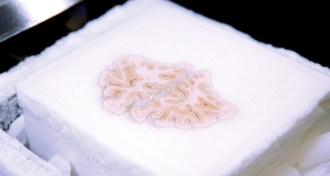
Famous brain surgery patient H.M. retained a chunk of hippocampus
The patient's amnesia was probably due to the loss of other regions and neural connections.
- Neuroscience
Big science for lean times
The greatest promises of brain research — a cellular description of thought and behavior and, even more importantly, strategies to battle disorders of the brain — have yet to be fulfilled. Making good on those promises is the motivation behind the federal BRAIN Initiative.
- Animals
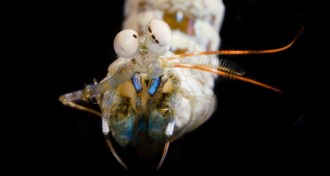
Mantis shrimp’s bizarre visual system may save brainpower
The mantis shrimp sees each color separately with one of a dozen kinds of specialized cells, a system that may help the animal quickly see colors without a lot of brainpower.
- Neuroscience
Caffeine’s little memory jolt garners a lot of excitement
A new study claims that caffeine can perk up memory consolidation in students without a caffeine habit. But concerns about the effect size and the statistics in the paper require a little extra shot of replication.
- Neuroscience
Thinking hard weighs heavy on the brain
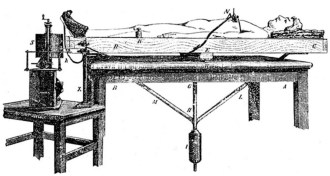
A balance measures the tiny changes in force due to blood flow behind a person's thoughts.
- Neuroscience
Caffeine may improve memory
Taking the stimulant after learning new information boosted people’s recall the next day.
- Neuroscience
A schizophrenia drug turns on protein factories in cells
Haloperidol reshapes neurons, which might explain how the medicine works.
- Neuroscience
Hormone hampers effects of marijuana
Study of pot-blocking brain chemical in rodents could lead to new treatments for cannabis addiction.
- Neuroscience
All mice are the same, until they’re not
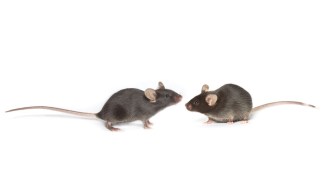
A new study shows substantial differences in how two closely related mouse strains respond to drugs. It offers new options for linking genes and behavior and may change how scientists think about the similarity of their mouse strains.