Oceans
- Earth
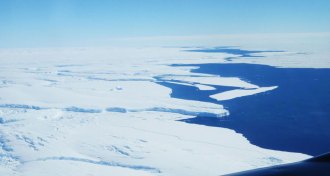
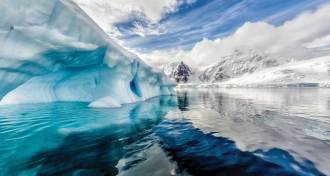
Wind may be driving the melting of East Antarctica’s largest glacier
Winds may be helping warm ocean waters speed up the melting of East Antarctica’s largest glacier.
- Animals
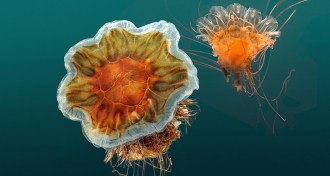
Here’s the real story on jellyfish taking over the world
In 'Spineless,' a former marine scientist reconnects with the seas and science through her obsession with these enigmatic creatures.
- Life
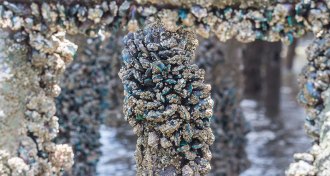
A new material may one day keep mussels off piers and boat hulls
Mussels don’t stick to a new lubricant-infused silicone material.
- Climate
‘Killer Hurricanes’ reconstructs the past to predict storms of the future
Geologists find clues to the future of deadly hurricanes, written in stone and sand, in the new NOVA documentary “Killer Hurricanes.”
- Oceans
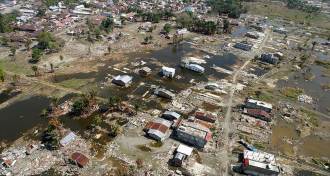
Here’s a breakdown of the animals that crossed the Pacific on 2011 tsunami debris
Hundreds of marine animals from Japan have washed up on U.S. beaches since the destructive 2011 earthquake and tsunami.
- Animals
New deep-sea sponge could play a starring role in monitoring ocean health
A new species of sponge that dwells on metal-rich rocks could help scientists track the environmental impact of deep-sea mining.
- Oceans
Castaway critters rafted to U.S. shores aboard Japan tsunami debris
Researchers report finding 289 living Japanese marine species that washed up on American shores on debris from the 2011 East Japan earthquake and tsunami.
- Earth
How hurricanes and other devastating disasters spur scientific research
Hurricanes such as Harvey, Irma and others have been devastating, even deadly, yet they drive our desire for scientific discovery.
- Oceans
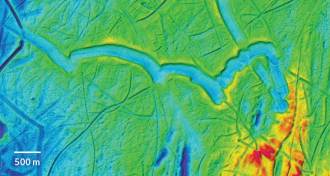
How deep water surfaces around Antarctica
New 3-D maps trace the pathway that deep water takes to the surface of the Southern Ocean.
- Animals
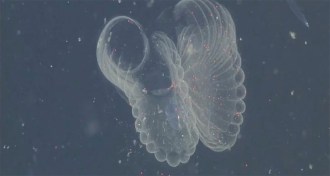
Giant larvaceans could be ferrying ocean plastic to the seafloor
Giant larvaceans could mistakenly capture microplastics, in addition to food, in their mucus houses and transfer them to the seafloor in their feces.
- Earth
Deep heat may have spawned one of the world’s deadliest tsunamis
The 2004 Indonesian quake was surprisingly strong because of dried-out, brittle minerals far below.
- Earth
Stunning images reveal glacial landscapes under the oceans
The most detailed atlas of the seafloor ever compiled offers colorful imagery and ghostly glimpses of Earth’s glacial past.