Oceans
- Environment
Trash researcher tallies ocean pollution
Marcus Eriksen has always had a thing for trash, and now he tallies ocean pollution.
- Oceans
Alcatraz escapees could have made it safely to shore
Detailed simulations of the San Francisco Bay suggest that three prisoners who escaped from the prison on Alcatraz Island in 1962 could have made it safely to shore.
- Climate
Resilience protects corals from hurricanes — and climate change
Coral reefs have evolved to be resilient in the face of hurricanes that can devastate human populations. But climate change is reducing the ability of reefs to bounce back from disaster.
- Oceans
Robotic subs reveal thicker Antarctic sea ice
New measurements by robotic subs suggest that scientists have underestimated Antarctic sea ice thickness.
- Animals
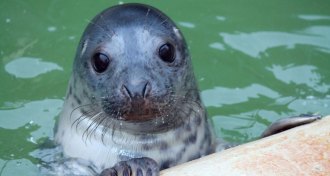
Scientists’ tags on fish may be leading seals to lunch
In an experiment, 10 young grey seals learned to associate the sound of a pinging tag with fish. The tags may make fish vulnerable to predators, scientists say.
- Life
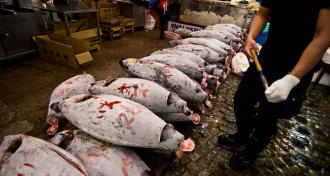
Tasty animals end up on latest list of threatened species
Growing food market lands several species, including Pacific bluefin tuna and Chinese pufferfish, on the IUCN Red List of Threatened Species.
- Environment
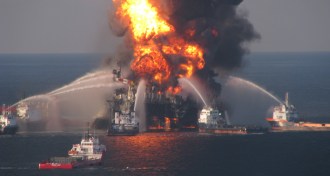
Oil from BP spill may be sitting on seafloor
More than four years after the Deepwater Horizon disaster in the Gulf of Mexico, scientists find that oil is still lingering over a large area on the seafloor.
- Ecosystems
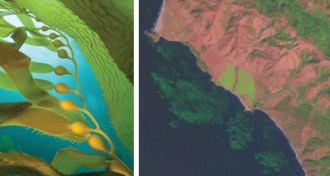
Help scientists find floating forests of kelp
By looking for signs of kelp in satellite images, citizen scientists can help researchers keep track of the world’s seaweed forests.
- Oceans
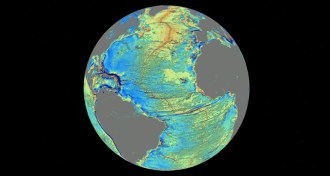
Satellites expose mysteries of the deep ocean
New detailed map of Earth’s seafloor reveals never-before-seen formations.
- Animals
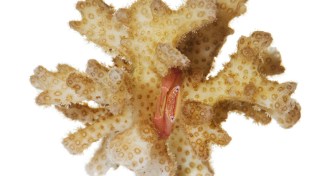
Crabs guard coral from army of sea stars
Coral guard-crabs proved their worth during a 2008 outbreak of crown-of-thorns sea stars, with many successfully protecting their coral from being eaten.
- Climate
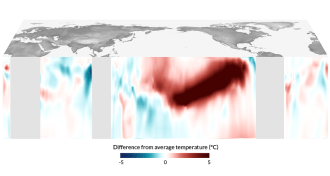
Missing winds probably foiled 2014’s chance for El Niño
Lack of antitrade winds probably hampered 2014 El Niño.
- Oceans
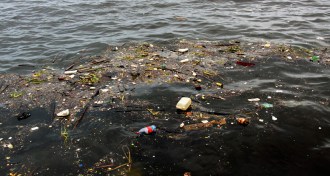
Plastic may take unexpected routes to marine garbage patches
By redefining ocean boundaries, researchers offer new insight to how litter moves through the oceans and who’s to blame for the floating clumps of trash.