Paleontology
- Paleontology
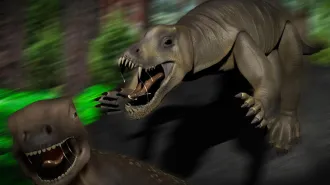
An ancient hippo-sized reptile may have been surprisingly agile
The skull of an Anteosaurus, a hefty reptile with a large snout, hints that it may have moved fast for its day.
- Paleontology
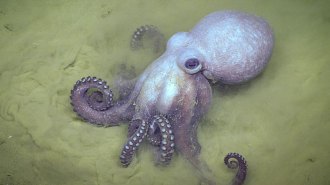
Predatory octopuses were drilling into clamshells at least 75 million years ago
Holes found in ancient clams reveal that octopuses have been drilling into their prey for at least 25 million years longer than was previously known.
- Paleontology
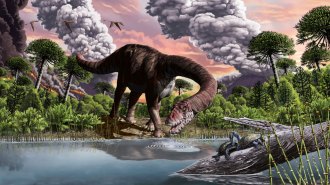
Climate change helped some dinosaurs migrate to Greenland
A drop in CO2 levels helped massive plant eaters called sauropodomorphs trek from South America to Greenland 214 million years ago, says a new study.
- Earth
A magnetic field reversal 42,000 years ago may have contributed to mass extinctions
The weakening of Earth's magnetic field beginning around 42,000 years ago correlates with a cascade of environmental crises, scientists say.
- Genetics
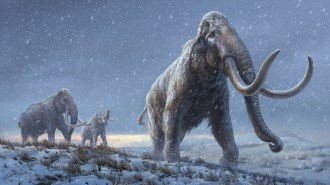
The oldest animal DNA ever recovered reveals mammoths’ evolution
Mammoths evolved to handle the cold over hundreds of thousands of years and North America may been home to a hybrid species, a new study finds.
- Earth
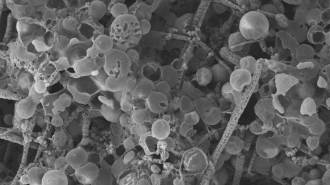
Fossil mimics may be more common in ancient rocks than actual fossils
Evidence of early life may be harder to preserve than pseudofossils — structures that form abiotically but resemble living remnants.
- Paleontology
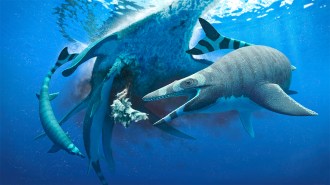
This ancient sea reptile had a slicing bite like no other
Right up until 66 million years ago, the sea was a teeming evolutionary laboratory with a small, agile, razor-toothed mosasaur patrolling the waters.
- Animals
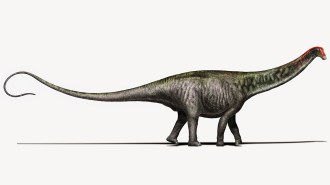
50 years ago, scientists made the case for a landlubbing Brontosaurus
In 1971, a scientist argued for a landbound Brontosaurus instead of a swampy swimmer. Recent evidence comes from studies of its ancient environment.
- Life
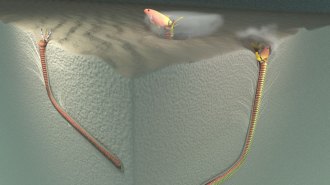
Giant worms may have burrowed into the ancient seafloor to ambush prey
20-million-year-old tunnels unearthed in Taiwan may have been home to creatures that ambushed prey similar to today’s monstrous bobbit worms.
- Paleontology
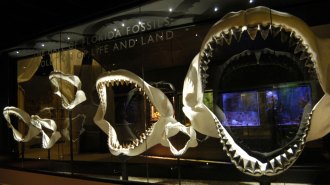
Newborn megalodon sharks were larger than most adult humans
Preserved pieces of backbone suggest that megalodon sharks were about 2 meters long at birth.
- Paleontology
How massive long-necked dinosaurs rose to rule the Jurassic herbivores
New dinosaur fossil dates to same time as a volcanic surge, suggesting ensuing changes in plant life allowed these long-necked giants to emerge.
- Life
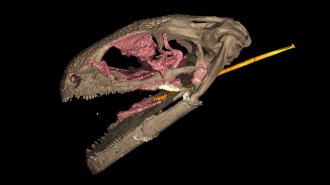
An ancient amphibian is the oldest known animal with a slingshot tongue
A tiny amphibian that lived 99 million years ago waited for invertebrate prey before snatching them with a swift, shooting tongue.