Planetary Science
-
- Planetary Science
Thirty years to Mars
Excerpt from the June 15, 1963, issue of Science News Letter.
- Health & Medicine
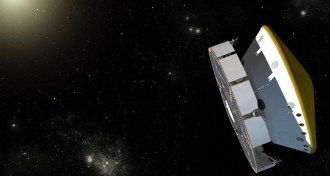
Mars trip would deliver big radiation dose
Curiosity instrument confirms expectation of major exposures.
- Planetary Science
Gone perhaps, but Kepler won’t soon be forgotten
Astronomers look forward to building on the planet-hunting telescope's discoveries.
- Astronomy
Most Earthlike planets yet seen bring Kepler closer to its holy grail
Space telescope finds globes that, compared with our world, are slightly larger and orbit a smaller star.
- Planetary Science
Faint Young Sun
Scientists struggle to understand how early Earth stayed warm enough for liquid water.
- Planetary Science
Distant planets’ atmospheres revealed
Telescopes get first direct glimpse of gases on exoplanets.
- Planetary Science
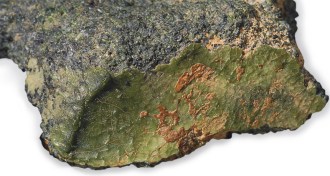
Life-friendly environment confirmed on Mars
Drill sample from bedrock reveals chemistry that could have supported microbial life.
-
- Planetary Science
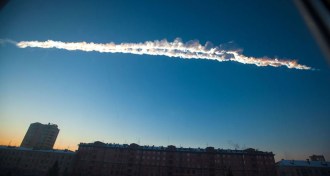
Meteor explodes over Russia
The object is unrelated to February 15 asteroid flyby, experts say.
-
- Planetary Science
Violent past revealed by map of moon’s interior
A gravity survey by twin orbiters reveals how much the lunar surface was pummeled by meteorite impacts early in its history.