Space
We summarize the week's scientific breakthroughs every Thursday.
- Physics
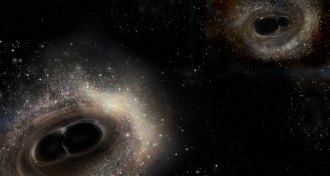
More events needed to pin down gravitational waves backstory
As more black hole collisions are found, researchers hope to piece together how and where these destructive duos form.
- Astronomy
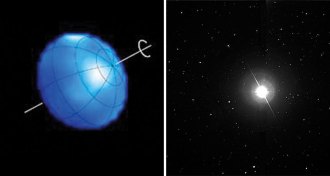
Bulging stars mess with planet’s seasons
On planets orbiting rapidly rotating stars, the seasons can get a little strange.
- Space
Readers weigh in on ET and the meaning of life
Reader feedback from the June 25, 2016, issue of Science News
- Planetary Science
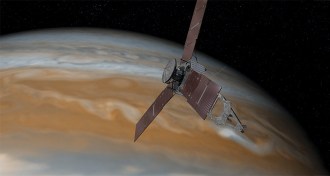
Juno is closing in on Jupiter
After 5 years of travel, Juno will soon reach Jupiter and begin its up close investigations of the giant planet.
- Planetary Science
The 43-year history of journeys to Jupiter, in one graph
With the arrival of Juno, nine spacecraft will have flown past or orbited Jupiter over the last 43 years.
- Astronomy
Molecular handedness found in space
Propylene oxide in an interstellar cloud sets up a testing ground for understanding why life chooses one type of mirror-image molecule over another.
- Physics
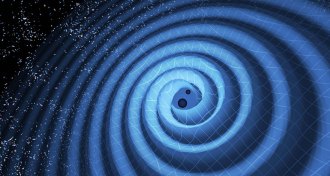
Second gravitational wave signal detected
LIGO has spotted a second set of ripples in the fabric of spacetime.
- Astronomy
Limestone world gobbled by planet-eating white dwarf
Debris from a shredded planet points to a world that was once covered in calcium carbonate.
- Planetary Science
Long-lost ‘extinct’ meteorite found
A newly discovered meteorite, nicknamed Öst 65, may have originated from the same collision that formed L chondrites, one of the most abundant groups of meteorites on Earth.
- Astronomy
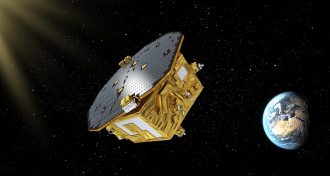
Space-based probe passes tests for gravitational wave detection
The LISA Pathfinder mission has demonstrated that future observatories in space could detect gravitational waves.
- Astronomy
Space-based probe passes tests for gravitational wave detection
The LISA Pathfinder mission has demonstrated that future observatories in space could detect gravitational waves.
- Planetary Science
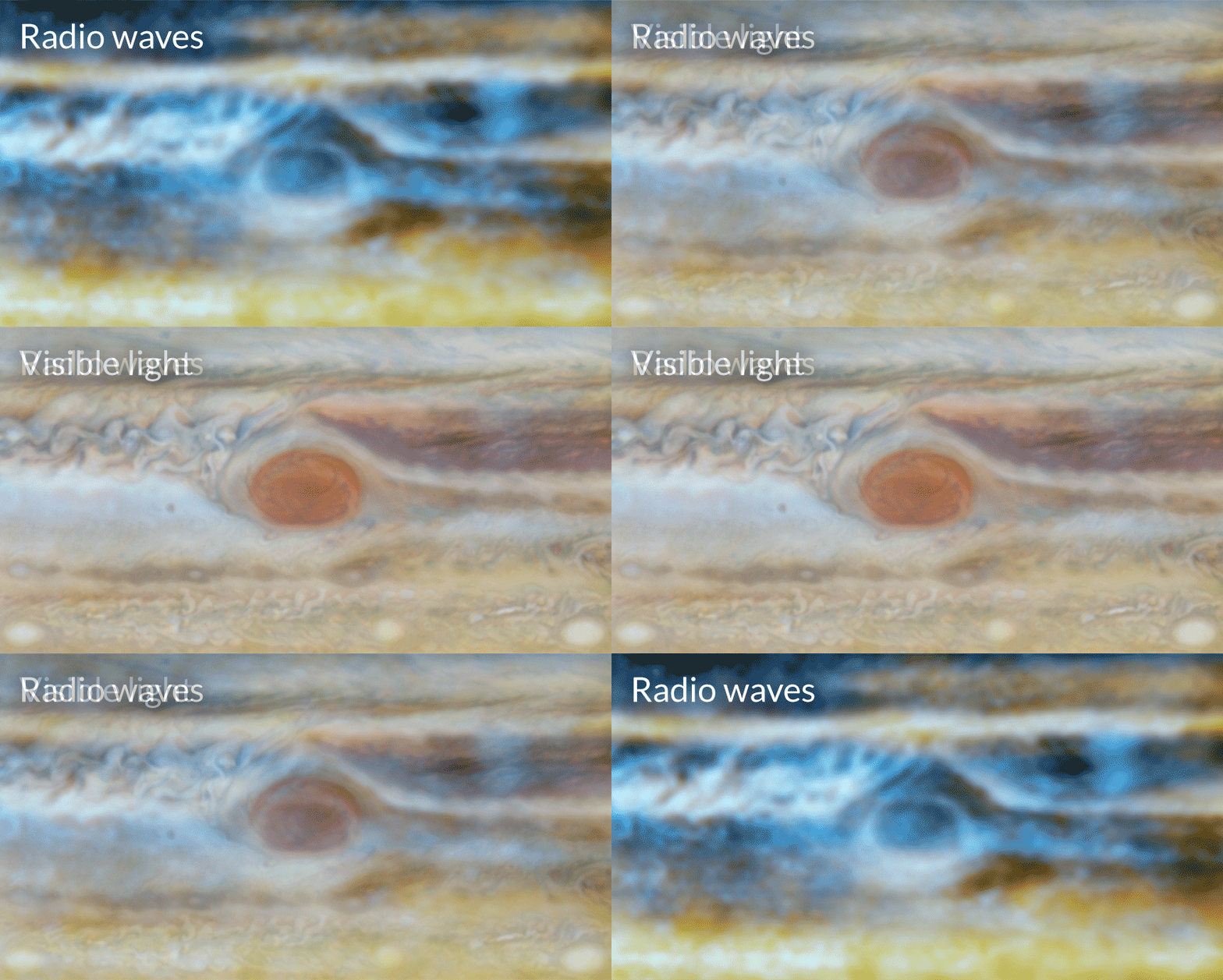
Jupiter’s stormy weather no tempest in teapot
New radio observations reveal how ammonia moves about beneath Jupiter’s clouds and provide a sneak peek at what NASA’s Juno mission will learn later this year.