Space
We summarize the week's scientific breakthroughs every Thursday.
- Planetary Science
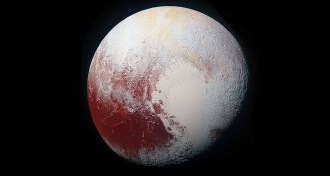
Year in review: Pluto unveiled as a world like no other
Long out of reach, Pluto came into focus in 2015 with the New Horizons mission.
- Planetary Science
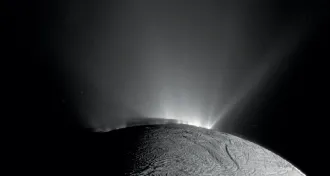
Year in review: Global ocean spans Enceladus
NASA's Cassini spacecraft is offering the best evidence yet that Saturn's moon Enceladus could be a great place to search for extraterrestrial life.
- Planetary Science
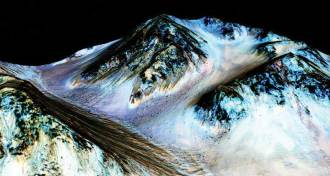
Year in review: Best evidence yet for water on Mars
New data from the Mars Reconaissance Orbiter supported the presence of salty water on Mars.
- Planetary Science
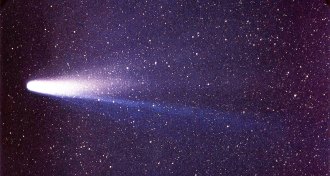
Comets-spewing-oxygen club gets new member
Halley’s comet becomes possibly the second comet known to be carting around oxygen buried since the formation of the solar system.
- Cosmology
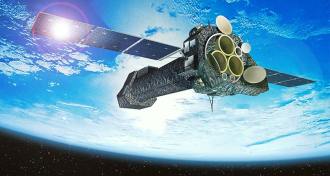
Debate grows over whether X-rays are a sign of dark matter
The dwarf galaxy Draco, which is chock-full of dark matter, doesn’t emit a band of X-rays that researchers hoped were produced by the mysterious invisible stuff.
- Planetary Science
It’s a new planet! It’s an unknown star! It’s — oops!
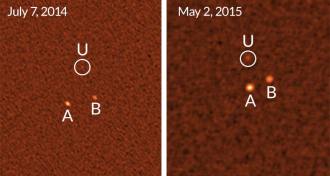
A couple of unexpected wandering points of light in the sky could be new planets or even a dim star orbiting the sun, but researchers have plenty of reasons to be skeptical.
- Planetary Science
Salty source of Ceres’ mysterious bright spots found
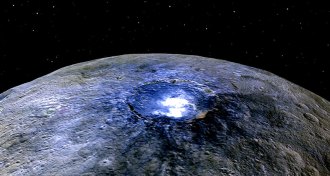
Bright spots on Ceres contain salts from a possible subsurface layer of ice while ammonia-rich minerals hint at building blocks incorporated from the far outer solar system.
- Planetary Science
Japanese spacecraft reaches Venus — five years late
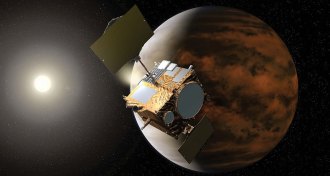
The Japanese Space Agency’s Akatsuki spacecraft succeeded at a second attempt at orbiting Venus, five years after an engine failure prevented its intended mission.
- Astronomy
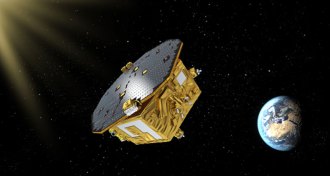
LISA Pathfinder to pave way for gravitational wave detection
The successful launch of the LISA Pathfinder mission marks the first step toward testing techniques needed to build a space-based gravitational-wave detector.
- Astronomy
Mysterious cosmic signals carry a clue to their origins
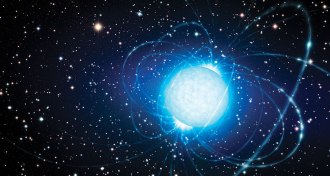
A burst of radio waves from another galaxy ran into a dense magnetized plasma while en route to Earth, hinting at an origin near a population of young stars.
- Astronomy
Super-Earths, meet superpuffs, a lighter weight class of planet
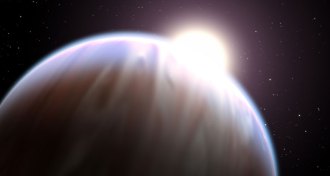
Superpuffs are underweight, oversized planets that formed in outskirts of star systems before cuddling up close to their sun.
- Planetary Science
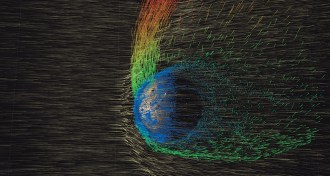
A defenseless Mars is losing its atmosphere
Measurements of Mars’ atmosphere leaking into space could help scientists explain how the Red Planet lost its once life-friendly climate.