Tech
We summarize the week's scientific breakthroughs every Thursday.
- Tech
Robots with fingernails can grasp thin edges
A robotic hand with fingernail-like tips lets robots peel fruit, open lids and pick up thin, flat objects with more precise, human-like dexterity.
- Chemistry
Machine learning streamlines the complexities of making better proteins
The framework predicts how proteins will function with several interacting mutations and finds combinations that work well together.
- Artificial Intelligence
Have we entered a new age of AI-enabled scientific discovery?
Some say we’ve entered a new age of AI-enabled scientific discovery. But human insight and creativity still can’t be automated.
- Tech
The Story of Stories traces the arc of storytelling across human history
In The Story of Stories, technologist Kevin Ashton explores how storytelling has evolved and why stories matter.
- Artificial Intelligence
Real-world medical questions stump AI chatbots
Subtle shifts in how users described symptoms to AI chatbots led to dramatically different, sometimes dangerous medical advice.
- Archaeology
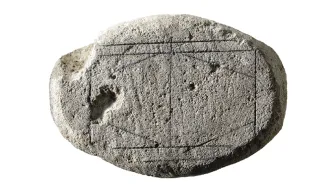
AI helps archaeologists solve a Roman gaming mystery
Researchers used AI-driven virtual players to test more than 100 rule sets, matching gameplay to wear patterns on a Roman limestone board.
- Artificial Intelligence
AI models spot deepfake images, but people catch fake videos
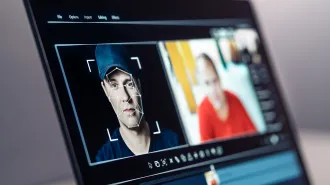
A new study finds that humans and AI spot different kinds of deepfakes — hinting at the need to team up to fight them.
- Genetics
AI tool AlphaGenome predicts how one typo can change a genetic story
The tool helps scientists understand how single-letter mutations and distant DNA regions influence gene activity, shaping health and disease risk.
- Tech
This detached hand robot has a thing for skittering on its fingertips
The robot can bend, grasp and carry in ways humans can’t, which could help it navigate spaces too confined for human arms.
- Computing
Computer science can help abuse and trafficking survivors regain safety
Nicola Dell, a computer scientist studying the role of technology in intimate partner violence, cofounded the Center to End Technology Abuse.
- Artificial Intelligence
A quantum trick helps trim bloated AI models
Machine learning techniques that make use of tensor networks could manipulate data more efficiently and help open the black box of AI models.
- Tech
Mosquitoes use it to suck blood. Researchers used it to 3-D print
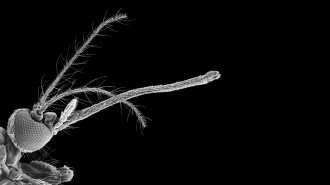
A mosquito proboscis repurposed as a 3-D printing nozzle can print filaments around 20 micrometers wide, half the width of a fine human hair.