All Stories
-
Feedback
Readers respond to disco clams, flying ibises and the changes pot makes on the brain.
- Astronomy
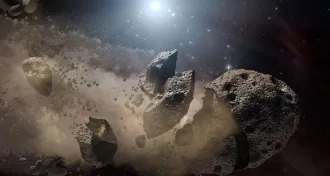
Pulsar pulverizes an asteroid
The steady beat of a pulsar may occasionally be interrupted by collisions with asteroids.
- Planetary Science
Lunar asteroid impact caught on video
On September 11, a dishwasher-sized meteoroid slammed into the nearside of the moon, exploding with the equivalent of 16 tons of TNT — and a lucky team of Spanish astronomers caught it on video.
- Health & Medicine
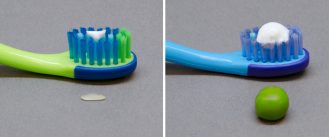
Brush kids’ teeth with just a little fluoride toothpaste
The American Dental Association has released new brushing guidelines for infants.
- Health & Medicine
Camels in Saudi Arabia teeming with MERS virus
Three-quarters of animals tested had signs of the MERS virus, which can be deadly in people.
- Genetics
What your earwax says about your ancestry
Both armpit and ear wax secretions are smellier in Caucasians than in Asians, thanks to a tiny genetic change that differs across ethnic groups.
- Health & Medicine
Acetaminophen use in pregnancy linked to kids’ slightly higher risk of ADHD
A large analysis shows an association between acetaminophen use in pregnancy and slightly higher risks of ADHD, but it does not prove the pain reliever causes the disorder.
- Health & Medicine
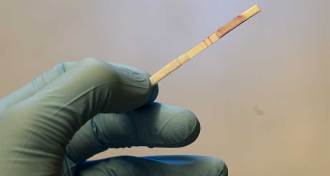
Urine test detects not pregnancy but cancer
A paper strip uses nanoparticles to pick up evidence of tumors or blood clots in mice.
- Animals
A tiny ocean vortex, with pop art pizzazz
Coral polyps kick up a whirling vortex of water by whipping their hairlike cilia back and forth in the photography winner of the 2013 International Science & Engineering Visualization Challenge.
- Neuroscience
Brain’s fact-checker located
A bit of brain tissue near the top of the head may be the body’s fact-checker. Called the supplementary motor cortex, this brain region monitors the body’s action and sends an alert when a mistake is made.
- Psychology
Beatles reaction puzzles even psychologists
From the February 29, 1964, issue: Psychologists are as puzzled as parents over the explosive effect the Beatles are having on American teen-agers.
- Earth
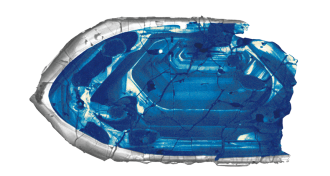
Age of Earth’s crust confirmed
Decaying atoms traced in zircon uphold dating of Earth's crust at about 4.374 billion years old.