All Stories
- Planetary Science
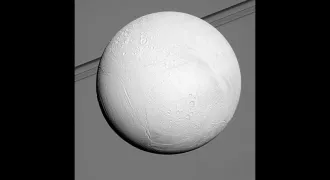
Cassini preps to shower in Enceladus’ ocean
The Cassini spacecraft is gearing up for one last plunge through the water geysers on Enceladus, an icy moon of Saturn.
- Health & Medicine
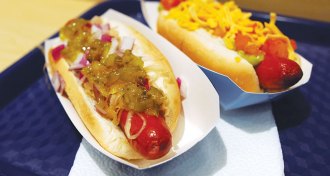
Eating meat officially raises cancer risk
Eating processed meats like bacon, ham and sausage causes cancer, says the World Health Organization.
- Quantum Physics
Light mimics hotel with limitless vacancies
By mimicking a mathematician’s method for creating vacancies in a hotel with an infinite number of rooms, physicists may have found a way of increasing the amount of data that can be carried via light.
- Animals
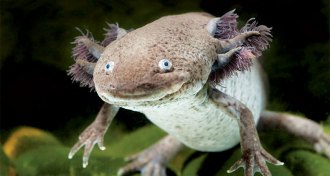
Salamander ancestors could regenerate limbs
Salamanders and ancient amphibians share similar way of regenerating limbs.
- Climate
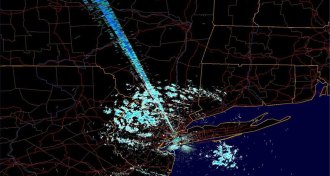
Wi-Fi threatens weather forecasts
Interference from wireless technology threatens the usefulness of weather radar, meteorologists warn.
- Psychology
Views on bias can be biased
When presented with a study showing bias against women, male scientists are more inclined to nitpick the results. But a little intervention can go a long way toward gender equality in science.
- Quantum Physics
Quantum interpretations feel the heat
Landauer’s principle shows a way to test competing interpretations about quantum physics.
- Planetary Science
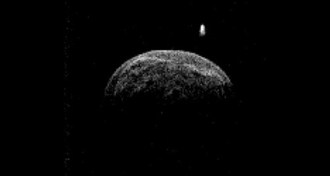
Asteroid set for Halloween flyby
Large asteroid will pass Earth just beyond the moon’s orbit on Halloween.
- Astronomy
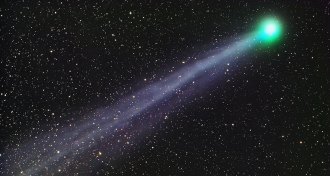
Comet carries alcohol, sugar
Sugar and alcohol are just two of the ingredients that go into making a comet.
- Climate
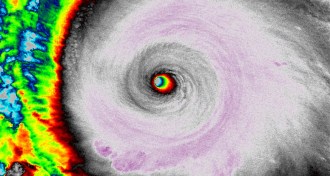
Hurricane Patricia’s howling winds smash records
Hurricane Patricia’s winds are now the fastest ever recorded in a tropical cyclone, making it the strongest hurricane on record in the Western Hemisphere.
-
- Animals
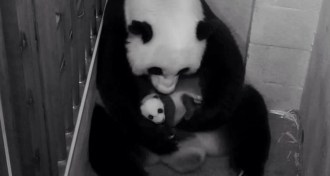
As panda baby grows, mom’s milk changes
In the first month after a mama panda gives birth, her milk changes in composition, a new study finds.