All Stories
- Humans
Moon bounces, bad spider leaders and more reader feedback
Readers debate faith's role in evolution, compare politicians to spiders and more.
- Chemistry
Wanted: Crime-solving bacteria and body odor
Forensic investigators are moving past old-school sleuthing to analyze microbes and odors that tell a more complete story, while pursuing ways to enhance traditional tools as well.
- Health & Medicine
Blood test can predict breast cancer relapse
Blood tests for breast cancer DNA can predict relapse.
- Animals
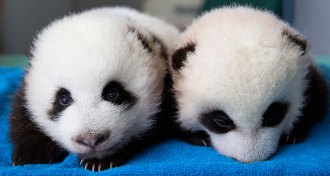
Twin pandas look forward to growth spurts
The surviving panda twin born at the National Zoo last weekend will undergo DNA tests to discover paternity.
- Animals
A world of mammal diversity has been lost because of humans
Humans have eradicated large mammal biodiversity in most regions of the globe, a new study finds.
- Health & Medicine
Virus closely related to hepatitis A discovered in seals
Scientists have discovered a relative of the hepatitis A virus in seals.
- Climate
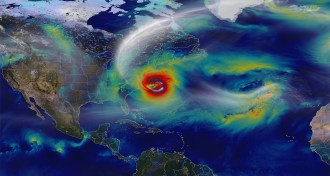
Hurricane’s tiny earthquakes could help forecasters
Hurricane Sandy set off small earthquakes under its eye as it moved up the U.S. East Coast in 2012. The tiny tremors could help researchers track the behavior of future storms, researchers propose.
- Animals
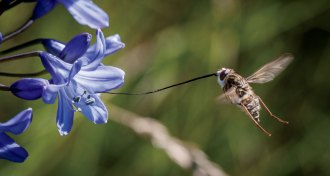
Long-tongued fly sips from afar
Long-tongued flies can dabble in shallow blossoms or reach into flowers with roomier nectar tubes.
- Physics
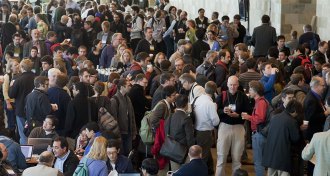
3-D printed device cracks cocktail party problem
A plastic disk does what sophisticated computers cannot: solve the cocktail party problem.
- Animals
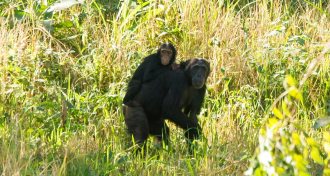
Chimps keep numbers high as forest losses mount
African apes show surprising resilience in face of forest destruction.
- Animals
Chimps keep numbers high as forest losses mount
African apes show surprising resilience in face of forest destruction.
- Planetary Science
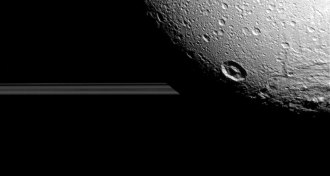
Flyby of Dione yields stunning pictures of icy Saturn moon
Saturn’s moon Dione shows off its ripping landscapes during the Cassini spacecraft’s final flyby.