All Stories
- Life
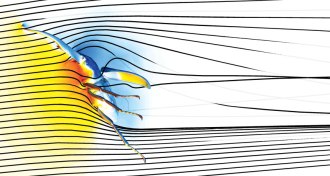
Male stag beetles face weighty problem for flight
Male stag beetles need enormous mandibles to fend off other males and find a mate, but computer simulations show that the giant jaws make running and flying very difficult.
- Plants
The art and science of the hedgerow
Spiky hawthorn trees have found many uses despite their unforgiving nature, Bill Vaughn writes in ‘Hawthorn.’
- Psychology
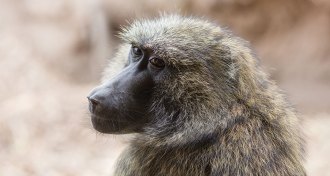
Quantity counts for baboons
Counting-like logic helps baboons track and compare accumulating sets of peanuts.
- Science & Society
Histories left behind by the dispossessed
‘Dispatches from Dystopia’ chronicles adventures in modernist wastelands to recount tales of the invisible and the overlooked, the exiled and the dispossessed.
- Genetics
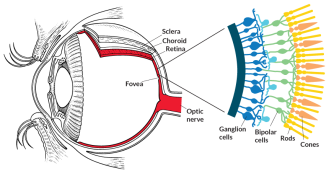
How to rewire the eye
The cutting-edge technology called optogenetics may offer a workaround to partially restore vision even after the retina’s light-sensing rods and cones die.
- Animals
A summer challenge: Observe nature
Opportunities for observing nature are plentiful, no matter where you live.
- Animals
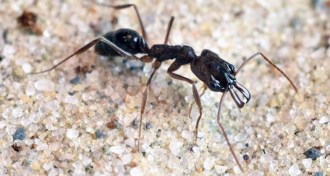
Ants snap jaws, shoot skyward, escape death
Emergency trap jaw launchings help some ants pass death tests.
- Earth
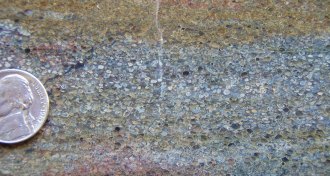
Asteroids boiled young Earth’s oceans, remnant rocks suggest
Giant asteroid impacts may have boiled Earth’s oceans around 3.3 billion years ago, snuffing out near-surface life.
- Animals
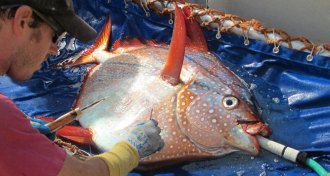
Deepwater dweller is first known warm-hearted fish
The opah, a deep-diving fish, can keep much of its body warmer than its surroundings, making it similar to warm-blooded birds and mammals.
- Astronomy
First quasar quartet discovered
A quartet of quasars seen in the early universe may mark where a massive galaxy cluster is starting to form.
- Oceans
Mysterious form of phosphorus explained
Mysterious form of phosphorus may be used as shadow currency by marine microbes, potentially upending scientists’ understanding of nutrient exchanges.
- Science & Society
The Dress divided the Internet, but it’s really about subtraction
People really do see different colors in the same photo of a dress, suggesting that our internal models shape color perception far more than has been recognized.