All Stories
- Cosmology
In era of collaboration, individual initiative can still pay off
A risky venture to study cosmic ray particles offers no guarantee of success, but it may help answer two of the biggest questions in physics.
- Health & Medicine
Teens have higher anaphylaxis risk than younger kids
Adolescents may be more apt to experience an extreme allergic reaction than younger children, researchers report.
- Neuroscience
Electrical zap of cells shapes growing brains
The electric charge across cell membranes directs many aspects of brain development, and changing it can fix certain brain birth defects.
- Neuroscience
Mapping aggression circuits in the brain
Using optogenetics and other techniques, scientists are tracing connections to and from the brain’s aggression command center.
- Life
Experimental herpes vaccine works in mice
An experimental herpes vaccine works in animal tests by using an approach starkly different from that used in previous vaccine development.
- Agriculture
Cage free isn’t good enough for livestock, ‘The Modern Savage’ argues
Even on a small farm, life can be brutal for animals, historian and animal rights advocate says in new book.
- Animals
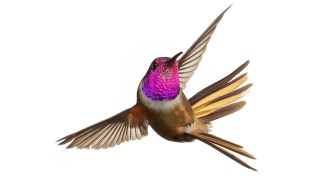
Hummingbird may get promoted
Not just a subspecies: A flashy, squeaky hummingbird should become its own species, ornithologists argue.
- Life
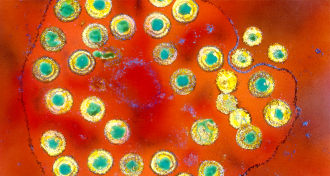
Life’s origin might illustrate the power of game theory
Game theory math can describe molecular competition and cooperation, perhaps providing clues to the origin of life.
- Paleontology
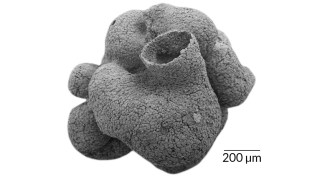
Possible ancestor of sponges found
An exquisitely preserved 600-million-year-old fossil from China has cell types and a shape resembling sponges, thought to be among the first multicellular animals to evolve.
- Genetics
Protein comparisons proposed in 1960s for tracking evolution
In 1965, two scientists spotted molecular signatures of primate divergence. The tool became widespread for studying evolution – and one researcher’s career ended in crime.
- Environment
Replacement for toxic chemical in plastics, receipts may be just as toxic
Mounting evidence suggests that BPS, a common chemical in plastics, may cause the same health effects as BPA.
-