All Stories
- Materials Science
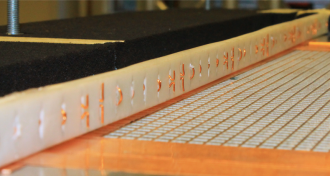
Copper-wire ‘metamirror’ reflects selectively
A metamaterial mirror reflects only a single wavelength of light, potentially leading to more compact and affordable radio antennas.
- Chemistry
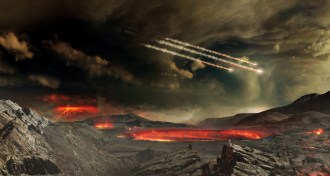
Cooking up life’s ingredients, all in one pot
An interconnected series of chemical reactions with a few primordial chemicals can cook up all the necessary elements of life
- Health & Medicine
In babies, turning down inflammation soothes the hurt
Babies don’t feel nerve pain because their immune systems tamp down inflammation.
- Quantum Physics
Finding quantum entanglement in a crowd
Physicists have measured entanglement between pairs of photons within a macroscopic beam of light, a first step toward understanding how particles’ quantum connections lead to large-scale effects.
- Animals
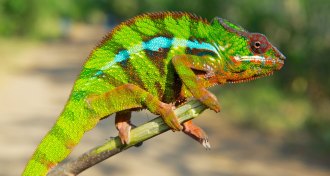
Nanocrystals explain chameleons’ color shifts
Tiny crystals embedded in chameleons’ skin reflect specific wavelengths of light based on their position, explaining how chameleons change colors.
- Animals
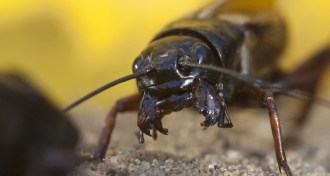
A brain chemical tells when to fight or flee
Crickets tally the knocks they take in a fight, and flee when their brains release nitric oxide to tell them they’ve had enough.
- Archaeology
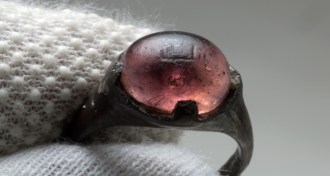
Ring brings ancient Viking, Islamic civilizations closer together
Ancient find fingers ninth century connection between Vikings and Islamic civilization.
- Astronomy
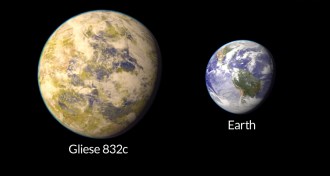
Super-Earths may form in two ways
Rocky planets much heavier than Earth may form in different ways.
- Planetary Science
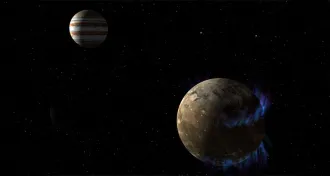
Aurora shift confirms Ganymede’s ocean
New observations confirm the presence of a liquid saltwater ocean beneath the surface of Jupiter’s largest moon, Ganymede.
- Climate
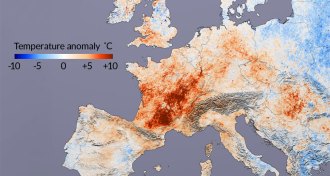
Arctic warming bolsters summer heat waves
Sagging storms brought on by rapid Arctic warming worsen summertime heat waves across the Northern Hemisphere.
- Life
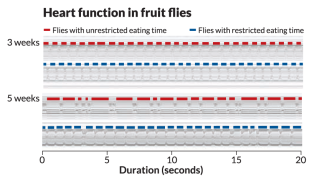
For healthy eating, timing matters
Limiting eating times improves heart function in fruit flies.
- Planetary Science
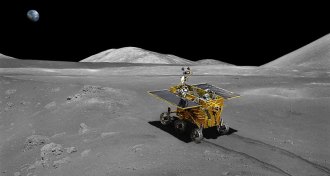
Chinese rover reveals moon’s layers
Radar imaging done by China’s Yutu lunar rover reveals that the moon’s geological history could be more complex than once thought.