463 results
463 results for: Dolphins
- Animals
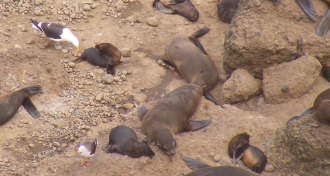
One creature’s meal is another’s pain in the butt
Kelp and dolphin gulls in Patagonia have found a new food source. But they accidentally injure fur seal pups to get it.
- Animals
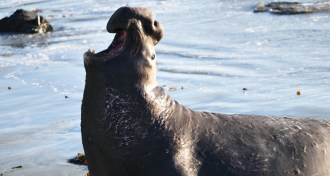
Elephant seals recognize rivals by the tempo of their calls
The distinct sputtering-lawnmower sound of a male elephant seal’s call has a tempo that broadcasts his identity to competitors.
- Particle Physics
Readers puzzled by proton’s properties
Readers sent feedback on under-ice greenhouses in the Arctic, the Martian atmosphere and more.
- Paleontology
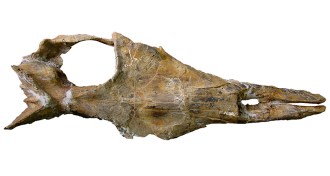
Ancient whale tells tale of when baleen whales had teeth
A 36 million-year-old whale fossil bridges the gap between ancient toothy predators and modern filter-feeding baleen whales.
- Animals
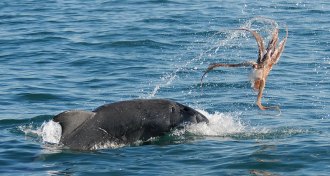
How a dolphin eats an octopus without dying
An octopus’s tentacles can kill a dolphin — or a human — when eaten alive. But wily dolphins in Australia have figured out how to do this safely.
- Animals
Tool use in sea otters doesn’t run in the family
A genetic study suggests that tool-use behavior isn’t hereditary in sea otters, and that only some animals need to use tools due to the type of food available in their ecosystem.
- Life
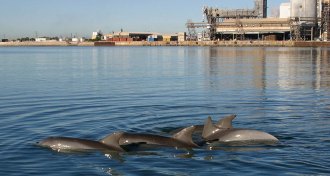
City dolphins get a boost from better protection and cleaner waters
Bottlenose dolphins near Adelaide, Australia, are slowly growing in number due to better environmental conditions and better protection.
- Paleontology
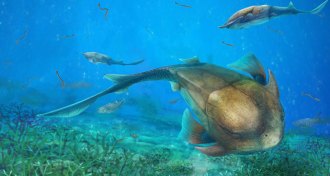
Ancient armored fish revises early history of jaws
The fossil of a 423-million-year-old armored fish from China suggests that the jaws of all modern land vertebrates and bony fish originated in a bizarre group of animals called placoderms.
- Paleontology
New fossil suggests echolocation evolved early in whales
A 27-million-year-old whale fossil sheds light on echolocation’s beginnings.
- Anthropology
Humans, birds communicate to collaborate
Bird species takes hunter-gatherers to honeybees’ nests when called on.
-
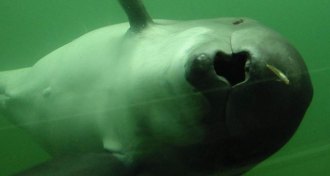
For harbor porpoises, the ocean is a 24-hour buffet
Scientists tagged harbor porpoises with monitoring equipment and found that the small cetaceans eat thousands of fish throughout the day.
- Animals
Snot could be crucial to dolphin echolocation
An acoustic model reveals that echolocation relies on mucus lined tissue lumps in the animal’s nasal passage.