3,982 results
3,982 results for:
- Math
Scrabble’s Random Letters
In the popular SCRABBLE Brand Crossword Game, players create words from letters selected at random from a stockpile of 100 tiles. The tiles are laid down on a board 15 squares high by 15 squares wide to form an interlocking, crossword arrangement. Each letter of the alphabet has a particular value and the number of […]
- Math
Conquering Catalan’s Conjecture
Innocent-looking problems involving whole numbers can stymie even the most astute mathematicians. As in the case of Fermats last theorem, centuries of effort may go into proving such tantalizing, deceptively simple conjectures in number theory. Now, Preda Mihailescu of the University of Paderborn in Germany finally may have the key to a venerable problem known […]
- Genetics
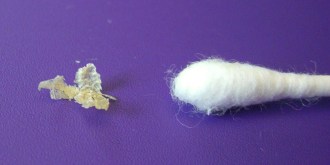
What your earwax says about your ancestry
Both armpit and ear wax secretions are smellier in Caucasians than in Asians, thanks to a tiny genetic change that differs across ethnic groups.
- Life
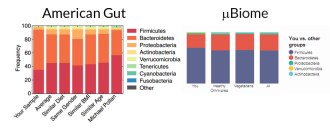
Here’s the poop on getting your gut microbiome analyzed
One Science News writer donated her used toilet paper for science and learned that microbiome research is as uncharted as the Wild West.
- Animals
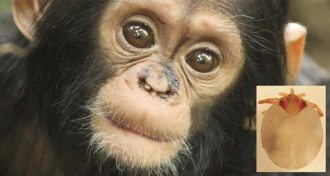
Hiding up your nose is a clever strategy for ticks
Found hiding in the noses of Ugandan chimps, a new tick species hitchhiked its way to America in a researcher's nose.
- Humans
From the March 22, 1930, issue
THE SUN’S NEW TRANS-NEPTUNIAN PLANET The Lowell Observatory has made the discovery of a celestial body whose rate of motion and path among the stars indicate that it is a new member of the sun’s family of planets out beyond Neptune. Twenty-five years ago, Dr. Percival Lowell, director and founder of the Observatory at Flagstaff, […]
- Humans
From the April 19, 1930, issue
TRAVEL TO THE MOON BY THE YEAR 2050 By the year 2050, Earth-dwellers will probably be able to travel to the moon and to communicate with their terrestrial home by telephoning over a beam of light. They will get there by traveling in a rocket ship at a speed of some 50,000 miles an hour, […]
-
-
From the February 20, 1932, issue
LIGHT FLOODS MONUMENT FOR CELEBRATION Science and engineering are aiding the Washington Bicentennial celebration, for they have just joined hands to illuminate in a very realistic fashion the famous obelisk that is named for the father of his country. The striking photograph of the shaft and its reflection in the Lincoln Memorial pool shows how […]
- Humans
Letters from the July 28, 2007, issue of Science News
Gyro Q & A Doesn’t “Spinning into Control” (SN: 05/19/07, p. 312) on flywheels leave out a significant aspect: the gyroscope effects of a rotating large mass? Wouldn’t it be a benefit for moving installations (stabilization) and a problem for immobile installations? Lee HukillPalo Alto, Calif. In the article, the flywheels depicted appear to have […]
- Science & Society
Outgoing congressman Rush Holt calls scientists to action
The New Jersey physicist has decided not to run for re-election but is a proponent of scientists in office.
- Life
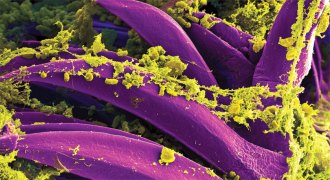
Microscapes take off at D.C’s Dulles airport
“Life: Magnified,” a display of microscope images depicting cells, microbes and details of life invisible to the naked eye runs from June to November.