113,283+ results
113,283+ results for:
- Paleontology
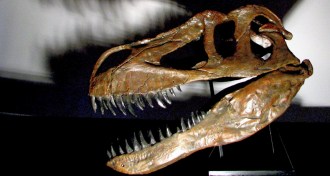
New dino species named Europe’s top predator
At up to 10 meters long and weighing in at four to five tons, this Tyrannosaurus rex-like beast could have been the biggest predator to ever roam Europe and among the largest dinosaurs to walk Earth during the late Jurassic period.
- Astronomy
Comets collide around young star
Astronomers detect clouds of carbon monoxide around Beta Pictoris that could help lead to the discovery of new planets.
- Neuroscience
Music doesn’t move some people
One study offers a glimpse into those who find no enjoyment in tunes.
- Science & Society
Domestic violence arrests may be counterproductive
Mandatory arrest laws may increase mortality rates, especially among employed black women.
- Astronomy
Cosmic lens exposes spin of supermassive black hole
A chance alignment of a bright, distant galaxy behind a much closer one has given astronomers a rare opportunity to determine the spin of a supermassive black hole 6 billion light-years from Earth.
- Physics
Material’s magnetism tuned by temperature
Layered substance may lead to more reliable hard drives in the future.
- Astronomy
Black holes may shut down stellar factories
Astronomers find dead galaxies loaded with the cold gas needed to make stars.
- Materials Science
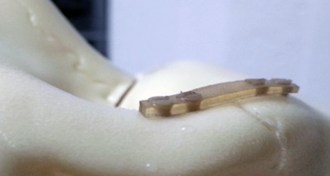
Silk bone screws may mend better than metal ones
The silk-made screw and plates are less stiff than metal ones and dissolve in the body, making them a safer, less invasive alternative for setting broken bones.
- Tech
Shining a light on radio waves
A new device detects faint signals by first converting them to laser pulses.
- Physics
Superfast laser pulses could pave way for beam weapons
Short light bursts turn columns of air into energy conduits.
- Health & Medicine
Casinos may reduce poverty, obesity in Native American communities
A modest reduction in overweight youth was observed after the addition of slot machines.
- Animals
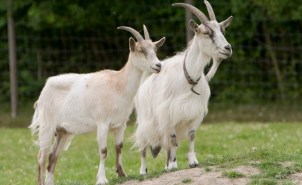
Chemical in male goat odor drives the lady goats wild
A new study shows that male goats exude pheromones from their skin that could make female goats ready to roll in the hay.