113,283+ results
113,283+ results for:
- Physics
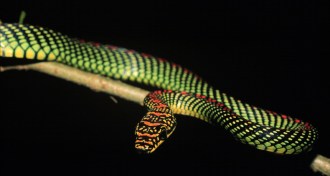
Flying snakes get lift from surrounding air vortices
When a paradise flying snake leaps into and glides through the air, it’s getting lift from small, swirling vortices in the air around it.
- Health & Medicine
Meaty diets may raise risk of dying young
Reducing protein consumption can lengthen life and improve health, studies in mice and people suggest.
- Astronomy
NASA releases 2015 budget with some mission cuts
NASA $17.5 billion budget for fiscal year 2015 supports big missions, such as the James Webb Space Telescope. But there are plans to put the SOFIA telescope in storage.
- Health & Medicine
HPV vaccination proves its worth in Australia
A study in Australia finds the shots are already reducing cases of abnormal cervical lesions.
- Astronomy
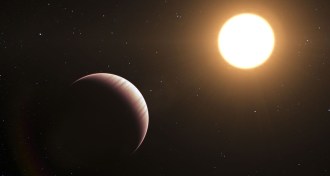
Exoplanet water seen in new light
Astronomers used a new technique to characterize the atmosphere of a gas giant exoplanet.
- Animals
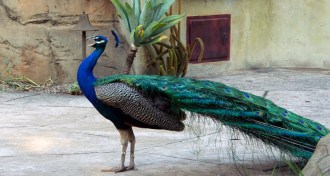
Peacocks sometimes fake mating hoots
Peacocks may have learned a benefit of deception by sounding their copulation calls even when no peahens are in sight.
- Neuroscience
Brain uses decision-making region to tell blue from green
Language and early visual areas of the brain are not crucial for distinguishing colors, an fMRI study suggests.
- Genetics
Neanderthal Man
The hottest thing in human evolution studies right now is DNA extracted from hominid fossils. Svante Pääbo, the dean of ancient-gene research, explains in Neandertal Man how it all began when he bought a piece of calf liver at a supermarket in 1981.
- Physics
Key to free will may be stripping reality naked
If reality emerges from an unseen foundation, human free will could influence the future.
- Microbes
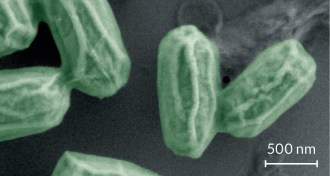
Power-packed bacterial spores generate electricity
With mighty bursts of rehydration, bacterial spores offer a new source of renewable energy.
- Health & Medicine
Should you hush that white noise?
Some sleep machines can pump out a dangerous amount of noise, but that doesn’t mean they can’t be used safely.
- Physics
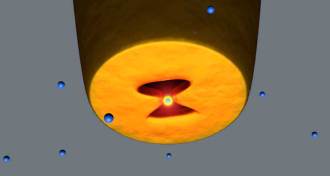
Laser tweezers manipulate objects just 50 nanometers wide
Technique could allow scientists to move proteins, viruses and nanomaterials.