Archaeology
- Physics
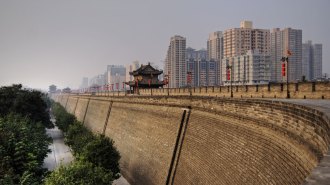
Muon scanning hints at mysteries within an ancient Chinese wall
Density fluctuations within the ancient rampart encircling the city of Xi’an could be defects or yet-to-be-discovered archaeological finds.
- Archaeology
Mysterious marks on Ice Age cave art may have been a form of record keeping
Hunter-gatherers during the Ice Age may have recorded when prey mated and gave birth, suggesting that these people possessed complex cognitive skills
- Chemistry
These chemists cracked the code to long-lasting Roman concrete
Roman concrete has stood the test of time, so scientists searched ruins to unlock the ancient recipe that could help architecture and climate change.
- Archaeology
Complex supply chains may have appeared more than 3,000 years ago
Finds from one of the world’s oldest shipwrecks hint that miners in Central Asia and Turkey provided a crucial metal to Mediterranean rulers.
- Archaeology
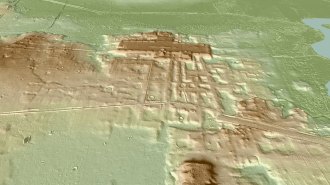
Lasers reveal sites used as the Americas’ oldest known star calendars
By around 3,100 years ago, Mesoamerican ritual complexes tracked celestial cycles using a 260-day count, a huge lidar mapping project shows.
- Earth
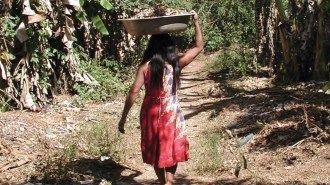
Indigenous people may have created the Amazon’s ‘dark earth’ on purpose
Modern Amazonians make nutrient-rich soil from ash, food scraps and burns. The soil strongly resembles ancient dark soils found in the region.
- Anthropology
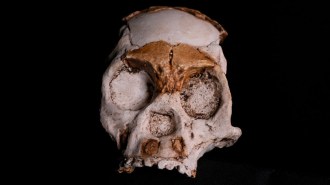
Homo naledi may have lit fires in underground caves at least 236,000 years ago
Homo naledi may have joined the group of ancient hominids who built controlled fires, presumably for light or warmth, new finds hint.
- Archaeology
A spider monkey’s remains tell a story of ancient diplomacy in the Americas
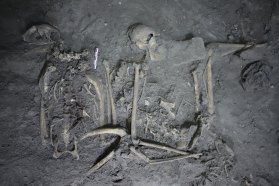
A 1,700-year-old spider monkey skeleton unearthed at Teotihuacan in Mexico was likely a diplomatic gift from the Maya.
- Anthropology
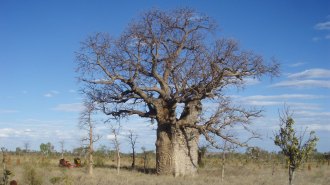
Carvings on Australia’s boab trees reveal a generation’s lost history
Archaeologists and an Aboriginal family are working together to rediscover a First Nations group’s lost connections to the land.
- Archaeology
Some Maya rulers may have taken generations to attract subjects
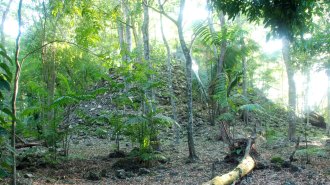
Commoners slowly granted authority to kings at the ancient Maya site of Tamarindito, researchers suspect.
- Archaeology
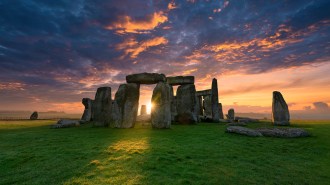
50 years ago, Stonehenge’s purpose mystified scientists. It still does
In 1972, scientists thought Stonehenge may have been a calendar. Today, we still don’t know its purpose, but we have gained insight on its origin.
- Humans
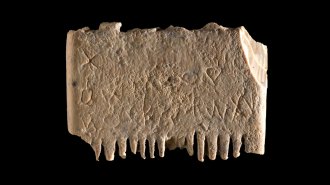
This ancient Canaanite comb is engraved with a plea against lice
The Canaanite comb bears the earliest known instance of a complete sentence written in a phonetic alphabet, researchers say.